


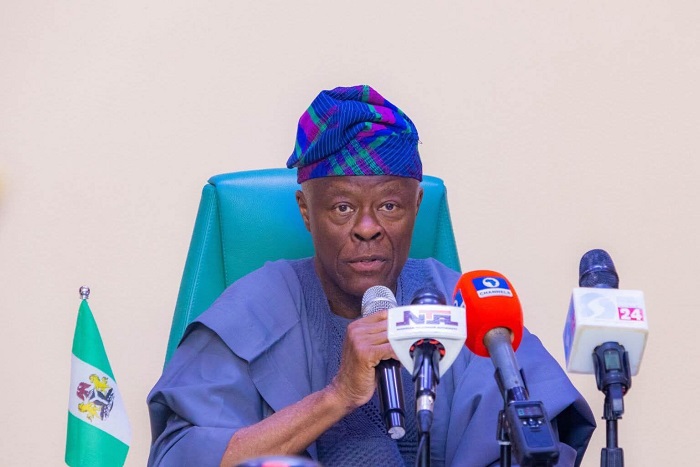




Nigeria is positioning itself to benefit from rising global oil prices while bracing for the economic challenges that come with them, Minister of Finance and Coordinating Minister of the Economy, Wale Edun, has said.
Speaking in Abuja during the presentation of the latest Nigeria Development Update by the World Bank, Edun noted that the Federal Government is focused on maximising revenue from higher crude prices amid ongoing global uncertainties, particularly tensions in the Middle East.
According to him, Nigeria’s status as an oil-producing nation places it in a delicate position—benefiting from increased revenues while simultaneously facing higher costs across key sectors.
“Higher oil prices boost government earnings but also raise costs, especially in energy and food production. We are on both sides of the equation,” he said.
The minister warned that global price increases are already feeding into domestic inflation. Rising gas prices, he explained, have driven up fertiliser costs, which in turn push food prices higher and deepen the financial strain on households.
Edun further cautioned that elevated interest rates in advanced economies could worsen Nigeria’s debt burden by increasing borrowing costs and debt servicing obligations.
In response, he disclosed that the Economic Management Team is actively evaluating multiple global scenarios and advising Bola Ahmed Tinubu on appropriate policy actions.
Despite these pressures, Edun expressed optimism about Nigeria’s resilience, citing recent economic reforms and improved oil production, now at approximately 1.84 million barrels per day. He stressed the need for continued fiscal discipline and policy consistency to sustain stability and investor confidence.
The minister also underscored the importance of private sector investment in driving long-term growth, job creation, and poverty reduction, noting that government alone cannot achieve these goals.
He assured that social intervention programmes would remain a key component of government policy to cushion vulnerable populations against rising living costs.
Meanwhile, Deputy Governor for Economic Policy at the Central Bank of Nigeria, Mohammed Sani Abdullahi, said the country is now better equipped to withstand global shocks than at any point in the past decade.
He attributed this improved resilience to foreign exchange reforms that have enhanced transparency and reduced the need for heavy interventions to stabilise the naira. Abdullahi noted that the currency has shown signs of appreciation in recent weeks, reflecting growing market confidence.
He also revealed plans to introduce a new foreign exchange manual aimed at strengthening exchange rate management and attracting foreign investment.
Presenting the report, the World Bank’s Lead Economist for Nigeria, Fiseha Haile, said the country’s economy has remained relatively resilient, with growth continuing into early 2026.
However, he warned that indirect effects of global crises—particularly rising fuel prices and inflation—remain significant. Petrol prices have surged by over 50 per cent since the onset of the Middle East crisis, while inflation, though down from about 33 per cent in 2024 to around 15 per cent, remains high and is beginning to rise again.
“High inflation continues to erode real incomes and slow poverty reduction,” Haile said.
On the external front, Nigeria has recorded improvements, including stronger reserves, reduced exchange rate volatility, and a unified foreign exchange system. Still, risks such as declining foreign investment, reduced remittances, and higher global borrowing costs persist.
Looking ahead, the World Bank projects Nigeria’s economy will grow at an average of 4.2 per cent between 2026 and 2028, supported by ongoing reforms. However, it stressed that growth must be inclusive, as many Nigerians have yet to feel the benefits.
The report called for disciplined fiscal management, including saving oil windfalls, avoiding inefficient subsidies, and expanding targeted support for vulnerable groups.
It also highlighted the urgent need to invest in human capital, particularly early childhood development, noting that millions of Nigerian children face challenges such as poor nutrition, high mortality rates, and limited school readiness—issues that could have long-term implications for productivity and economic growth.