The Federal Government has disclosed that no fewer than 9.2 million vulnerable Nigerians have benefited from its Household Prosperity and Empowerment Cash Transfer (HoPE-CT) Programme, as part of efforts to tackle poverty nationwide.
The initiative, anchored under the Renewed Hope Agenda of President Bola Ahmed Tinubu, is now targeting 15 million households across the country.
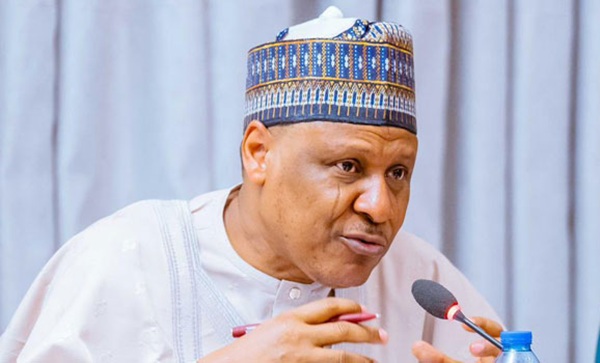
Minister of Information and National Orientation, Mohammed Idris, made the disclosure during a ministerial media briefing in Abuja, describing the programme as one of the administration’s most impactful social interventions.
Also speaking, Minister of Humanitarian Affairs and Poverty Reduction, Bernard Doro, said the initiative marks a shift from short-term relief to a structured, data-driven social protection system.
“We are not here to manage poverty. We are here to end it,” Doro declared.
Under the scheme, each eligible household receives ₦75,000 over three months to support essential needs such as food, healthcare, and education. Beneficiaries are selected from the National Social Register and verified using NIN or BVN, with payments processed through secure digital platforms to curb fraud.
Providing a breakdown, the minister said 9,178,837 beneficiaries received the first tranche, 7,203,579 the second, and 6,497,089 the third, reflecting what he described as tangible improvements in livelihoods.
“These are not just numbers. They represent households whose dignity is being restored and whose resilience is being strengthened,” he said.
Doro added that the programme is designed to transition beneficiaries towards economic self-reliance through embedded livelihood support and “graduation pathways.”
Highlighting its inclusiveness, he noted that 58.7 per cent of beneficiaries are women, describing the gender focus as a deliberate strategy to strengthen households and communities.
“When you empower a woman, you strengthen a household. When you strengthen a household, you stabilise a community,” he said.
National Programme Manager of the National Cash Transfer Office, Abdullahi Imam, said the initiative, launched in November 2023, is supported by an $800 million facility from the World Bank.
He explained that the initial target of 10.4 million households has been expanded to 15 million, with millions already receiving at least one tranche of ₦25,000.
“At its core, the programme is about people—families who need support to stay afloat and a fair chance to build better lives,” Imam said.
Idris, represented by the ministry’s Director of Public Relations, Suleiman Haruna, said the programme goes beyond statistics, symbolising renewed hope and improved living conditions for vulnerable Nigerians.
He urged media practitioners to focus on the human impact of such interventions, highlighting real-life transformation stories to strengthen public trust.
The government also outlined complementary initiatives, including the National Social Investment Programme, student loans under NELFUND, microloans through GEEP, and skills development schemes such as 3MTT and SUPA.
According to officials, the HoPE-CT programme represents a cornerstone of Nigeria’s broader poverty reduction strategy, aimed at fostering inclusive growth and ensuring that no citizen is left behind.