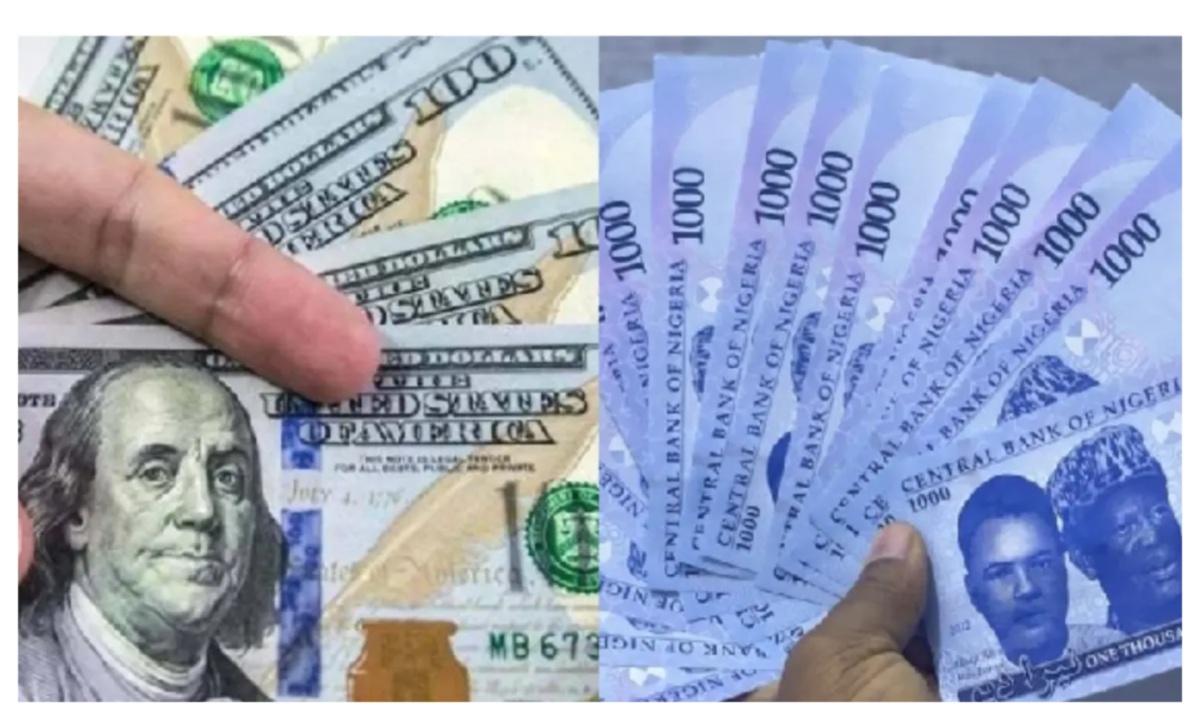
The naira recorded its strongest gain in three weeks at the official foreign exchange market, appreciating to N1,376 per dollar as Nigeria’s foreign reserves climbed to $50.01 billion

Naira Posts Strongest Gain in Three Weeks as Nigeria’s Foreign Reserves Hit $50bn
Nigeria’s currency, the Nigerian Naira, recorded its strongest appreciation against the US dollar in three weeks at the official foreign exchange market on Wednesday, buoyed by a marginal increase in the country’s external reserves.
Latest data released by the Central Bank of Nigeria (CBN) showed that the naira strengthened significantly to N1,376.19 per dollar at the official market.
This represents an improvement from N1,401.40 per dollar recorded on Tuesday, translating into a N25.21 gain within 24 hours.
The development marks the currency’s largest day-to-day appreciation in three weeks, signaling a temporary recovery after a period of sustained pressure in the foreign exchange market.
The strengthening of the naira comes after the currency began to break from a recent depreciation trend earlier in the week.
Analysts say the improved performance may be linked to better liquidity conditions in the official market and growing confidence following an increase in Nigeria’s external reserves.
Despite the improvement at the official market, the local currency recorded a slight depreciation in the parallel market, commonly referred to as the black market.
At the informal trading window, the naira weakened by N10, trading at N1,430 per dollar on Wednesday, compared with N1,420 per dollar recorded the previous day.
Meanwhile, data from the Central Bank of Nigeria showed that the country’s foreign exchange reserves climbed to $50.01 billion as of March 10, 2026.
The figure represents a slight increase from $49.99 billion recorded on March 9, pushing the reserve position above the $50 billion mark.
Foreign reserves are a critical indicator of a country’s ability to defend its currency, finance imports, and maintain stability in the foreign exchange market.
Economists note that while the recent appreciation offers temporary relief, the naira’s long-term stability will depend on sustained foreign exchange inflows, improved oil revenue, and continued monetary policy interventions by the CBN.
The widening gap between the official and parallel market exchange rates also remains a key challenge policymakers are monitoring.
For now, Wednesday’s performance provides a positive signal for the local currency after weeks of volatility in Nigeria’s foreign exchange market. Read More