Nigeria has secured a landmark £746 million financing deal backed by the United Kingdom to modernise its two busiest seaports—Lagos Port Complex and Tin Can Island Port Complex—in what is being described as the most ambitious port upgrade in nearly five decades.
The agreement, facilitated through UK Export Finance (UKEF), will fund a comprehensive overhaul of the facilities, which together handle over 70 per cent of Nigeria’s import and export traffic.
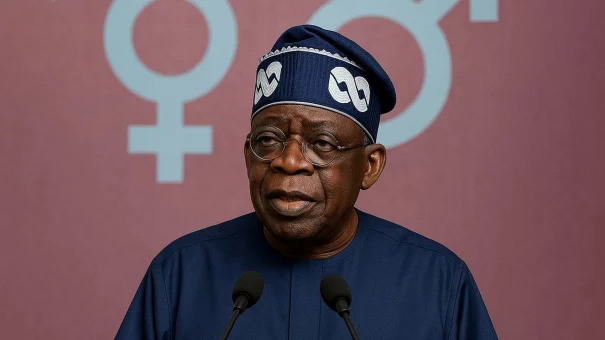
The deal is expected to be formally signed during President Bola Ahmed Tinubu’s state visit to London from March 18 to 19, underscoring deepening economic ties between Nigeria and the United Kingdom.
Minister of Marine and Blue Economy, Adegboyega Oyetola, described the initiative as a turning point for Nigeria’s maritime sector.
“For decades, Apapa Port and Tin Can Island Port have borne the weight of our national trade, yet their infrastructure has not kept pace with modern global shipping demands,” he said, adding that the project represents a full-scale transformation rather than a routine upgrade.
The Lagos Port Complex, established in 1913, remains Nigeria’s oldest and busiest seaport, while the Tin Can Island Port Complex, commissioned in 1977, was designed to support its capacity. Both facilities have long faced infrastructure challenges due to decades without major modernisation.
According to Oyetola, the upgrade will introduce advanced cargo-handling equipment, expand port capacity, and integrate digital systems aimed at eliminating operational bottlenecks.
He noted that automation and digitalisation would significantly reduce vessel turnaround time and cargo delays, improving efficiency and lowering logistics costs for businesses.
“Efficiency at the ports is central to the health of the national economy,” the minister said, stressing that improved infrastructure would enhance trade, boost revenue, and support long-term economic growth.
Beyond operational improvements, the government views the project as a strategic move to position Nigeria as a leading maritime hub in West and Central Africa, attracting more vessel traffic and increasing investor confidence.
“Our vision is to build a port system that reflects the aspirations of a modern and globally competitive Nigeria,” Oyetola added.
The modernisation programme is expected to play a critical role in strengthening Nigeria’s logistics chain and advancing its broader economic development agenda.