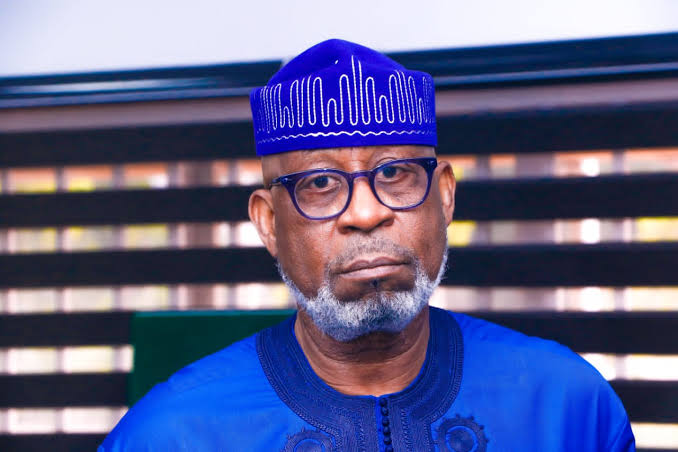
The new plants will generate jobs, spur technology transfer, and strengthen the local economy
Nigeria to Launch Over $800m Lithium Plants in 2025 — Alake
In a major boost to Nigeria’s solid minerals sector, Minister of Solid Minerals Development, Dele Alake, has announced that four lithium processing plants worth over $800 million will be launched before the end of 2025.
In a statement issued on Sunday, Alake detailed the projects, revealing that a $600 million lithium processing facility spanning Kaduna and Niger states is nearing commissioning, while a $200 million refinery close to Abuja is almost ready. He also disclosed that two additional plants are expected to come online in Nasarawa State before the third quarter of the year.
“We’ve got a $600 million lithium processing plant near Kaduna and Niger about to be commissioned. Another $200 million refinery near Abuja is nearly ready. Two more plants are coming online in Nasarawa before the third quarter of this year,” Alake stated.
According to the Minister, these developments are the result of deliberate reforms aimed at transforming the underperforming solid minerals sector. He pointed to a dramatic leap in revenue — from ₦6 billion in 2023 to ₦38 billion by the end of 2024 — as evidence of progress.
“When we came into office, Nigeria’s solid minerals sector was underperforming. In 2023, it generated just ₦6 billion in revenue. By the end of 2024, that number had grown to ₦38 billion. That kind of turnaround tells you something is working. One of the first things we did was tighten the licensing process,” he said.
Alake stressed that companies are now required to present clear local processing plans before licenses are granted, ending the era of unchecked raw mineral exports.
“We made it clear that no one gets a mining license without showing a real plan for local processing. Exporting raw minerals without adding value here at home wasn’t helping our economy, and we had to stop that. Since then, we’ve seen real results of over $800 million in processing investments last year alone,” he added.
The Minister emphasized that the new plants will generate jobs, spur technology transfer, and strengthen the local economy. He also highlighted the government’s renewed focus on exploration and data generation.
“Exploration has also been a priority. When we took office, Nigeria had only spent $2 million on mineral exploration. By comparison, Côte d’Ivoire had spent $148 million, and South Africa more than $300 million. No serious investor takes you seriously without credible geological data,” he said.
To tackle this, Alake said the Ministry has secured ₦1 trillion for mineral exploration to enhance Nigeria’s global competitiveness.
“That’s why this year, we’ve secured ₦1 trillion specifically for mineral exploration to build the foundation for a globally competitive sector. We’re also confronting illegal mining head-on. Over 300 arrests were made last year, with 150 prosecutions ongoing and several convictions already secured, including foreign nationals,” he noted.
In support of small-scale miners, the Ministry has helped establish over 250 cooperatives to formalize operations and improve access to financing.
“We’re also supporting local miners by formalising their operations. So far, over 250 cooperatives have been established to help small-scale miners get access to finance and share in the revenue.”
He also announced Nigeria’s new leadership role in continental mineral policy.
“Nigeria now chairs the African Mineral Strategy Group, a new bloc focused on local value addition and fairer mineral trade,” he said.
Alake tied the sector’s gains to President Bola Tinubu’s broader economic vision, citing increased investor confidence as a sign of the reforms’ success.
“Just this quarter, the Mining Cadastral Office received over 10,000 applications. That kind of momentum didn’t exist before. It’s a sign that our reforms are working. We’ve still got work to do, but the direction is clear.
“We’re turning Nigeria’s mineral wealth into real economic value for our people, our industries, and our future,” he concluded. Read More