At 70, however, celebration must share space with reflection. For men of stature, do not merely age; they accumulate responsibility. They become repositories of expectation
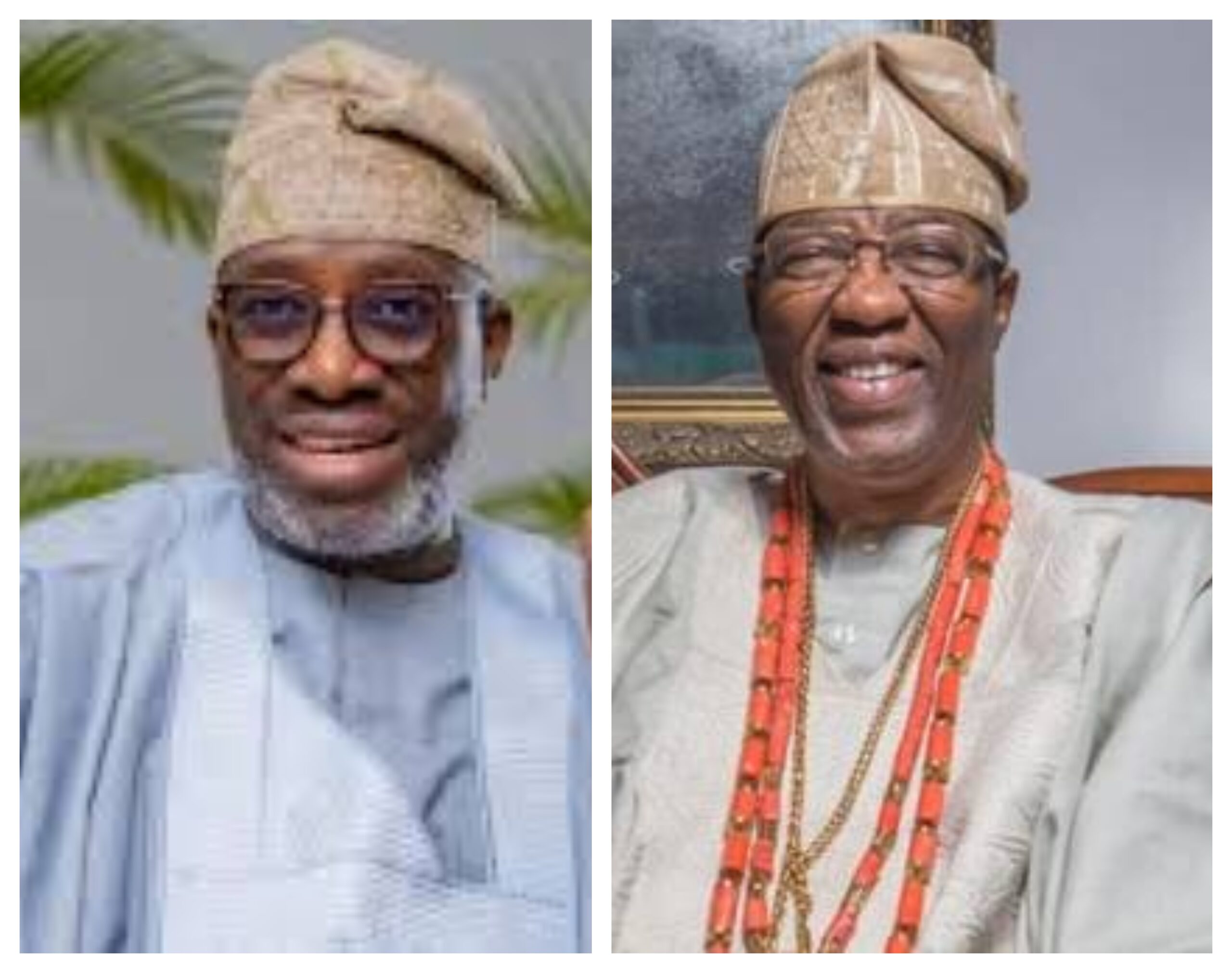
At 70, Otunba Gbenga Daniel and the Burden of Being an Enigma | By Segun Showunmi
There are men who pass through public life, and there are those who imprint themselves upon it. Otunba Justus Olugbenga Daniel belongs firmly in the latter category an enduring enigma whose life invites both admiration and scrutiny in equal measure.
The evidence of this distinction is neither accidental nor recent. It stretches back to the formative years of a brilliant student at Baptist Boys High School, Abeokuta; of an University of Lagos scholar shaped by the rigours of the Awojobi Fellowship; of a young mind drawn early into the orbit of the Obafemi Awolowo intellectual tradition. Even then, the outlines of an unusual trajectory were already visible: a fusion of intellect, ambition, and a certain philosophical depth.
From engineering excellence to the rare honour of traditional recognition in Ile-Ife the symbolic cradle of Yoruba civilization his journey has been marked by an almost rhythmic accumulation of distinction. His imprint across pan-Yoruba platforms, from Afenifere to the ideological stirrings that inspired the Yoruba Council of Elders, only reinforces the conclusion: this is no ordinary public figure. This is a generational actor.
Yet, perhaps the most consequential phase of his public life remains his tenure as Governor of Ogun State. In his book, Land of My Dreams, he set forth not just a vision, but a working document a manifesto of possibility for a state rich in heritage yet yearning for modern coherence. Historians will ultimately arbitrate how much of that vision was realized. But even the most dispassionate observer must concede that his administration was not short on innovation.
Traffic management at the subnational level now taken for granted was once an audacious experiment. His emphasis on human capital development, his responsiveness to citizens, and his stylized approach to political mobilization altered the grammar of governance in Ogun State. He demonstrated an instinctive ability to assemble teams, spot talent, and integrate traditional institutions into the formal architecture of governance in ways that felt both organic and strategic.
History, one suspects, will be kind not out of sentiment, but out of evidence.
At 70, however, celebration must share space with reflection. For men of stature do not merely age they accumulate responsibility. They become repositories of expectation. Society projects onto them both its anxieties and its aspirations. And so it is with Otunba Daniel: a man upon whom much has been bestowed, and from whom much is therefore expected.
Nigeria today stands at a delicate crossroads, and four issues demand the attention of minds such as his.
First, national cohesion has frayed dangerously. The bonds that once held together our shared identity as a people have weakened, threatened by suspicion, fragmentation, and a creeping loss of common purpose.
Second, there is an observable erosion of values. A society untethered from its moral anchors risks drifting into a condition where anything becomes permissible and nothing remains sacred. The urgency of a national reorientation cannot be overstated.
Third, the challenge of unemployment regardless of the debates around data and metrics remains stark. Even allowing for the nuanced optimism suggested by works like Factfulness, which cautions against overly pessimistic global narratives, Nigeria must rethink its models of economic engagement. The question is no longer whether jobs are sufficient, but whether our systems are designed to make our people meaningfully productive.
Finally and most urgently there is insecurity. It is both a symptom and a driver of the preceding crises. When crime becomes ethnicized and tribalized, it complicates not just enforcement, but perception, trust, and national unity itself. Addressing insecurity, therefore, requires more than force; it requires thought deep, structural, and courageous thinking.
This is where men like Otunba Daniel must come to the fore. Nations, in moments of strain, lean heavily on their thinkers not merely their office holders. The burden of insight, of foresight, of intellectual leadership, rests disproportionately on those who have seen, built, and endured.
Seventy, then, is not merely a milestone. It is a summons.
A summons to remain engaged. To think. To guide. To challenge. And, where necessary, to disrupt complacency.
As you mark this significant passage, one is reminded of the enduring wisdom of Book of Proverbs: “The fear of the Lord prolongs life, but the years of the wicked will be shortened.” It is both a prayer and a caution a reminder that longevity finds its highest meaning in purpose.
You are a good man, complicated though but all the same a good man. Enjoy your day aware of the huge responsibility of succession.
Many happy returns to the Otunba Obalofin Owelenkeri of Ijebu land. Olunla Egba. May your light not dim, and may you, indeed, focus on the things that should occupy the mind of an elder statesman.
Otunba Segun Showunmi
Odofin Keesi
The Alternative.