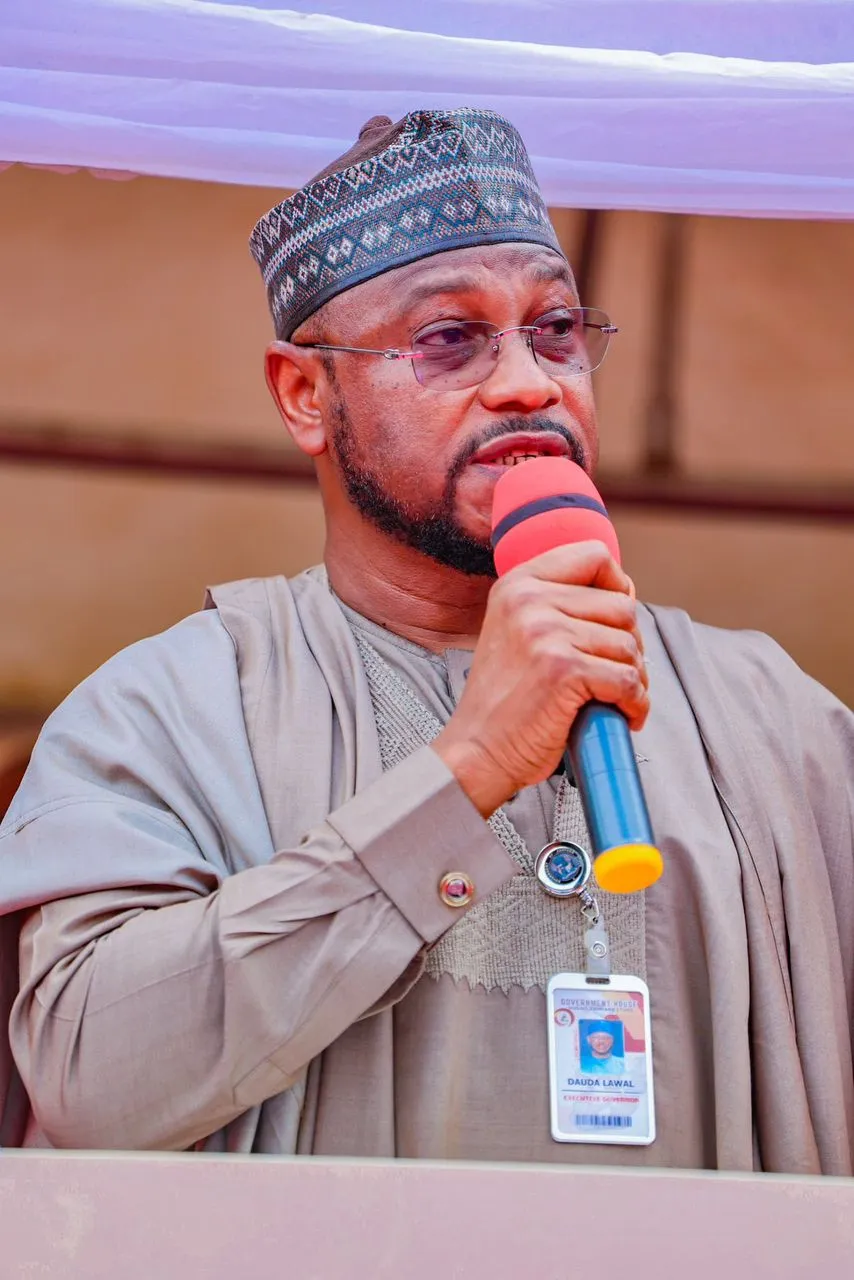
In Nigeria’s troubled northwest, a quiet transformation is underway in Zamfara State. Long associated with banditry, institutional decay, and economic stagnation, the state is gradually rewriting its narrative under the leadership of Dauda Lawal.
Three years into his first term, Lawal’s administration is being defined by a series of reforms aimed at stabilizing security, rebuilding public institutions, and restoring confidence among citizens. While challenges remain, supporters argue that continuity is critical to consolidating these gains.
Here are ten key developments shaping the argument for his re-election:
1. Security Overhaul
Lawal introduced a proactive security framework, including the Zamfara Community Guard working alongside formal security agencies. Investments exceeding ₦4 billion in surveillance equipment and rapid-response systems have reportedly reduced major attacks significantly, with plans to extend coverage to more remote areas.
2. Civil Service Reforms
A biometric audit eliminated over 5,000 ghost workers, saving the state more than ₦1.2 billion monthly. The administration also cleared 18 months of salary arrears, restoring confidence within the workforce and setting the stage for merit-based reforms.
3. Education Revival
With hundreds of schools previously abandoned due to insecurity, the government rebuilt over 200 primary schools and launched initiatives that returned 150,000 children to classrooms. However, many schools in high-risk zones still require intervention.
4. Healthcare Improvements
More than 140 primary healthcare centers have been upgraded with solar power and medical supplies. Programs targeting maternal health have expanded access, while ongoing projects aim to strengthen secondary healthcare infrastructure.
5. Agricultural Support
Through security-backed farming initiatives and distribution of modern inputs, agricultural output has increased. Future plans include establishing processing zones to enhance value addition and reduce post-harvest losses.
6. Water Infrastructure Upgrade
A major rehabilitation of the state’s water system has improved access in urban areas, increasing supply capacity significantly. Expansion to rural communities remains a priority.
7. Youth and Women Empowerment
Thousands of youths have received vocational training and startup support, while financial grants have been extended to women entrepreneurs to boost small-scale businesses and reduce economic vulnerability.
8. Transparency Measures
Lawal’s administration publishes monthly financial reports and has opened state accounts to external audits, strengthening relationships with international development partners and promoting accountability.
9. Justice Sector Reforms
Efforts to decongest correctional facilities and prosecute criminal collaborators have been implemented, alongside judicial reforms aimed at improving efficiency and fairness.
10. Rebuilding Public Trust
Perhaps most significantly, there are signs of renewed public confidence. Markets are reopening for longer hours, displaced persons are returning home, and daily life is gradually normalizing.
Hi ppl While critics maintain that progress is uneven and challenges persist, supporters insist that the current administration has laid a workable foundation. For them, the upcoming political decision is less about change and more about continuity—allowing ongoing reforms to mature into long-term stability and growth.