

“An internal EFCC analysis showed that 90 per cent of stolen public funds in one year were moved abroad. That money could have built hospitals, schools, and supported millions of Nigerian students from primary to tertiary level”
Details: EFCC Uncovers Massive Corruption in NNPCL, Tracks Looted Assets to Iceland
The Chairman of the Economic and Financial Crimes Commission (EFCC), Ola Olukoyede, has revealed alarming discoveries of corruption within the Nigerian National Petroleum Company Limited (NNPCL), describing the scale of financial misconduct as “mind-boggling.”
Speaking on Wednesday at the National Conference on Public Accounts and Fiscal Governance—organized by the Public Accounts Committees of the Senate and House of Representatives in Abuja—Olukoyede disclosed that a preliminary investigation into the NNPCL has already unearthed serious financial anomalies.
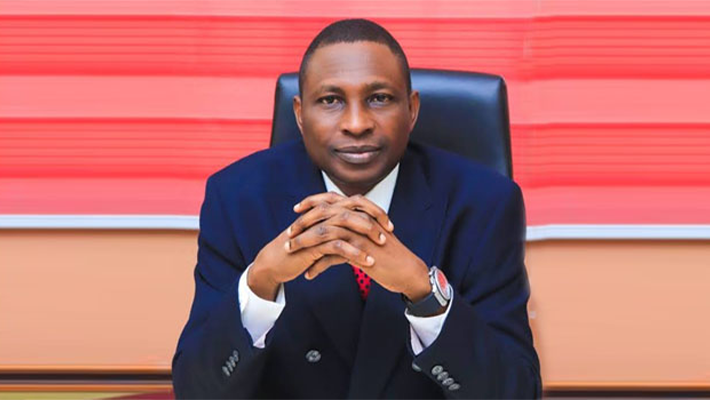
“In the last three weeks, we launched a commission-wide investigation into the extractive industry, particularly the oil and gas sector. What we have discovered is mind-boggling,” he said.
“And we have only just opened the books. If this is what we’re seeing at the surface, imagine what lies beneath.”
The anti-corruption boss linked Nigeria’s insecurity challenges—ranging from terrorism to kidnapping—to the mismanagement of public resources, especially in the oil and gas sector.
“There is a very strong connection between the mismanagement of our resources and insecurity. When you look at banditry, kidnapping, terrorism—trace it back, and you will find a pattern of corrupt practices and diversion of funds meant to improve people’s lives,” he stated.
The NNPCL recently underwent a leadership change, with President Bola Tinubu removing Mele Kyari as Group Chief Executive Officer in April and appointing Bashir Ojulari in his place.
Olukoyede called on the National Assembly to urgently pass the Unexplained Wealth Bill, which would criminalize the possession of assets not linked to known legal income.
“Help me pass the Unexplained Wealth Bill. I’ve been begging for the past year. This same bill was thrown out in the last Assembly,” he said.
“If we don’t make individuals accountable for what they own, we’ll never get it right.”
He gave a striking example to illustrate the absurdity of current legal constraints:
“Someone has worked in a ministry for 20 years. We calculate their entire salary and allowances. Then we find five properties—two in Maitama, three in Asokoro. Yet we’re told to go and prove a predicate offence before we can act. That is absurd.”
The EFCC chairman also revealed that the Commission is tracking stolen Nigerian assets across the globe, including in the United States, Turkey, and even Iceland.
“Last month alone, I visited four or five countries chasing Nigeria’s stolen assets. An ambassador even told me they discovered an estate in Iceland owned by a Nigerian. Iceland of all places!” he exclaimed.
Despite these efforts, Olukoyede admitted that global cooperation in asset recovery is often limited.
“There is no amount of capacity I can build, no level of effort I can put in, that will enable me to recover even half of what has been stolen from Nigeria, because the custodians of those assets in foreign countries don’t want to let go. Under international law, the custodian of stolen assets is just as guilty as the original thief,” he noted.
He also condemned the culture of impunity in Nigeria, where indicted individuals are celebrated instead of held accountable.
“We see people who have stolen our money. We have shown you evidence. We’ve traced where the money went. We are already in court. Yet, they’re being celebrated all over the place. Does that show we’re serious?”
Olukoyede disclosed that over 700 federal Ministries, Departments, and Agencies (MDAs) lack proper internal control systems and questioned whether the National Assembly could realistically audit them all.
“How many books can you check? How many files will you read? We need to build strong internal compliance systems that can proactively checkmate corruption.”
He warned that unless transparency and accountability become central to governance, Nigeria’s development will remain stunted.
“An internal EFCC analysis showed that 90 per cent of stolen public funds in one year were moved abroad. That money could have built hospitals, schools, and supported millions of Nigerian students from primary to tertiary level.”
Olukoyede urged unity across political and ethnic lines, warning that this administration may be Nigeria’s last opportunity to correct course.
“If we execute even 60 per cent of our capital budget efficiently between 2025 and 2026, we will empower small and medium-scale industries. We’ll build infrastructure. We’ll be fine.
What we need is transparency in revenue generation and accountability in public expenditure,” he emphasized.
He called on lawmakers and citizens to resist pressures from vested interests and digital detractors.
“This is about rescuing the soul of Nigeria,” Olukoyede concluded.