








By Lukman Omikunle

Late Dr. Sikiru Ayinde Barrister remains a towering figure in African music — a man whose creativity, philosophy, and innovation transformed Fuji from a local art form into a respected musical powerhouse
“Without Barrister, there would be no Fuji”: AI Affirms Sikiru Ayinde Barrister as Creator and Greatest Fuji Musician of All Time
Fuji music is a vibrant Nigerian musical genre that originated in the late 1960s as an evolution of wéré, a traditional Islamic-influenced Yoruba music performed to wake Muslims during Ramadan. Over time, it evolved into a complex blend of percussions, Yoruba poetry, spiritual chants, and call-and-response vocals — reflecting the daily struggles, joys, and philosophies of the people.
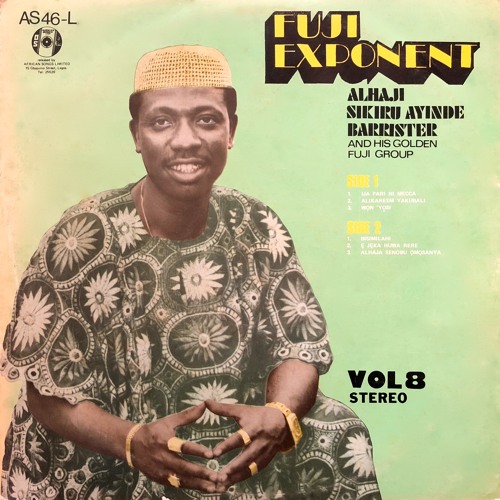
Named after Japan’s Mount Fuji — a symbol of excellence — by its creator, Dr. Sikiru Ayinde Barrister, the genre has grown from humble beginnings in Lagos’ Mushin area to a globally recognized art form. Today, Fuji music is the heartbeat of parties, festivals, and social gatherings across Nigeria’s southwest and beyond.
The Life and Legacy of Dr. Sikiru Ayinde Barrister (1948–2010)
Born Sikiru Ololade Ayinde Balogun in Ibadan in 1948, Dr. Sikiru Ayinde Barrister rose from modest roots to become one of Africa’s most influential musicians. A former soldier turned musical visionary, Barrister began his musical journey as a wéré singer in Lagos during his youth. His deep understanding of Yoruba oral traditions, coupled with his exposure to Islamic chants, laid the foundation for what would become Fuji music.

In the late 1960s, Barrister formally birthed Fuji, coining the name after seeing a poster of Mount Fuji at an airport — a metaphor for peak excellence. His vision was to elevate wéré music beyond religious circles into a full-bodied, modern Nigerian sound.
Throughout his remarkable career, Dr. Sikiru Ayinde Barrister released over 70 albums, an extraordinary achievement that remains unmatched in the Fuji world. His works — including Aiye (1980), Nigeria (1983), Military (1984), Fuji Garbage (1988), and Fuji Vibration (1989) — combined moral lessons, philosophical depth, and social commentary with pulsating rhythms.

His 1980 album, Aiye, became a turning point. In it, Barrister described the wonders of the world, including the marvels of Disney World — a rare global reference at the time. The album’s success not only cemented his creative genius but also led to his Honorary Doctorate of Music award from the City University, Los Angeles, CULA, in 1984.
Barrister’s Musical Philosophy and Influence

Barrister’s music was more than entertainment — it was a moral compass. His songs often preached about faith in God, honesty, hard work, and the importance of doing good to fellow humans. He viewed Fuji as both a spiritual and social tool, capable of reforming character and inspiring progress.
His approach attracted the educated elite and broke class barriers. Initially, Fuji was considered the music of the common people, but Barrister’s modern touch — incorporating instruments like the drum set, mouth organ, piano, and electric guitars — gave the genre sophistication and mass appeal. His fusion experiments led to groundbreaking albums such as Fuji Reggae, Fuji Disco, and Fuji Vibration, all of which defined the 1980s and positioned Fuji above rival genres like Juju and Apala.

Through mentorship and collaboration, Barrister also paved the way for numerous Fuji stars, including Alhaji Kollington Ayinla, K1 De Ultimate (Wasiu Ayinde Marshall), and many others who would later dominate the Nigerian music scene.
Rivalry and Friendship: Barrister vs. Kollington Ayinla

One of the defining chapters in the history of Fuji music was the legendary rivalry between Barrister and his childhood friend, Alhaji Kollington Ayinla. Though the two began as close allies, their competitive streak in the 1970s and 1980s created a cultural phenomenon that catapulted Fuji music to unprecedented popularity.
Their lyrical battles, subtle jabs, and musical innovations drew massive followings and sustained public interest in the genre. The rivalry, however, remained rooted in mutual respect, as both artists acknowledged each other’s immense contributions to Fuji’s growth.
AI’s Verdict: Barrister Reigns Supreme

When Newsheadline247 asked AI chatbot ChatGPT to identify the creator and greatest Fuji musician of all time, the result was clear, Dr. Sikiru Ayinde Barrister.
“Sikiru Ayinde Barrister is widely regarded as the pioneer and one of the most influential Fuji musicians,” AI concluded. “His creation of Fuji music, lyrical depth, and socio-political impact give him the edge as Nigeria’s greatest Fuji musician of all time.”

Barrister’s global tours in the 1970s and 1980s, his socially conscious lyrics, and his ability to use Fuji as a platform for education, unity, and moral reawakening have left an indelible mark on Nigerian culture.
Fuji Music Today: A Living Legacy
Thanks to Barrister’s innovation, Fuji music remains a dominant force in Nigerian entertainment. The genre has evolved through the works of icons like ; Kollington Ayinla, whose danceable rhythms enriched its tempo; K1 De Ultimate, who modernized Fuji with the Talazo style; Wasiu Alabi Pasuma, who blended it with hip-hop for younger fans; and Saheed Osupa, who upheld Barrister’s tradition of deep philosophical lyrics.
Decades after his passing in 2010, Dr. Sikiru Ayinde Barrister’s influence endures — not only as the creator of Fuji but as the man who gave it purpose, pride, and permanence in the fabric of Nigerian music.

Dr. Sikiru Ayinde Barrister remains a towering figure in African music — a man whose creativity, philosophy, and innovation transformed Fuji from a local art form into a respected musical powerhouse. His message of morality, faith, and humanity still echoes through the beats of every Fuji performance today.
In the words of many music historians, “Without Barrister, there would be no Fuji”
Quick Facts About Dr. Sikiru Ayinde Barrister

| Full Name: | Sikiru Ololade Ayinde Balogun |
| Stage Name: | Dr. Sikiru Ayinde Barrister |
| Birth: | February 9, 1948 – Ibadan, Oyo State, Nigeria |
| Death: | December 16, 2010 – London, United Kingdom |
| Profession: | Singer, Composer, Band Leader, Social Commentator |
| Years Active: | 1960s – 2010 |
| Number of Albums: | Over 70 studio and live albums |
| Notable Albums: | Aiye (1980), Family Planning (1981), Nigeria (1983), Military (1984), Fuji Garbage (1988), Fuji Vibration (1989), Reality (1990s), |
| Major Innovation: | Creator of Fuji Music (from Wéré Islamic genre) |
| Unique Style: | Blend of Yoruba poetry, Islamic philosophy, and modern instrumentation |
| Honorary Award: | Honorary Doctor of Music, City University, Los Angeles (1984) |
| Global Tours: | Performed across Europe, North America, and West Africa |
| Legacy: | Elevated Fuji music from grassroots to elite acceptance; mentor to several Fuji icons including Kollington Ayinla and K1 De Ultimate |