




A deep dive into the human side of Otunba Gbenga Daniel’s governance in Ogun State — his bold reforms in education, youth empowerment, and social infrastructure that transformed lives and communities
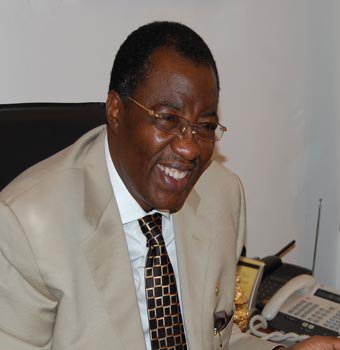
FEATURE: The Human Side of OGD’s Governance: How Gbenga Daniel Rewrote Ogun’s Social and Educational Story
“A Total Recall of Gbenga Daniel’s Stewardship” [Part 2]
By Lukman OMIKUNLE
When the history of Ogun State’s development is told, Otunba Gbenga Daniel’s name stands tall not only for his industrial vision but also for his deep human touch. While the first part of this feature explored how the former governor rebranded Ogun as Nigeria’s “Gateway State” for investors, this second part focuses on the social heartbeat of his administration — education, youth empowerment, and social infrastructure.
Beyond the factories and free trade zones, Daniel’s leadership was rooted in people — in building minds, restoring dignity, and shaping opportunities for generations yet unborn.
Education: The Cornerstone of Sustainable Development
From his first day in office in 2003, Gbenga Daniel declared education the “foundation of modern Ogun.” The state, known for producing intellectual giants like Chief Obafemi Awolowo and Prof. Wole Soyinka, found in Daniel a leader determined to sustain that legacy.
Under his administration, Ogun State witnessed the most comprehensive educational infrastructure drive in its history. Hundreds of schools were renovated, new model secondary schools were built, and teachers’ welfare received unprecedented attention.
One of Daniel’s most acclaimed achievements was the Ogun State Education Revitalization Project (OGSERP) — a strategic intervention that upgraded laboratories, improved learning environments, and strengthened the technical and vocational education subsector.
The government’s introduction of ICT-based learning and school networking programmes made Ogun one of the earliest states to integrate digital literacy into its public school system.
“Our mission was simple,” Daniel once said. “To give every child, rich or poor, the chance to dream through quality education.”
By 2010, the state’s public school enrolment had risen sharply, and the dropout rate declined dramatically, especially among female students.
Empowering the Youth: Building a Generation of Doers
Gbenga Daniel believed that youth empowerment was the truest measure of progress. He saw the young population not as a problem but as potential — a resource waiting to be harnessed.
Through the Youth Empowerment Scheme of Ogun State (YES-O) and multiple skill acquisition initiatives, thousands of young men and women were trained in vocations such as ICT, fashion design, automobile repair, welding, catering, and film production.
He introduced The Gateway Microcredit Scheme, providing soft loans to young entrepreneurs and artisans to start small businesses. These efforts did not only create jobs but also reduced crime rates and boosted the local economy.
The state’s partnership with development agencies, including the Bank of Industry (BoI) and UNDP, expanded opportunities for youth-owned enterprises, while the Gateway ICT Institute became a talent pipeline for tech-savvy professionals now thriving across Nigeria and beyond.
“When you empower one youth, you empower an entire household,” Daniel often remarked. “Our goal was to raise a generation that builds, not begs.”
Social Infrastructure and Community Development: Governance with a Human Face
While industrialization grabbed headlines, Daniel’s quieter revolution unfolded in rural communities — roads, water, hospitals, and electrification projects reached areas that had long been forgotten.
Through the Gateway Integrated Rural Development Initiative (GIRDI), hundreds of kilometres of rural roads were constructed, linking farmers to markets and encouraging local commerce. The Community Development Fund enabled towns and villages to co-design projects with the state government — from boreholes to maternity centres — fostering a sense of ownership and inclusion.
Health care was another cornerstone. Under Daniel’s tenure, Ogun State General Hospitals were modernized, and new Primary Health Centres (PHCs) were established in underserved areas. The Ogun State Ambulance and Emergency Service (OGAMES) introduced a 24-hour emergency response system, the first of its kind in the state.
“We built industries, but we never forgot that our true duty was to build lives,” Daniel said during his farewell address in 2011.
Women and Family: The Compassion Factor
The “human side” of OGD’s governance also found strong expression in women empowerment and family initiatives — many led by his wife, Her Excellency, Olufunke Daniel, through the Women and Youth Development Initiative (WAYDI).
WAYDI provided economic support for widows, market women, and rural entrepreneurs while promoting girl-child education and maternal health. The programme’s ripple effects continue to be felt across Ogun today, especially in micro-enterprise networks established during that era.
A Leader with Heart and Vision
Otunba Gbenga Daniel’s philosophy of governance was holistic — grow the economy, but grow the people even more. His blend of visionary industrialization and compassionate social policies remains a reference point in Nigerian subnational governance.
While he was an engineer and entrepreneur by training, Daniel’s most profound engineering feat was human — rebuilding hope, confidence, and opportunity in Ogun State.
From education to enterprise, from villages to cities, OGD’s tenure redefined governance as both a mission of progress and compassion.
Today, as history recalls his stewardship, one truth stands firm: Gbenga Daniel did not just build a Gateway State — he built a Gateway People. Read More