


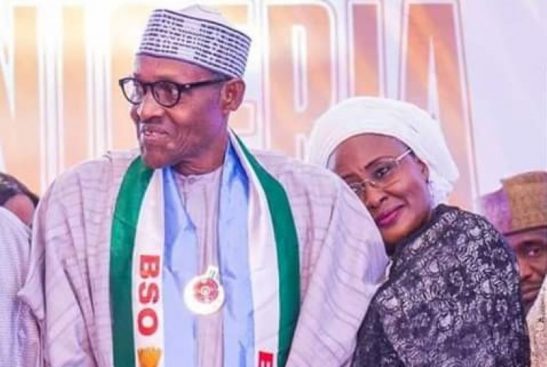





Aisha Buhari has clarified her late husband Muhammadu Buhari’s controversial ‘other room’ remark, saying it was a private joke taken out of context and never meant as policy or belief
Aisha Buhari Explains ‘Other Room’ Comment, Says Remark Was Misunderstood Joke
Former First Lady Aisha Buhari has offered fresh insight into her late husband’s controversial “other room” remark, insisting the comment was widely misunderstood and never intended as a statement of belief, policy, or gender ideology.
The remark, which sparked global backlash in 2016, was made by then-President Muhammadu Buhari during a joint press conference in Berlin with former German Chancellor Angela Merkel. Responding to questions about his wife’s public criticism of his administration, Buhari said she belonged to his “kitchen, living room and the other room,” a comment that immediately ignited accusations of sexism and gender insensitivity.
The statement followed an unprecedented BBC Hausa interview in which Aisha Buhari openly criticised aspects of her husband’s government, placing the presidential couple at the centre of intense local and international scrutiny.
However, according to a newly released biography titled From Soldier to Statesman: The Legacy of Muhammadu Buhari, Aisha Buhari said the remark was merely a private joke between her and her husband that was delivered in the wrong setting and stripped of its intended context.
The 600-page book, authored by Charles Omole and launched at the State House on Monday, chronicles Buhari’s journey from his early life in Daura, Katsina State, through his military and political career, to his final days in a London hospital in mid-July 2025.
Omole explained that Aisha Buhari, familiar with her husband’s dry military humour, did not initially view the comment as offensive but later acknowledged that it was ill-suited for an international audience and diplomatic environment.
According to the author, what Buhari intended as humour was instead interpreted globally as a reflection of official policy and personal ideology, a misreading that permanently shaped public perception of the incident.
“In the global square, irony travels badly,” Omole wrote, noting that the comment ultimately became one of the most enduring and controversial moments of Buhari’s presidency.