
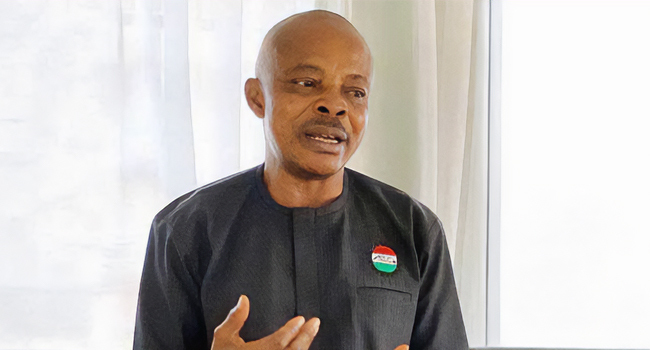



NLC’s Joe Ajaero, in his 2025 Christmas message, condemns alleged forgery in Nigeria’s tax reform laws and urges Nigerians to reject them.
NLC President Joe Ajaero Urges Rejection of Distorted Tax Laws: Calls for Tax Justice in 2025 Christmas Message
The Nigeria Labour Congress (NLC) has urged all Nigerians to firmly reject any tax laws marred by distortion, falsification, or outright forgery, describing such practices as a direct assault on public trust and democratic credibility.
In his 2025 Christmas message issued on Wednesday, December 24, NLC President Joe Ajaero delivered a strong critique of the ongoing controversy surrounding the Nigerian Tax Reform Acts, insisting that fiscal policies must be inclusive, fair, and transparent.
“Together, in this season and beyond, we must insist on Tax Justice where the rich pay their fair share and all forms of regressive taxation are removed,” Ajaero declared.
“Any tax system that is mired in apparent distortion and outright forgery is unacceptable and should therefore be rejected by all.”
Ajaero emphasized the broader need for social and tax justice, arguing that every citizen deserves access to quality healthcare, education, and security, while workers’ rights and fair compensation must be upheld.
He warned against rushed, politically motivated legislation, stressing that genuine reform demands patience, openness, and widespread ownership.
“It is better to patiently craft a law that is broadly crafted and owned than rush into one filled with serious errors and outright political manipulations,” he said.
The NLC leader called for national unity in demanding accountable governance and reaffirmed the congress’s readiness to mobilize workers against any policies that deepen economic hardship.
The statement arrives as controversy intensifies over the four major tax reform laws signed by President Bola Tinubu on June 26, 2025: the Nigeria Tax Act, Nigeria Tax Administration Act, Nigeria Revenue Service (Establishment) Act, and Joint Revenue Board (Establishment) Act—collectively known as the Nigerian Tax Reform Acts.
These laws aim to modernize Nigeria’s tax system, expand the tax base, boost efficiency, and replace the Federal Inland Revenue Service with the more powerful Nigeria Revenue Service.
However, serious allegations of forgery have emerged, with claims that the gazetted versions published by the executive differ significantly from the texts debated and passed by the National Assembly.
House of Representatives member Abdussamad Dasuki recently highlighted these discrepancies, asserting that the alterations violated lawmakers’ legislative rights and the integrity of the parliamentary process.
In response, the House has constituted an ad-hoc committee to thoroughly investigate the forgery claims.
The reforms have also drawn sharp criticism from civil society organizations and several state governors, who warn of potential economic strain on citizens and adverse effects on revenue-sharing arrangements between federal and state governments.
As the January 1, 2026, implementation date approaches, the NLC’s intervention adds significant weight to calls for suspension or comprehensive review of the laws until full transparency and consensus are achieved.