




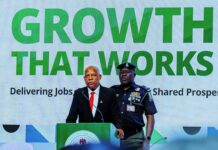



Nonye Ayeni, ED and CEO of the Nigerian Export Promotion Council (NEPC), has affirmed the continued dominance of Zenith Bank Plc in facilitating Nigeria’s non-oil export proceeds

Zenith Bank Remains Nigeria’s No1 Financial Institution In Non-Export Proceeds
Nonye Ayeni, Executive Director and Chief Executive Officer of the Nigerian Export Promotion Council (NEPC), has affirmed the continued dominance of Zenith Bank Plc in facilitating Nigeria’s non-oil export proceeds, describing the bank as the leading financial institution in export transaction processing under the Nigeria Export Proceeds framework.
Speaking at a media briefing in Abuja on the performance of non-oil exports for 2025 and the outlook for 2026, Ayeni said increased engagement with financial institutions strengthened export documentation and monitoring, with measurable outcomes across the banking sector.
“Increased engagement with financial institutions yielded positive results, with 30 banks actively participating in non-oil export transactions and a total of 19,975 Nigeria Export Proceeds forms processed,” she said explaining “Zenith Bank Plc maintained its leading position, contributing 32.31% to the total number of NXPs for non-oil export.”
According to the NEPC Executive Director, Guaranty Trust Bank Plc ranked second with 12.37% of total transactions, while First Bank Nigeria Plc followed in third place with 11.52%, reflecting what she described as “a strong showing by some banks, while others dropped in terms of NXP performance.”
Checks revealed beyond its dominant position in export proceeds processing, Zenith Bank’s leadership reflects its long-standing role as one of Nigeria’s most influential financial institutions. Founded by Jim Ovia and headquartered in Lagos, the bank has built a reputation for strong corporate banking operations, trade finance capacity, and digital banking infrastructure, making it a preferred partner for exporters handling international transactions and documentation. Its consistent top ranking of the financial institution with Dame Adaora Umeoji as Group Chief Executive Officer (GCEO) in Nigeria Export Proceeds processing reinforces its strategic position at the centre of the country’s growing non-oil export ecosystem.
The NEPC chief linked improved banking participation to the broader expansion of Nigeria’s non-oil export sector, which recorded its highest performance since the council’s establishment.
Export earnings rose to about $6.1 billion in 2025, representing an 11.5% increase from $5.46 billion in 2024, while export volumes climbed 10% to 8.02 million metric tonnes.
She noted that the number of exported products also expanded significantly to 281, up 14.23% from the previous year, while Nigerian non-oil goods reached 120 countries, reflecting growing diversification and global market penetration.

Ayeni attributed the performance to policy alignment and institutional reforms under the administration of Bola Ahmed Tinubu, whose economic diversification drive she said was reshaping Nigeria’s trade structure.
She also acknowledged the role of the Minister of Industry, Trade and Investment, Jumoke Oduwole, in strengthening policy direction and coordination across export-support institutions.
The NEPC Boss added that the administration’s strategy had produced “impressive results in deepening the non-oil export sector, creating jobs, alleviating poverty and strengthening Nigeria’s position in global trade.”
She explained that improvements in export compliance, stronger monitoring under the Nigeria Export Proceeds framework, increased participation by registered exporters, and better coordination among regulatory agencies all contributed to the sector’s growth. Global demand for key Nigerian commodities, recovering logistics networks, and export promotion programmes also supported expansion.
Ayeni said the data confirmed that Nigeria’s non-oil sector was gaining resilience but warned that growth remained concentrated among a limited number of large exporters and high-value commodities.

And stressed that sustaining expansion would require deeper value addition, broader exporter participation, infrastructure development, and stronger regional trade engagement.
“The overall increase in export value and volume demonstrates resilience and continued relevance of non-oil exports to the national economy,” she said, stressing “However, sustaining growth will require deliberate efforts to balance scale with inclusiveness, deepen domestic value chains, and reduce exposure to external price shocks.”
The CEO added that the NEPC would continue strengthening exporter capacity, expanding market access, and improving monitoring systems to sustain performance in 2026, while leveraging international trade agreements and new market opportunities.
Ayeni concluded that the 2025 results reaffirmed the strategic importance of non-oil exports in Nigeria’s economic diversification agenda, with the banking sector — led by Zenith Bank — playing a central role in facilitating export proceeds and supporting the country’s transition away from oil dependence. Read More











, has affirmed the continued dominance of Zenith Bank Plc in facilitating Nigeria’s non-oil export proceeds)