
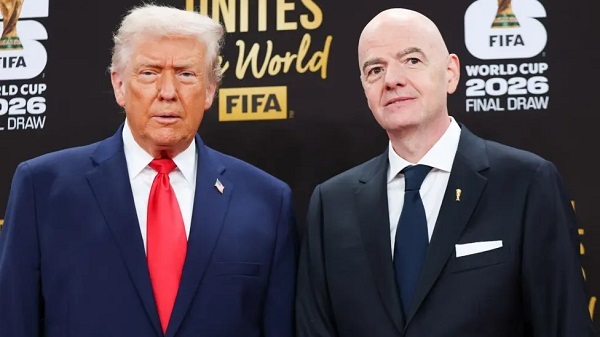





US officials have issued a stark warning: unless nearly $900 million in frozen federal funds are released, security planning for the 2026 World Cup could face “catastrophic” consequences.
At a tense House Homeland Security Committee hearing, leaders revealed that money earmarked for the 11 US cities hosting matches has stalled amid a partial federal government shutdown. The funding freeze, coupled with reported coordination gaps between local authorities and federal agencies, has left security preparations significantly behind schedule.
Ray Martinez, chief operating officer of the Miami World Cup Host Committee, said the city could be forced to cancel planned events if it does not receive $70 million by the end of March.
We’re 107 days out from the tournament but, more importantly, we’re about 70-something days out from starting to build the Fan Fest,” Martinez said. “Without receiving this money, it could be catastrophic for our planning and co-ordination.”
The 2026 World Cup — co-hosted by the United States, Canada and Mexico — kicks off on 11 June, with the first US match set for 13 June in Los Angeles when the USA face Paraguay.
The US host cities include:
Atlanta
Boston
Dallas
Houston
Los Angeles
Kansas City
Miami
New York City / Newark
Philadelphia
San Francisco
Seattle
In Massachusetts, concerns are mounting over matches scheduled at Gillette Stadium, which is set to host seven games. Local officials have reportedly warned the venue could withdraw unless funds are released.
Meanwhile, in Kansas City, deputy police chief Joseph Mabin told lawmakers the department lacks sufficient staffing to meet the city’s security demands without federal support.
The funding in question stems from a special World Cup security grant launched in November by the Federal Emergency Management Agency, part of the Department of Homeland Security.
Initially valued at $625 million, the programme was designed to help host cities protect players, fans, venues and infrastructure against potential terrorist threats. In December, an additional $250 million was added to strengthen cities’ capabilities against drone-related risks.
But with the money now frozen, officials say timelines are slipping — and critical security infrastructure may not be ready in time.
The tournament’s group-stage matches include:
England vs Croatia in Dallas (17 June)
England vs Ghana in Boston (23 June)
England vs Panama in New York (27 June)
Scotland vs Haiti and Morocco in Boston (14 and 19 June)
Scotland vs Brazil in Miami (24 June)
With just over three months until kickoff, local organisers say decisions on staffing, construction, technology deployment and fan events cannot be delayed much longer.
As one official put it bluntly: without swift action in Washington, the world’s biggest sporting event could arrive before America’s security preparations are fully built.