
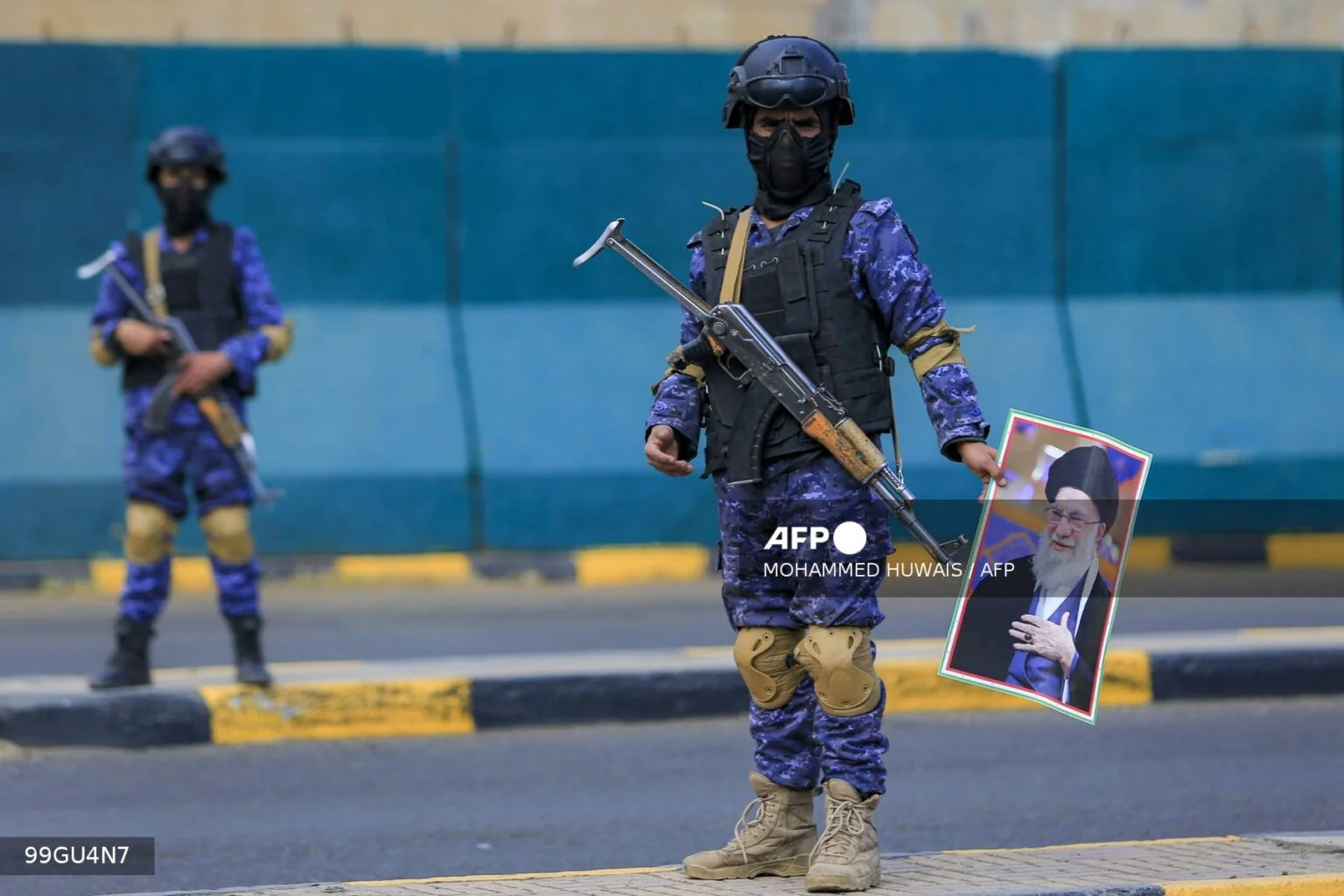


Israeli forces launched airstrikes across Lebanon, including the capital Beirut, early Monday after the Iran-backed militant group Hezbollah fired rockets and drones at Israel in what it described as retaliation for the killing of Iran’s Supreme Leader, Ayatollah Ali Khamenei.
An AFP journalist in Beirut reported hearing multiple loud explosions as the Israeli military confirmed it had “begun striking targets of the Hezbollah terrorist organisation across Lebanon.”
The strikes mark the most significant flare-up since a November 2024 ceasefire ended more than a year of cross-border warfare between Israel and Hezbollah.
The Israeli military said it had “precisely struck” senior Hezbollah figures in Beirut and southern Lebanon. Lebanon’s state-run National News Agency reported bombardments in multiple regions, including Beirut’s southern suburbs, a known Hezbollah stronghold.
Israel followed up with evacuation warnings to residents in about 50 towns and villages in southern and eastern Lebanon, urging them to move at least 1,000 metres away from their homes.
“Hezbollah’s actions force the IDF to act against it… For your safety, evacuate your homes immediately,” Israeli army spokeswoman Ella Waweya said on X.
Hezbollah claimed responsibility for the rocket and drone attacks on Israel — its first acknowledged assault since the ceasefire saying the strikes were both retaliation for Khamenei’s killing in weekend US-Israeli strikes on Tehran and a response to repeated Israeli attacks on Lebanon.
The group, weakened after entering the conflict in support of Hamas following the October 2023 war in Gaza, had earlier warned that any attack on Khamenei would be considered a “red line.”
Israel reported that several projectiles fired from Lebanon fell in open areas, with no immediate casualties. Air raid sirens later sounded in northern Israel over an incoming drone alert.
Israeli military chief Eyal Zamir said Hezbollah had “opened a campaign” and would bear full responsibility for any escalation.
The renewed fighting triggered widespread displacement. AFP correspondents reported long convoys of cars fleeing Beirut’s southern suburbs and towns near the Israeli border.
In the coastal city of Sidon, traffic was gridlocked with families arriving from southern border communities. Some residents were seen transporting mattresses on car roofs as they sought safety.
The office of Lebanese Prime Minister Nawaf Salam published a list of public schools designated as shelters for displaced civilians.
Salam condemned the rocket fire as irresponsible,” warning that such actions jeopardise Lebanon’s security and provide Israel with justification for continued attacks.
Without naming Hezbollah directly, he vowed to “stop the perpetrators and protect the Lebanese people,” and announced an emergency cabinet meeting to address the crisis.
President Joseph Aoun also cautioned that attacks launched from Lebanese territory risk dragging the country into a broader regional war, while condemning Israeli strikes.
Lebanese authorities have repeatedly stated they do not want the country drawn into a wider regional conflict, which intensified after a major US-Israeli offensive against Iran prompted retaliatory missile and drone strikes across the region.
With cross-border hostilities reignited and evacuation orders in place, fears are growing that the fragile truce between Israel and Hezbollah may be on the brink of collapse raising the spectre of a broader Middle East confrontation.