
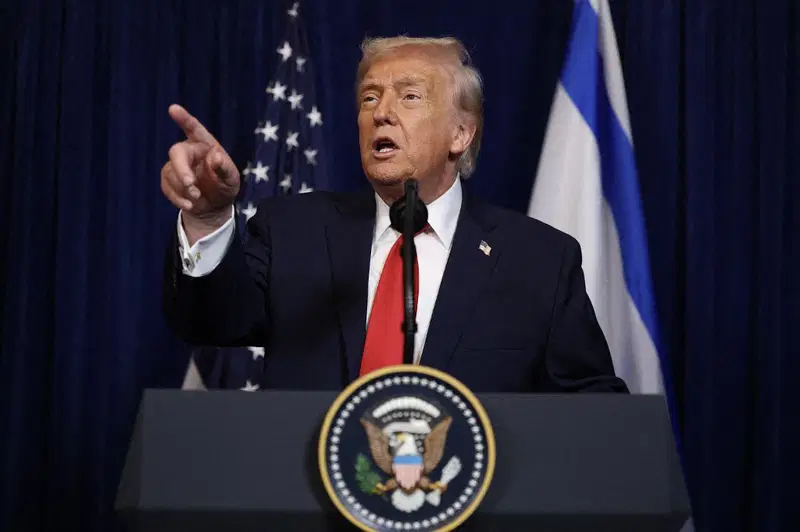





U.S. President Donald Trump has issued a stark 48-hour ultimatum to Iran, demanding the immediate reopening of the Strait of Hormuz or face sweeping attacks on its energy infrastructure.
The warning, delivered Saturday via Truth Social, came amid a sharp escalation in hostilities, as Tehran launched its most destructive missile strikes yet on Israel, injuring more than 100 people in the south of the country.
Trump warned that the United States would “hit and obliterate” Iranian power plants — starting with its largest facilities — if the vital shipping route is not reopened by Monday night.
The ultimatum follows earlier remarks by Trump suggesting a possible de-escalation after nearly three weeks of conflict. However, the continued closure of the Strait of Hormuz — a key global oil transit route — and the deployment of additional U.S. Marines to the region signal a deepening crisis.
Iran’s Foreign Minister, Abbas Araghchi, defended Tehran’s actions, stating that restrictions apply only to vessels linked to countries involved in attacks against Iran, while neutral ships would be assisted.
In response to the U.S. threat, Iranian military officials warned they would target American-linked energy and desalination facilities across the region.
The rising tensions come after Iranian missiles struck southern Israeli cities, including Arad and Dimona, causing widespread destruction. Emergency responders reported dozens of injuries, with several in critical condition. Residential buildings were severely damaged, with large craters left at impact sites.
Dimona, widely believed to host Israel’s undeclared nuclear facility, was among the targets. Israeli authorities confirmed direct missile impacts on buildings in the area, including injuries to civilians, among them a young child.
Israeli Prime Minister Benjamin Netanyahu described the attacks as a “very difficult evening” and vowed retaliation “on all fronts.” Shortly after, Israeli forces launched strikes targeting locations in Tehran.
Iran said the strikes on Dimona were in retaliation for attacks on its Natanz nuclear facility, a key installation in its nuclear programme. While Israel denied responsibility for the Natanz strike, it confirmed targeting a facility in Tehran allegedly linked to missile and nuclear development.
The conflict, now entering its fourth week, has seen sustained U.S.-Israeli bombardment met with continued Iranian missile and drone retaliation across the region.
Iran also attempted a long-range ballistic missile strike on the joint U.S.-UK base at Diego Garcia, though the attack was unsuccessful, according to officials.
Meanwhile, regional tensions have widened. The United Arab Emirates reported aerial threats following Iranian warnings against cooperation with U.S. military operations near the Strait of Hormuz.
The disruption of the waterway — responsible for roughly a fifth of global oil shipments — has triggered a surge in oil prices, with Brent crude rising above $105 per barrel, raising fears of broader economic fallout.
World leaders from countries including the United Kingdom, France, Germany, and others condemned Iran’s effective closure of the strait, pledging support for efforts to restore safe passage.
Despite heavy losses, analysts suggest Iran’s military capabilities remain resilient. According to Neil Quilliam, Tehran’s response has demonstrated an unexpected level of endurance.
As the conflict intensifies, Iran marked the end of Ramadan under the shadow of war. The country’s new supreme leader, Mojtaba Khamenei, has yet to appear publicly, while senior judicial official Gholam Hossein Mohseni Ejei led Eid prayers in Tehran.
For many civilians, the contrast between festivity and conflict remains stark, as fears grow over the human and economic cost of a prolonged war.