





The EFCC has declared Abuja socialite Halimat Tejuosho wanted over alleged fraud involving fake government jobs and contracts worth hundreds of millions of naira
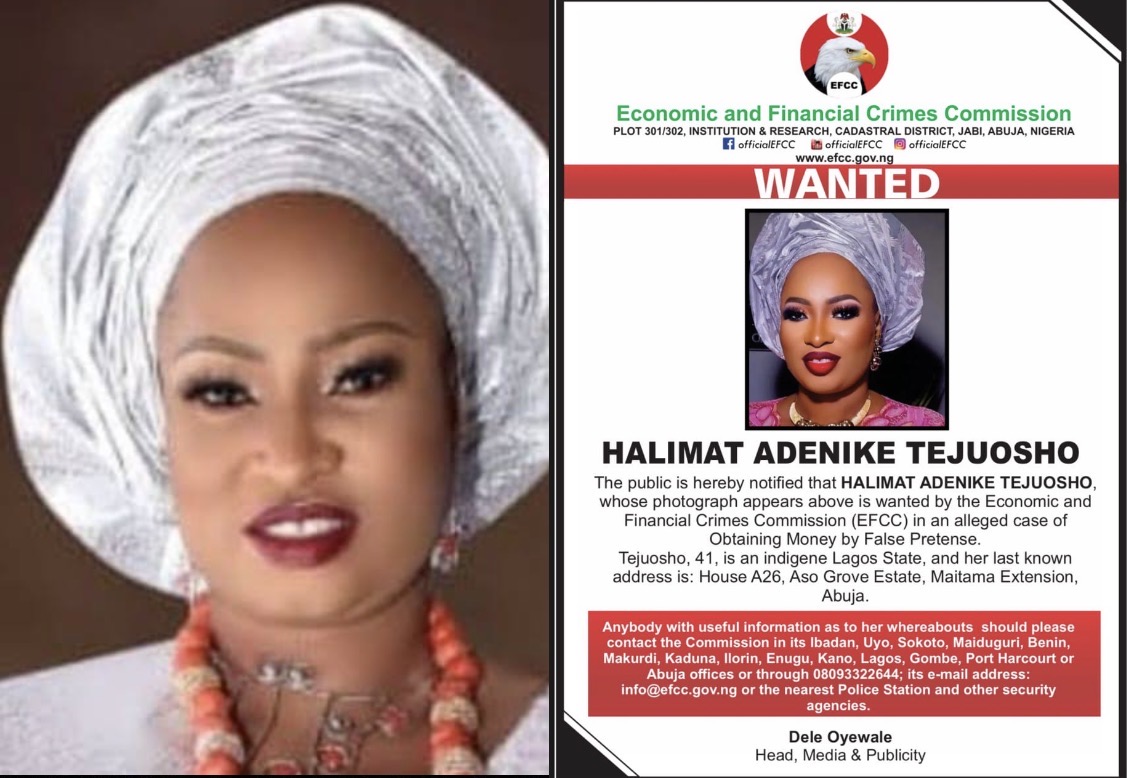
Abuja Socialite Halimat Tejuosho Declared Wanted by EFCC in Alleged Fake Appointment, Contract Fraud
Nigeria’s anti-graft agency, the Economic and Financial Crimes Commission, has declared Abuja-based businesswoman and socialite Halimat Adenike Tejuosho wanted over her alleged role in a sprawling fraud scheme involving fake government appointments and contracts, marking a dramatic escalation in a case that has quietly built momentum through petitions and investigations.
In a public notice, the commission accused the 41-year-old of obtaining money under false pretence, a criminal offence under Nigerian law, and urged members of the public to provide information that could lead to her arrest, suggesting she may have gone into hiding as investigators intensified efforts to locate her. Tejuosho, a familiar name in Abuja’s elite social circles, had previously come under scrutiny following multiple petitions from alleged victims who claimed they were defrauded of hundreds of millions of naira in what authorities describe as a carefully orchestrated scheme built on influence, access and deception.
Investigators say victims were promised federal government appointments, lucrative housing and procurement contracts, and insider access to top-level officials, assurances allegedly reinforced with forged documents and false claims of political connections, including impersonation of a senior aide within Nigeria’s national security structure. One petition, according to sources familiar with the probe, involved more than N400 million alongside foreign currency payments for a supposed government-backed housing deal that never materialised, deepening the scale and seriousness of the allegations now before authorities.
The EFCC believes proceeds from the scheme may have funded a lavish lifestyle, including the acquisition of luxury assets, while earlier legal proceedings within the Federal Capital Territory reportedly recommended her prosecution on multiple counts ranging from advance fee fraud to criminal breach of trust, cheating and impersonation. Despite those recommendations, Tejuosho had been granted administrative bail as investigations continued, a development that now contrasts sharply with the commission’s decision to declare her wanted.
Tejuosho has consistently denied wrongdoing, with her lawyers dismissing earlier reports linking her to fraud as “false, malicious, and defamatory,” and even demanding compensation from media organisations including First Weekly Magazine that published the claims. Her legal team has maintained that she was never lawfully indicted and argued that the allegations were built on unverified accusations intended to damage her reputation.
The EFCC’s latest move signals that the case has moved beyond routine inquiry into active pursuit, a step typically taken when a suspect is believed to have failed to honour invitations or bail conditions, cannot be reached by investigators, or is suspected of evading arrest. While full details of pending charges have not yet been made public, the commission’s notice underscores the urgency now attached to the case and its reliance on public cooperation to bring the suspect into custody.
Beyond the individual allegations, the unfolding case reflects a broader pattern in Nigeria’s fraud landscape, where individuals are accused of exploiting the desperation of job seekers and contractors by offering “guaranteed” access to government opportunities. The EFCC has repeatedly warned Nigerians against paying for promised appointments, trusting unofficial intermediaries who claim political connections, or entering contract deals without proper verification, cautioning that such schemes often end in significant financial losses.
If apprehended, Tejuosho is expected to be formally arraigned in court, where prosecutors will seek to establish whether the alleged network of promises, payments and influence amounted to criminal conduct. For now, the spotlight remains fixed on one of Abuja’s most talked-about figures, as authorities push to track her down and unravel a case that highlights the enduring risks within Nigeria’s high-stakes political and economic environment.