



Civil society organisations across Africa have urged governments to shift from making anti-corruption promises to enforcing existing laws, warning that weak accountability continues to fuel grand corruption and deprive the continent of critical resources needed for development.
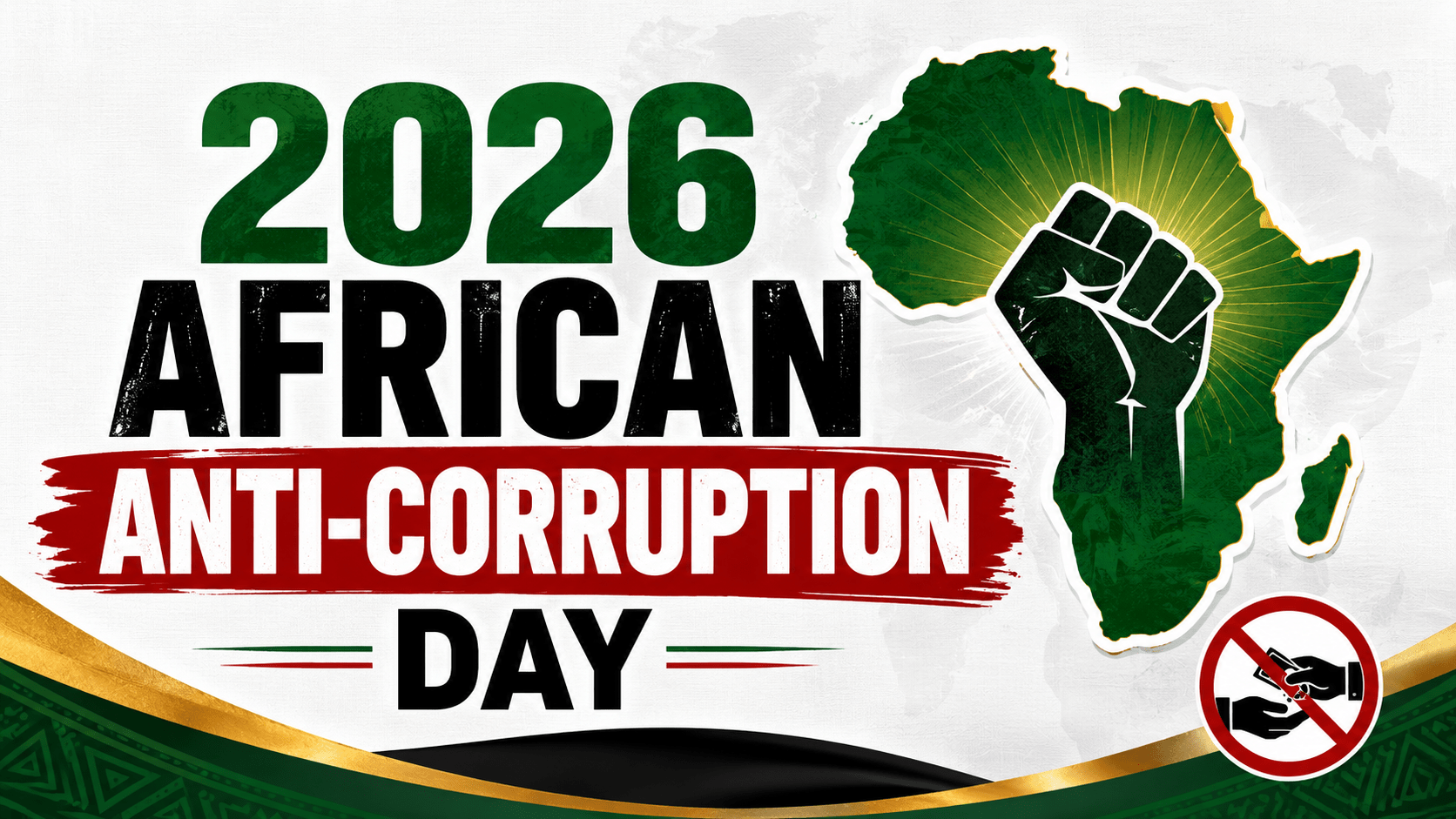
The organisations made the call in a joint statement released on Saturday to commemorate the 2026 African Anti-Corruption Day, observed under the African Union (AU) theme, “Scaling Up the Promotion of Integrity and Anti-Corruption Actions Across Africa.”
Marked annually on July 11, African Anti-Corruption Day commemorates the adoption of the African Union Convention on Preventing and Combating Corruption (AUCPCC) in 2003, which serves as the continent’s legal framework for combating corruption.
The groups acknowledged that many African countries have established anti-corruption agencies, financial intelligence units, audit institutions, procurement regulations and regional accountability frameworks. However, they stressed that the greatest challenge remains enforcing these existing laws.
Executive Director of Tournons La Page, Mathieu Pourchier, said Africa already possesses the legal and institutional frameworks required to combat corruption but lacks effective enforcement.
He warned that integrity cannot be strengthened if powerful individuals continue to steal public funds, launder illicit proceeds, intimidate whistleblowers and evade justice.
According to the organisations, the consequences of weak enforcement are severe. They cited estimates from the United Nations Conference on Trade and Development (UNCTAD), which indicate that Africa loses approximately $88.6 billion annually to illicit financial flows—equivalent to about 3.7 per cent of the continent’s Gross Domestic Product (GDP).
They noted that these lost resources could otherwise be invested in education, healthcare, water infrastructure, youth employment and social protection programmes.
The statement further described grand corruption as a major threat to governance, saying it weakens institutions, distorts electoral processes, undermines public service delivery and shields politically connected individuals from accountability.
Chairman of the Human and Environmental Development Agenda (HEDA) Resource Centre, Olanrewaju Suraju, said addressing grand corruption requires stronger prevention measures, effective investigations, prosecutions, asset recovery and enhanced international cooperation.
He observed that stolen public funds are often hidden through cross-border financial systems involving banks, shell companies, offshore accounts and professional facilitators.
The organisations also reaffirmed their support for the proposed International Anti-Corruption Court (IACC), arguing that it would complement national judicial systems by prosecuting grand corruption cases where domestic authorities are unwilling or unable to act.
They said the proposed court would serve as a court of last resort, strengthen international accountability and facilitate the recovery of stolen public assets.
Acting Chief Executive Officer of Transparency Mauritius, Laura Jaymangal, said Africa’s challenge is not a shortage of anti-corruption commitments but an accountability deficit.
She stated that strengthening national institutions remains essential but argued that complementary international mechanisms such as the proposed International Anti-Corruption Court should be considered where domestic systems fail to address grand corruption effectively.
The organisations further urged African governments to enforce anti-corruption laws impartially, protect whistleblowers, journalists, civil society activists and honest public officials, improve transparency in public procurement, land administration, natural resource contracts and public finance, and strengthen anti-money laundering and asset recovery measures.
They added that greater transparency in infrastructure projects and proactive disclosure of public information would reduce opportunities for corruption and enhance public oversight.
Head of Liaison and Advocacy at Good Governance Africa, Karam Singh, warned that Africa’s aspirations under the African Union’s Agenda 2063 would remain difficult to achieve if public resources continue to be diverted into private hands.
He also called on African countries to embrace regional and international accountability mechanisms whenever political interference undermines domestic anti-corruption institutions.
Board Member of Integrity Initiatives International, Justice Richard Goldstone, urged African leaders, public institutions, the private sector, civil society organisations, the media and citizens to move beyond awareness campaigns by strengthening systems that prevent abuse of office, combat corruption and recover stolen public wealth.
He emphasised that corruption should be treated as a direct attack on development, democracy and human dignity, urging governments across the continent to translate anti-corruption commitments into meaningful action.