



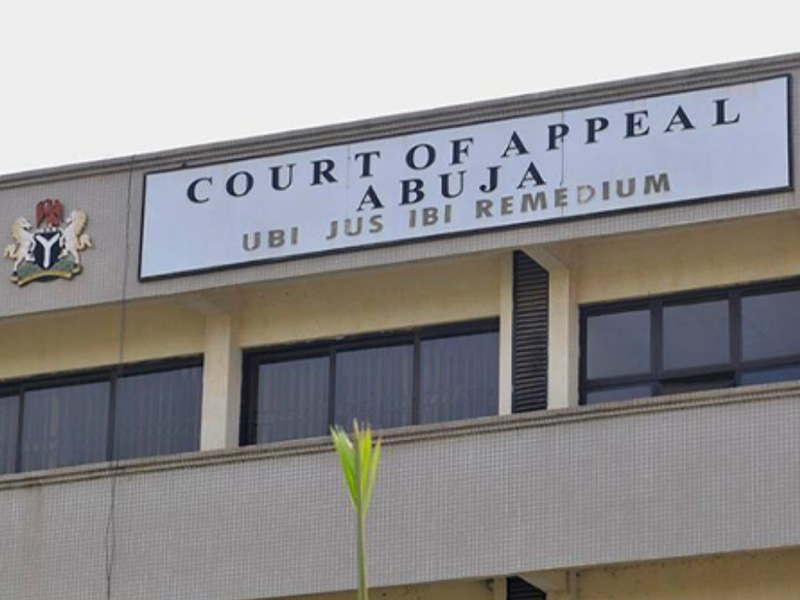
Conflicting judgments delivered by two separate panels of the Court of Appeal in Abuja have sparked fresh legal uncertainty over the powers of the Independent National Electoral Commission (INEC) and key provisions of the Electoral Act 2026 ahead of the 2027 general election.
In one ruling, the Court of Appeal overturned a Federal High Court judgment that had nullified parts of INEC’s election guidelines for the 2027 polls. The three-member panel unanimously held that the lower court erred in invalidating the commission’s administrative guidelines, ruling that they neither violated the 1999 Constitution nor the Electoral Act.
The appellate court held that INEC acted within the powers granted to it by law and that there was no evidence showing that the Youth Party, which challenged the guidelines, had suffered any injury or was prevented from conducting its primaries.
Delivering the lead judgment, Justice Adebukola Banjoko, read by Justice Okon Abang, stated that courts should not interfere with INEC’s administrative discretion where the electoral body acts within the law.
“The declaratory reliefs granted by the trial court were wrongly granted and are hereby set aside,” the court ruled.
The panel also agreed with INEC that the Youth Party lacked the legal standing (locus standi) to institute the suit, noting that the party failed to demonstrate how the commission’s guidelines affected its participation in the electoral process.
The appeal followed a May 20 judgment by Justice Mohammed Umar of the Federal High Court, which voided INEC’s revised timetable for the 2027 general election after holding that the commission exceeded its powers by prescribing timelines for political parties to submit membership registers, conduct primaries and forward candidates’ names.
However, in a separate judgment delivered by another three-member panel of the Court of Appeal in Abuja, the court struck down Sections 77(5), 77(6), 77(7) and 84(2) of the Electoral Act 2026, declaring them inconsistent with the 1999 Constitution.
The panel, led by Justice Balkisu Bello Aliyu, ruled that the provisions infringed on the constitutional rights of political parties to determine their internal affairs, including candidate nomination procedures.
The case arose from an appeal filed by the Zenith Party against a Federal High Court judgment that dismissed its challenge to the constitutionality of the disputed sections.
Among the invalidated provisions were those requiring political parties to submit membership registers to INEC before primaries, restricting parties to using only the submitted register during primaries, and disqualifying parties that failed to comply from fielding candidates.
The appellate court also struck down Section 84(2), which mandated political parties to nominate candidates through direct primaries or consensus.
According to the court, Sections 221 and 222 of the Constitution empower political parties to determine whom they sponsor for elections, while Sections 177 and 182 already provide the constitutional qualifications and disqualifications for candidates.
The court held that no provision of the Electoral Act could impose additional conditions capable of disqualifying candidates or limiting the constitutional powers of political parties.
The conflicting decisions by the two appellate panels have created uncertainty over the interpretation of INEC’s powers and the validity of key provisions of the Electoral Act as preparations intensify for the 2027 general election.