


The Federal Government has rejected calls to restore the fuel subsidy, warning that a reversal of the reform could revive petrol scarcity, fiscal pressures, and economic uncertainty.
FG Warns Against Fuel Subsidy Return, Says Nigeria Cannot Go Back
The Federal Government has rejected calls for the restoration of petrol subsidy, warning that reversing the policy could drag Nigeria back into the economic difficulties the Tinubu administration says it has spent the past three years trying to overcome.
Minister of Information and National Orientation, Mohammed Idris, said on Sunday that Nigeria could not afford to return to what he described as a “retrogressive path”, arguing that reinstating the subsidy would undo gains recorded from the economic reforms introduced since May 29, 2023.
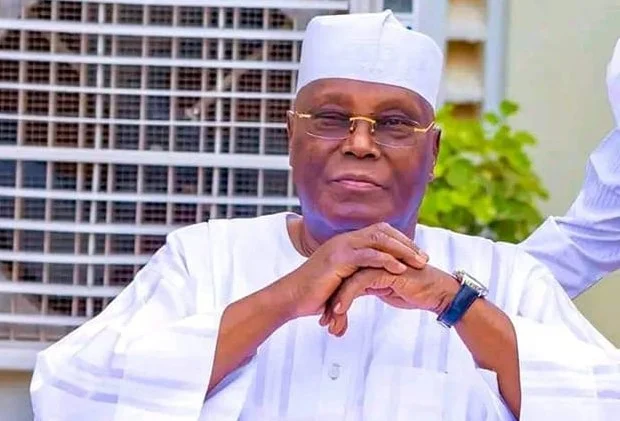
Idris was responding to renewed calls by the African Democratic Congress presidential candidate, Atiku Abubakar, for a review of the subsidy policy. The former Vice-President had initially said he would reverse the removal of fuel subsidy if elected, before subsequently clarifying that his proposed intervention would be targeted, capped, transparently budgeted and independently audited.
The Federal Government, however, maintained that a broad reversal of the policy would recreate the fiscal pressures, fuel scarcity and market distortions associated with the old subsidy regime while creating fresh uncertainty for investors.
Idris said the fiscal consequences could also revive the era of “Ways and Means” financing, under which the government borrowed from the Central Bank of Nigeria to meet its financial obligations.
According to the minister, the removal of petrol subsidy, alongside the unification of the foreign exchange market, remains one of the two major pillars of the Tinubu administration’s economic reform programme.
Atiku had argued that the government could not claim to have abolished subsidy while granting tax credits, concessions and other fiscal incentives to operators in the petroleum sector.
“The administration cannot claim to have abolished subsidy while granting tax credits, concessions and other fiscal incentives to operators in the same petroleum industry,” Atiku said in a statement issued by his media aide, Phrank Shaibu.
“This is precisely why the Atiku Economic Recovery Plan rejects Tinubu’s false choice between the corrupt subsidy regime of yesterday and the cruel shock therapy of today.
“What he (Atiku) proposes is a targeted, capped, transparently budgeted and independently audited intervention with a clearly defined exit mechanism, accompanied by accelerated domestic refining, competition, mass transportation and measures to restore household purchasing power.”
Atiku’s proposal has triggered a fresh debate over the economic consequences of subsidy removal, with economists, labour activists, manufacturers and members of the Organised Private Sector weighing in on the issue.
The Presidency has also criticised the former Vice-President’s position, with President Bola Ahmed Tinubu previously describing the proposal as an idea borne out of ignorance and accusing Atiku of pandering to public frustration over the hardship caused by the reforms.
But Idris insisted that Nigerians should consider what the government described as the fiscal gains from subsidy removal before supporting any attempt to reverse the policy.
Quoting the Minister of Finance and Coordinating Minister of the Economy, Dr Taiwo Oyedele, Idris said the subsidy reform had released N15.8 trillion in resources to the federation between June 2023 and December 2025.
He said approximately N5.43 trillion accrued to the Federal Government, N6.52 trillion to the states and N3.88 trillion to local governments.
Idris clarified that the N15.8 trillion was not sitting in a government account as a separate pool of cash labelled “subsidy savings”, explaining that it represented resources released within the wider fiscal system and made available to the three tiers of government.
The minister said the figures were presented by Oyedele during the Federal Government’s presentation of its “Nigeria’s reform scorecard: The benefits, costs and harms prevented.”
He recalled that Nigeria was already facing declining oil production and weak revenues in 2022, when the country spent about $10 billion on fuel subsidies.
According to Idris, the government is also currently subsidising electricity, meaning that restoring petrol subsidy would place an additional burden on an already pressured fiscal system.
He said increased allocations to states and local governments had strengthened their ability to meet salary and pension obligations while providing funds for infrastructure and essential services, including primary healthcare, basic education and roads.
The minister also highlighted what he described as additional government spending made possible by the reforms, including approximately N6.47 trillion invested in strategic infrastructure covering transportation, housing, agriculture, security and other projects.
“These include major national corridors such as the Lagos-Calabar Coastal Highway, Sokoto-Badagry Superhighway, and the Trans-Sahara Superhighway,” Idris said.
He added that the reforms had also expanded social intervention programmes, with more than 10 million Nigerian households benefiting from social transfers.
The government, he said, had also committed more than N400 billion to major social investment initiatives, including N223.8 billion for the Nigerian Education Loan Fund, N150 billion for the MOFI Real Estate Investment Fund and N50 billion for the Nigerian Consumer Credit Corporation.
Idris further claimed that renewed domestic and foreign investor confidence had helped make the Nigerian stock market the world’s best-performing market in 2026, while external reserves had risen to their highest level in almost two decades and oil production had increased beyond Nigeria’s OPEC quota for the first time in years.
He said the additional fiscal space had also supported wage adjustments, minimum-wage obligations and pensions, while expanding government’s capacity to invest in education, healthcare, agriculture, electricity and security.
The minister warned that reversing the subsidy policy at a time when Nigeria’s domestic refining capacity was expanding could undermine investor confidence and introduce fresh uncertainty into the petroleum sector.
“Had the subsidy regime remained unaddressed, petrol scarcity would have returned, pushing prices above N3,000 per litre on the black market. The legacy Ways and Means financing, which stood at about N30 trillion in May 2023 and has since been curtailed, would have doubled to N60 trillion or more,” Idris said.
He added that the government’s reform scorecard projected that the inherited situation of 27 states struggling to reliably pay salaries would have worsened without the reforms.
“Nigeria already carries a second energy subsidy, on electricity consumption, which cost the country an additional N3.14 trillion between June 2023 and December 2025,” he said.
“This subsidy helps bridge the gap between actual power production costs and the capped tariffs paid by most consumers.
“Reintroducing a petrol consumption subsidy on top of this would deal a double blow to Nigeria’s fiscal position.”
Idris argued that restoring subsidy would almost immediately recreate the economic conditions that made the previous system unsustainable.
“Restoring subsidy would almost instantly return Nigeria to the economic conditions of 2022, recreating the same fiscal pressures, distortions, scarcity and incentives for arbitrage that made the old system unsustainable in the first place,” he said.
The minister, however, acknowledged that the reforms had not solved all of Nigeria’s economic problems and that millions of Nigerians were still struggling with the consequences of higher living costs.
“We are not claiming that the reforms have solved all of Nigeria’s economic challenges; there is indeed still much work to be done to translate improved fiscal capacity into better services, jobs, infrastructure and living standards,” he said.
“But the proper response to the hardship associated with reform is not to dismantle the reform; it is to accelerate the benefits – which remains what the Tinubu administration is resolutely focused on.”
Idris said the government’s objective was to redirect public resources away from subsidising consumption and towards investment in Nigerians and the productive sectors of the economy.
“This is also why the debate over restoring subsidy must ultimately come down to hard choices,” he said.
He then posed a series of questions to Nigerians, asking whether the country should restore petrol subsidy at the expense of student loans and consumer credit, higher allocations to states and local governments, infrastructure projects, power, security, healthcare, education and social protection.
“Nigeria cannot build tomorrow’s economy by returning to yesterday’s unsustainable subsidy regime. We have moved beyond that model,” Idris stressed.
Meanwhile, Accord chieftain Gbenga Olawepo-Hashim has accused Atiku of dishonesty over his changed position on fuel subsidy, arguing that Nigerians deserve an explanation for the shift.
Hashim said there was nothing inherently wrong with a politician changing his position when circumstances or evidence changed, but insisted that such a change must be properly explained to voters.
“Atiku’s recant on subsidy removal without an apology is dishonesty. If you change your position because circumstances or evidence have changed, tell Nigerians why you changed,” he said.
Hashim argued that Atiku, Tinubu and Nigeria Democratic Congress presidential candidate Peter Obi had all supported subsidy removal during the 2023 presidential election, while he and other candidates, including Omoyele Sowore and Adewole Adebayo, opposed the policy.
He described Atiku as one of the prominent advocates of subsidy removal and wholesale privatisation during the Fourth Republic, recalling that as Vice-President under former President Olusegun Obasanjo, Atiku headed the economic team when the administration increased petroleum prices and attempted to remove subsidy.
According to Hashim, he and other PDP officials opposed the move at the time, while the National Assembly also passed resolutions against the policy, eventually leading to its reversal.
“We opposed subsidy removal when it was politically inconvenient to do so. We did not suddenly discover the suffering of Nigerians because another election is approaching,” Hashim said.
Despite his criticism of Atiku, Hashim called for the restoration of subsidy on petroleum products and other strategic commodities, insisting that any such intervention must be targeted, transparent and designed to protect consumers and productive sectors.
“Our position is simple: restore subsidy on petroleum products and other strategic products where necessary, but do it intelligently,” he said.
Hashim said any reformed subsidy regime should have clear eligibility criteria, publicly disclosed costs and beneficiaries, measurable economic objectives and strict accountability.
With the 2027 presidential election approaching, the fuel subsidy debate is set to remain one of the central economic issues before Nigerian voters, with the competing positions exposing a wider disagreement over whether the country should consolidate the Tinubu administration’s reforms or pursue a different approach to cushioning the impact of rising living costs.
Hashim urged Nigerians to scrutinise the consistency and economic programmes of all presidential contenders, warning against choosing leaders solely on the strength of their political machinery.
“Nigeria needs originality, courage and compassion in leadership. We cannot continue recycling people because they have the biggest megaphone,” he said.