

Senator Gbenga Daniel says Nigeria cannot achieve lasting security without a strong economy, urging investment in jobs, infrastructure and young people
‘There Can Be No Lasting Security Without a Strong Economy’ — Senator Gbenga Daniel
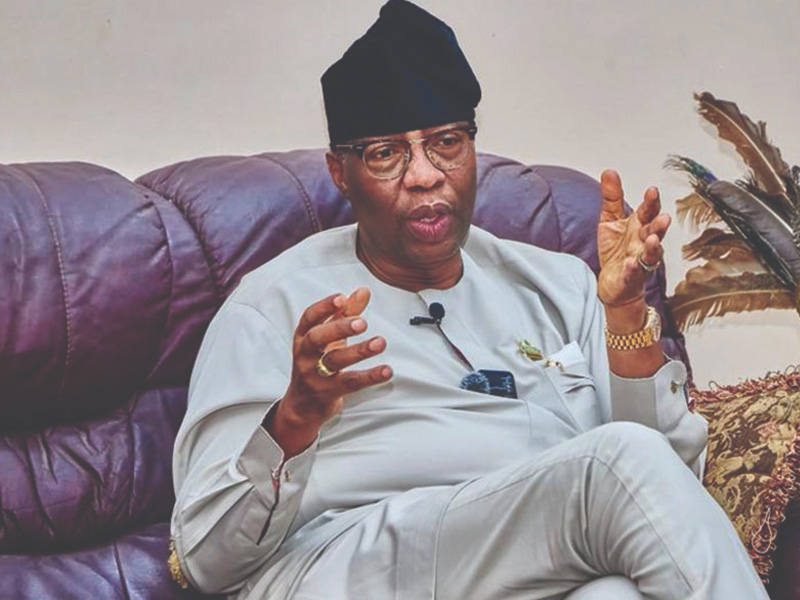
Nigeria cannot achieve lasting security without a strong economy, and economic growth itself cannot be sustained in an atmosphere of insecurity, former Ogun State governor and Senator representing Ogun East, Otunba Gbenga Daniel, has said.
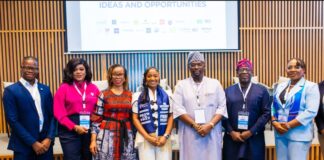
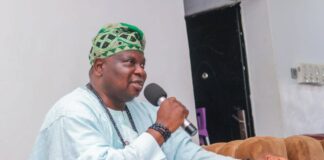
Senator Daniel made the declaration on Thursday at the 7th Annual Lecture of Freedom Online, themed Economy and Security: The Future of Nigeria, held at the Sheraton Hotel, Lagos, where he appeared as Special Guest of Honour.
The senator said Nigeria’s economic and security challenges were deeply interconnected, warning that treating them as separate national problems would undermine efforts to achieve sustainable development.
“Nigeria cannot have a strong economy without security, and it cannot have lasting security without a strong economy. The two are inseparable,” Daniel said.
He spoke against the backdrop of recent improvements in Nigeria’s economic indicators, including the reported 4.43 per cent real GDP growth recorded in the second quarter of 2026.
But Daniel cautioned against measuring economic progress solely through GDP figures, arguing that the real measure of growth must be whether Nigerians are experiencing better economic opportunities and improved living conditions.
“Can a young person find decent work? Can a farmer safely reach the farm? Can a manufacturer produce competitively? Can a small business survive the cost of power, transport and finance? Can investors commit their resources with confidence?” he asked.
The senator said the questions were central to understanding the link between insecurity and economic performance.
According to him, insecurity has become an economic burden, affecting agricultural production, transportation, business competitiveness, investment and the overall confidence required for economic expansion.
Daniel stressed that security should therefore not be regarded exclusively as the responsibility of the military, police and other security agencies.
“Security is not merely a matter for the military, police and other agencies. It is also an essential part of economic infrastructure,” he said.
He explained that farmers who cannot safely access their farms would inevitably produce less food, while insecurity along major roads increases the cost of moving goods and services across the country.
Businesses, he added, are also forced to devote resources to security that could otherwise be invested in expansion, employment and productivity.
“When farmers are afraid to cultivate their land, food production suffers. When roads are unsafe, the cost of transporting goods rises. When businesses spend excessively on protection, their competitiveness declines. When communities live in fear, investment is discouraged,” Daniel said.
He described the reported abduction of more than 7,800 people between July 2025 and June 2026 as a warning that extends beyond Nigeria’s security architecture.
“The reported abduction of more than 7,800 people between July 2025 and June 2026 is therefore not only a security statistic. It is also an economic warning,” he said.
Despite the challenges, the former governor said Nigeria remained a country of enormous economic possibilities, pointing to its youthful population, entrepreneurial culture, technology sector, financial institutions and creative industry as assets capable of driving sustained growth.
Daniel said the challenge was to create the environment required for Nigerians to translate those advantages into jobs, investment and prosperity.
“Our challenge is to create the conditions in which Nigerian ability can flourish at scale. Those conditions include security, infrastructure and opportunity,” he said.
He also argued that Nigeria must reduce its dependence on oil by accelerating the development of sectors capable of generating broad-based economic activity.
Oil, he acknowledged, remains important to the Nigerian economy, but said the country’s future cannot depend on crude oil alone.
Daniel noted that the non-oil sector accounted for approximately 95.8 per cent of real GDP in the second quarter of 2026, reflecting the growing contributions of agriculture, manufacturing, technology, construction, financial services, tourism, entertainment and the digital economy.
He said the priority must now be to turn the growth of these sectors into productive employment, higher incomes and better living standards.
For Daniel, the issue of youth opportunity is particularly urgent given Nigeria’s large and growing young population.
“Our young people need more than speeches. They need skills, employment, access to capital, technology and a society in which enterprise and hard work can lead to a better life,” he said.
He warned that failure to provide such opportunities could deepen frustration and undermine social stability.
“If we give our young people an opportunity, they will build Nigeria. If we deny them opportunity, frustration will grow and social stability will suffer,” Daniel said.
The senator pointed to Lagos and Ogun states as examples of what can happen when population, enterprise, infrastructure and opportunity converge in an enabling environment.
While acknowledging the challenges confronting both states, he said their economic activities demonstrated the capacity of Nigerians to be highly productive when given the right conditions.
Daniel called for a national framework capable of extending such opportunities beyond Nigeria’s major economic centres.
“The wider national challenge is to extend that opportunity across the country, so that a young entrepreneur in Aba, Kano, Ibadan, Jos, Port Harcourt, or Maiduguri can build with the same confidence as one in Lagos,” he said.
In his closing remarks, the senator linked the country’s security challenges directly to its economic future, saying securing productive assets and communities would strengthen the foundations of national prosperity.
“If we secure our farms, we strengthen food security. If we secure our roads, we strengthen commerce. If we secure our communities, we attract investment. If we create jobs and invest in our young people, we strengthen social stability and the future of the nation,” he said.
Daniel maintained that Nigeria should approach its challenges with confidence rather than despair, saying the country’s capacity remains greater than its problems.
“I remain optimistic about Nigeria, not because our problems are small, but because our capacity is greater than our problems,” he said.
According to him, Nigeria already has the human resources, market, natural resources and entrepreneurial energy required to build a prosperous economy.
“We have the people, the resources, the market and the entrepreneurial spirit. What we need is security, leadership, infrastructure and discipline to convert potential into prosperity,” Daniel said.
The senator thereafter handed over to the Lagos State governor, the main lecturer at the summit, to take the discussion further.
Daniel’s intervention placed economic security at the heart of Nigeria’s development debate, arguing that the country’s battle against insecurity must go beyond military responses to include job creation, infrastructure, investment, agricultural productivity and opportunities for young Nigerians.
His central message was unequivocal: without an economy capable of creating opportunity and prosperity, Nigeria’s security gains will remain fragile; and without security, the investment and productivity needed to build that economy will continue to be threatened.