





DAAR Communications faces fresh scrutiny over alleged unpaid salaries, missing pension remittances, disputed asset transactions and a family control battle
DAAR in Turmoil: Workers Cry Over 11 Months Without Pay as Asset Claims and Family War Rock AIT Owner
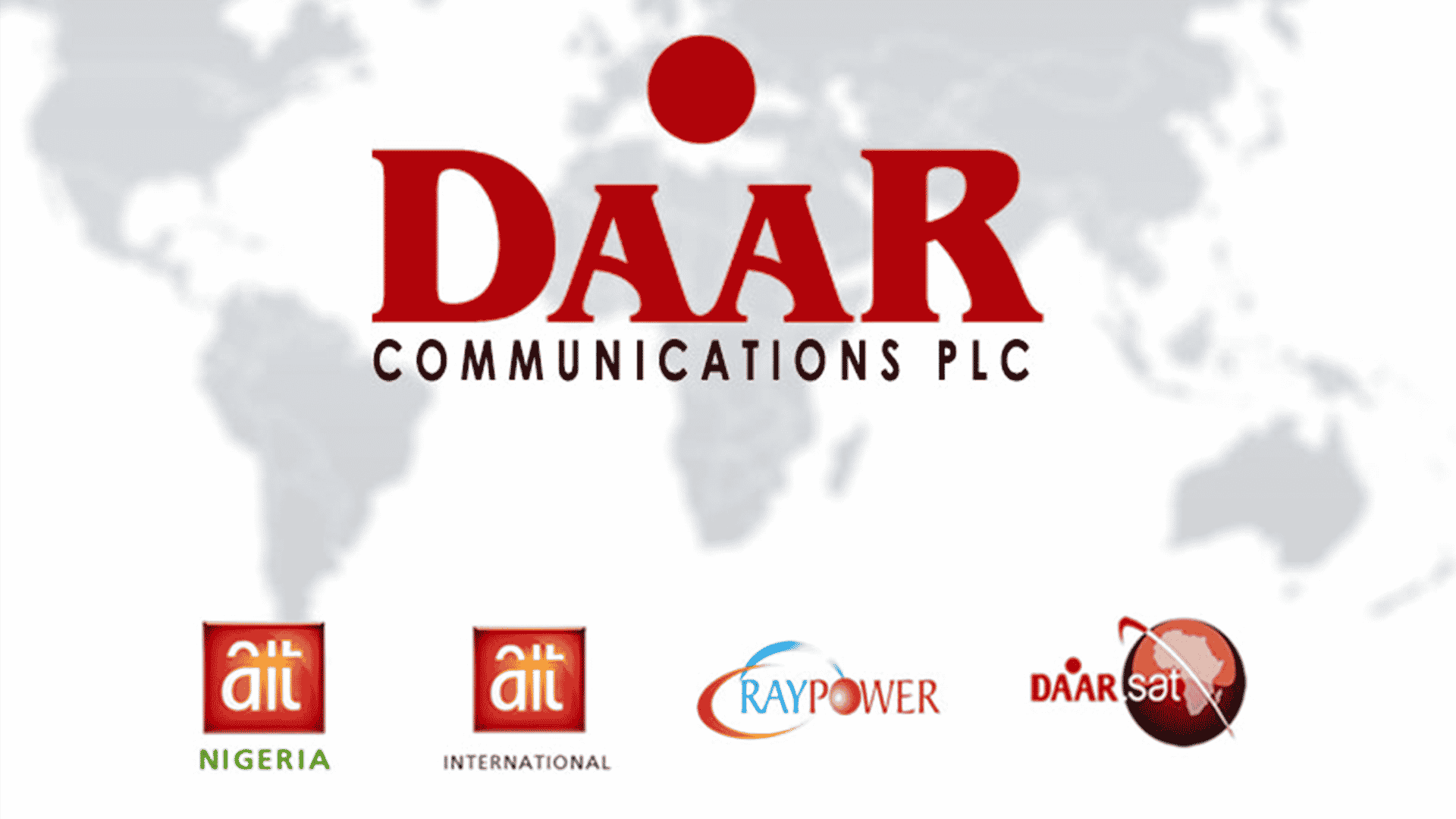
DAAR Communications, owners of African Independent Television (AIT), Raypower FM and Faaji FM, is facing mounting allegations of unpaid salaries, unremitted pension deductions, disputed asset disposals and an escalating family battle over corporate control, according to a document circulating among stakeholders and obtained for this report.
The document paints a troubling picture of a media organisation under severe financial and corporate strain, with former workers allegedly waiting for months for salaries and terminal benefits while questions are being raised over the fate of some of the company’s properties, broadcast equipment and other assets.
At the centre of the allegations are claims that some former employees have gone as long as 11 months without receiving outstanding payments following their disengagement, with pension deductions and other entitlements also allegedly unpaid.
The document quotes affected workers as saying, “PAY US BEFORE WE DIE,” while another account attributed to former employees states, “Most of our children are no longer in school.”
Those claims could not, from the material supplied, be independently verified as applying to all affected workers. However, court records show that disputes over unpaid salaries, pension contributions and other employment entitlements involving DAAR Communications have persisted for several years.
In a June 2023 judgment, the National Industrial Court ordered DAAR Communications to pay two former workers more than N3.7 million in combined salary arrears, unremitted pension and other statutory entitlements. In one of the cases, the court awarded N2.66 million to a claimant for 26 months of unpaid salary, pension and other benefits and N1.04 million to another claimant for 20 months of outstanding entitlements.
In another 2023 case, the Industrial Court ordered DAAR Communications to pay former staff member Chidiebere Otegwu salary arrears, accumulated unremitted pension, NHIS and NHF contributions, severance benefits and damages after finding the company’s failure to pay the entitlements unlawful.
The employment disputes have continued into more recent years. In February 2025, the National Industrial Court ordered DAAR Communications to pay former employee Yannet Joshua N2.15 million in salary arrears, N588,000 in gratuity, N175,000 in leave bonuses, N400,000 in severance benefits and other sums, in addition to N506,520 in accumulated unremitted pension contributions.
The court records show that the pension issue is not limited to a single claimant. In a separate judgment involving former employee Tauna Samson, the court ordered DAAR Communications to pay salary arrears, gratuity and other benefits and to remit N583,576.17 in accumulated pension contributions.
Another National Industrial Court judgment delivered in Lagos in April 2025 also involved claims for outstanding salary, gratuity and unremitted pension against DAAR Communications.
And in May 2026, the National Industrial Court in Lagos again ruled in favour of a former DAAR employee who claimed unpaid severance benefits and pension contributions, with the case records showing that the defendant had not entered a defence despite service of the originating processes.
Against that background, the latest allegations contained in the circulating document raise fresh questions about the financial condition and corporate governance of the broadcaster.
The document alleges that the company’s difficulties intensified following the death of its founder, Raymond Dokpesi, in 2023, and places particular scrutiny on the leadership of Raymond Dokpesi Jr.
According to the document, the period after the founder’s death was marked by worsening salary arrears, the departure of experienced personnel, deterioration of operational infrastructure and uncertainty over the company’s restructuring direction.
Those claims, however, remain allegations in the document and should not be treated as established findings of misconduct against any individual without supporting evidence or a response from the parties concerned.
More serious questions are raised in the document over the alleged disposal of DAAR assets.
One of the properties mentioned is the company’s facility in Alagbado, Lagos, where the document alleges that operations were wound down and employees were asked to remove their belongings while prospective buyers were reportedly being engaged.
The document also alleges that DAAR’s Port Harcourt station, including transmitters, land and other equipment, had been sold or was being targeted for disposal.
Another claim concerns DAARSAT satellite equipment, with the document alleging that equipment acquired through substantial investment by the company’s founder could no longer be properly accounted for and that some equipment had allegedly entered informal markets.
These allegations were not accompanied in the supplied material by deeds of transfer, board resolutions, audited accounts, purchaser details or other documentary evidence capable of independently establishing the claims.
The document also raises questions over alleged financial transactions involving sums running into hundreds of millions of naira.
It alleges that Raymond Dokpesi Jr. received N150 million, although it does not provide sufficient documentary evidence establishing the purpose or destination of the alleged payment.
It further alleges that transactions involving as much as N100 million were linked to asset disposals over a weekend.
Those claims require verification from bank records, audited financial statements, transaction documents and corporate approvals before any conclusion can responsibly be drawn about their legality or purpose.
Perhaps the most striking allegation in the document concerns a property in Asokoro, Abuja.
The document alleges that a prime property was sold for more than N2 billion, while members of the family were allegedly informed that the transaction generated only about N200 million.
If substantiated, the alleged difference of approximately N1.8 billion would raise significant questions about the transaction, including the actual sale price, valuation, purchaser, payment trail and corporate authorisation.
But at present, the material supplied does not establish that the property was sold for N2 billion, nor does it provide documentary proof that family members were told it fetched N200 million.
Those facts would need to be established through the relevant title documents, valuation reports, sale agreement, board records and financial records.
The document further portrays a deepening dispute within the Dokpesi family and alleges disagreements over shareholding, corporate records and control of DAAR Investment & Holding Company, described in the material as holding a controlling 61 per cent interest in DAAR Communications.
It also refers to competing claims, police petitions and litigation surrounding the ownership and control of the investment company.
The dispute is significant because questions concerning the ownership and control of a company with a controlling stake in a listed or publicly accountable media business can extend beyond a private family disagreement into corporate governance and shareholder concerns.
The document therefore calls for scrutiny by institutions including the Nigeria Police Force, Economic and Financial Crimes Commission, Department of State Services, Securities and Exchange Commission, Corporate Affairs Commission and National Pension Commission.
However, the existence of allegations in a document does not by itself establish criminal liability, financial misconduct or regulatory violations. Any investigation by the relevant authorities would need to determine what happened, identify responsible parties where appropriate and distinguish legitimate corporate transactions from unauthorised or unlawful conduct.
For DAAR workers, the most immediate issue remains unpaid entitlements.
The historical court record is significant because it demonstrates that salary arrears and pension remittance disputes involving the broadcaster have previously reached the National Industrial Court, with judgments directing the company to pay former employees and remit pension contributions.
The latest document suggests that the problem may still be affecting former workers, some of whom allegedly remain without full payment long after leaving the organisation.
That situation places the human cost of the corporate crisis squarely at the centre of the controversy.
Behind the figures are former journalists, technicians, administrators, security personnel and other workers who depend on their earnings and retirement contributions to support their families.
The claims contained in the document therefore raise two separate but connected questions: whether DAAR can meet its obligations to workers and whether its remaining assets and corporate resources are being managed transparently enough to reassure employees, shareholders, regulators and the wider public.
DAAR Communications occupies an unusual position in Nigeria’s media landscape. Through AIT and its radio operations, the company has maintained a national broadcasting footprint for decades. Any prolonged deterioration in its finances and infrastructure consequently has implications beyond an ordinary private-company dispute.
For now, the most serious claims contained in the circulating document remain allegations awaiting documentary verification and responses from those named or implicated.
What is already established, however, is that DAAR Communications has faced multiple successful claims at the National Industrial Court involving unpaid salaries, pension contributions and other employee entitlements, including judgments delivered as recently as 2026.
The emerging controversy now places renewed focus on the company’s financial position, the treatment of its workers, the management of its assets and the unresolved battle over corporate control.
The central question is no longer simply whether former DAAR workers are owed money. It is whether the broadcaster can restore confidence in its corporate governance, settle legitimate employee obligations and provide credible answers to questions being raised about its assets and finances.
Until the relevant records are produced and the parties respond, allegations of asset stripping, diversion of funds or criminal wrongdoing remain unproven. But the combination of longstanding employment disputes, fresh allegations over assets and an intensifying ownership struggle makes the crisis one that shareholders, regulators, workers and the Nigerian public will be watching closely.