

INEC faces protests and legal threats over missing 2027 candidates, including Gwarzo, Pantami and Adebutu, as political parties seek corrections before October 24
INEC Faces Protests Over Missing 2027 Governorship Candidates as October 24 Deadline Nears
By Lukman OMIKUNLE
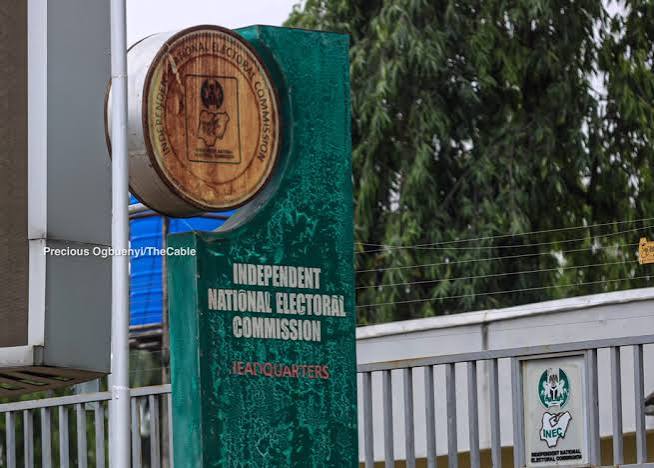
The Independent National Electoral Commission (INEC) is facing mounting pressure from political parties and aggrieved candidates over omissions from its final list of contestants for the February 2027 elections, with protests, petitions and threatened court action spreading across several states.
The commission has confirmed receiving formal complaints from some political parties and said the submissions are being reviewed. It has given affected parties until October 24, 2026, to notify it of alleged errors in the published list.
The controversy has affected prominent political figures, including the Nigeria Democratic Congress (NDC) governorship candidate in Kano State, Aminu Abdussalam Gwarzo; the Peoples Democratic Party (PDP) candidate in Gombe State, Isa Ali Pantami; the party’s Ogun State candidate, Ladi Adebutu; and the NDC candidate in Kaduna State, Danjuma La’ah.
INEC said the deadline was in line with Section 32(2) of the Electoral Act, 2026, which provides a 14-day window for political parties to notify the commission of candidates they believe were wrongly excluded.
Chief Press Secretary and Media Adviser to the INEC chairman, Adedayo Oketola, told The Nation that the commission had received complaints and was processing them in accordance with the law.
“Yes, the commission has received formal complaints from some political parties regarding the non-inclusion of certain candidates, and these submissions are currently being carefully reviewed,” Oketola said.
He added: “As an election management body responsible for managing thousands of nominations across political parties, receiving complaints, petitions, and legal notifications is a routine administrative occurrence.
“Under Section 32(2) of the Electoral Act 2026, political parties that believe their candidates were omitted or excluded have a statutory window of 14 days from the date of publication to formally notify the commission.
“Following the publication of the governorship list, affected parties have until October 24, 2026, to present their formal notifications. The commission remains strictly guided by the provisions of the Electoral Act, valid judicial orders, and its commitment to legal compliance, procedural fairness, and transparency.”
INEC has also explained that the omissions are linked to requirements concerning political parties’ membership registers under the Electoral Act, 2026. The commission’s position has heightened the dispute over whether the affected parties complied with the statutory conditions for nominating candidates. <Cite refs={[“turn953349search12″,”turn953349search3”]}/>
Although the commission has not publicly specified the total number of complaints under review, some affected candidates are reportedly considering legal action to compel INEC to publish their names.
A senior commission official told The Nation that submitting a petition would not automatically result in a candidate’s name being added to the list.
“Yes, the commission has received some petitions and some may still come in. But the commission will treat each petition on its merit and in accordance with the provisions of the Electoral Act and the recent Supreme Court judgement.
“Anybody whose name did not appear on the membership list submitted to the commission, 21 days before the party primary will still not be included on the list. Law is law. People cannot just break the law at will and expect the same law to protect them.
“You are aware that some of these candidates complaining went shopping for new parties to contest elections after losing party primaries in their previous parties. The consideration by the commission may also include those whose names are already published, but whose names were absent from the list submitted by their parties’ 21 days before the primaries.”
In Kano, hundreds of Kwankwasiyya Movement supporters on Thursday marched to the INEC state office to protest the exclusion of Gwarzo from the final list.
The protesters, led by the NDC deputy governorship candidate, Mustapha Kwankwaso, submitted a petition demanding Gwarzo’s reinstatement and an investigation into alleged irregularities surrounding the candidates’ list.
They accused an INEC official of allegedly colluding with unauthorised individuals to facilitate the substitution of some candidates using documents bearing suspected forged signatures.
The group’s spokesman, Dr Habib Mohammed, told reporters that several letters containing suspected forged signatures had been submitted to the commission.
“We are also petitioning against a staff here, whom we believe colluded with some unauthorized people to hide a decision which led to substitution of some of our candidates,” Mohammed said.
The State Resident Electoral Commissioner, Abdu Zango, who received the petition, assured the protesters that their complaints would be forwarded to the commission’s national headquarters.
“We received all the complaints and assured the delegation that their petition will receive the necessary attention and we are going to forward it to our national headquarters for consideration,” Zango said.
Zango also reaffirmed INEC’s commitment to neutrality in the electoral process.
The NDC’s national leader, Senator Seriake Dickson, said the party would continue to challenge the exclusion of its candidates.
Dickson assured affected candidates and supporters that the party had taken steps to address the omissions, insisting that those affected had complied with the relevant requirements.
He said: “All affected candidates registered with the party before the statutory 21-day period required by law.”
The party leader urged INEC to “remedy this apparent omission promptly.”
“From the Presidential election to the State Houses of Assembly, the NDC has fielded qualified candidates who emerged through a rigorous and painstaking screening process. We are confident that INEC will correct this omission without delay,” he added.
Dickson directed party members to continue “consultations, town hall meetings, mobilisation, and campaigns” across states and constituencies ahead of the elections.
In Ogun State, PDP governorship aspirant Toba Olusegun Peter has given INEC 48 hours to explain why his name was omitted from the final list of candidates for the February 6, 2027 election, threatening to seek judicial intervention if the commission fails to respond.
In a letter dated October 14, 2026, Peter’s lawyer, Anderson Asemota, told the INEC chairman that his client had fulfilled the nomination requirements and deserved an explanation for his exclusion.
According to the lawyer, Peter obtained his expression-of-interest and nomination forms on May 12, 2026, and participated in the party’s governorship primary on May 27. His name, the lawyer said, appeared as entry number 15783 on the PDP membership register submitted to INEC under Section 77 of the Electoral Act, 2026.
Asemota acknowledged the Supreme Court judgment in INEC v. Zenith Labour Party, suit number SC/CV/495/2026, but argued that its provisions should be applied to the facts and records relating to his client.
“Our Client does not invite the Commission to disregard that decision. Rather, the Commission is requested to apply the provisions as authoritatively interpreted by the Supreme Court to the actual facts and records relating to the PDP and our Client,” the letter stated.
The lawyer asked INEC to establish whether Peter’s name appeared on the membership register submitted by the PDP, whether the applicable statutory requirements had been met and whether any court order or other lawful basis justified his exclusion.
He requested that the commission complete its verification within 48 hours of receiving the letter and provide a written explanation of its findings.
Adebutu has also challenged his omission from the list. However, the Ogun State PDP leadership aligned with him has said the party and its candidate remain active and have continued their ward-to-ward campaigns.
Speaking to The Nation, the Head of Public Communications of the Ladi Adebutu Campaign Organisation, Afolabi Orekoya, said Adebutu had not violated the law.
“We are managing the situation well, as you already know, the national leadership of the party are currently on it and we believe that it will be resolved soon,” he said.
In Ebonyi State, the omission of candidates’ names has triggered disagreements within the African Democratic Congress (ADC) and the PDP.
Jennifer Adibe, the factional ADC chairman in the state, told The Nation that candidates submitted by her faction were missing from INEC’s list. She said the affected candidates had taken the matter to court.
However, a source in the rival faction dismissed her claims, maintaining that the authentic candidates emerged from primaries conducted by the faction led by Silas Onu. INEC’s published list identified Onu as the party’s candidate.
The source said candidates who emerged from the Adibe-led faction had filed at least 30 court cases seeking recognition.
“But they filed the cases out of time, and right now, the court has not even given us a date. You can imagine filing such matters in September for a primary that took place in May,” the source said.
The PDP is also facing uncertainty over its candidate for the Ohaozara/Onicha/Ivo Federal Constituency. Felix Igboke, a former Ebonyi commissioner for project monitoring who resigned from Governor Francis Nwifuru’s administration and joined the PDP, was reportedly given the party’s ticket, but his name was missing from the final list.
A party source expressed confidence that the omission would be resolved following INEC’s invitation to political parties to report errors.
“There is no cause for concern. It will soon be corrected,” the source said.
In Anambra State, competing factions within the NDC are also disputing the party’s leadership and the submission of candidates’ names to INEC.
David Chukwudifu, who leads one faction, maintained that he was the authentic state chairman and accused a group led by former state lawmaker Ikem Uzoezie of joining the party after its congresses had concluded.
Chukwudifu acknowledged that the party’s national leadership had intervened to resolve the dispute.
Uzoezie, however, said some candidates’ names submitted by the party were missing from INEC’s list, adding that the issue was being addressed nationally.
“There are some names the party submitted that were not reflected.
“But the party has already written back to INEC to that effect for necessary corrections to be made.
“All these correspondences are being handled at the national level,” Uzoezie said.
The publication of the final governorship candidates’ list has also stirred political tension in Oyo State, where parties are assessing the implications of the confirmed tickets and unresolved internal disputes ahead of the polls.
Within the Allied Peoples Movement, the confirmation of its candidate has reportedly brought relief to some party leaders, while dissatisfaction among aspirants who lost the primaries remains a concern.
Other parties are also dealing with factional disagreements and pending court cases that could affect their preparations. The All Progressives Congress has reportedly deployed reconciliation committees across the state’s three senatorial districts to engage dissatisfied members and limit internal divisions.
Smaller parties and emerging political coalitions are meanwhile seeking to strengthen their grassroots networks and reassure supporters that their candidates can compete despite concerns over their organisational capacity.
With the October 24 notification deadline approaching, attention is turning to INEC’s handling of the complaints and whether the affected parties can establish that their candidates met the legal requirements for nomination.
The commission has maintained that each petition will be assessed on its merits and in accordance with the Electoral Act and relevant court decisions. The outcome could determine whether the disputed omissions are corrected or remain a major source of contention as preparations for the 2027 elections continue.