






The Association of Former Female Athletes of Nigeria has elected Dr. Esther Aluko president at its maiden 2026 AGM in Lagos, with calls for greater welfare, education and career opportunities

Beyond Medals: Former Nigerian Female Athletes Elect New Leaders, Demand Greater Opportunities After Retirement
By Lukman OMIKUNLE, Lagos
The Association of Former Female Athletes of Nigeria (AFFAN) has elected Dr Esther Oluwatoyin Aluko as its president, alongside other members of its maiden executive council, as the association seeks to strengthen the welfare, education, leadership opportunities and professional development of retired female athletes in Nigeria.
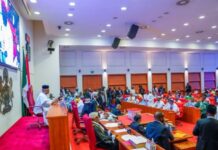
The elections took place during AFFAN’s maiden Annual General Meeting (AGM), held on Saturday, November 14, 2026, at the Indoor Sports Hall of Teslim Balogun Stadium, Surulere, Lagos.
Aluko emerged as president following the association’s inaugural electoral process, which was conducted by an electoral committee chaired by Hon. Margaret Porbeni. Other members of the committee were Mrs Bamidele Garko as secretary, Hon. Rabi Egujie as member and Mrs Bunmi Benson as legal adviser. The committee adjudged the election free and fair.
Other elected officers include Victoria Uwagba as First Vice President, Salamatu Alimi as Second Vice President, Ekuta Catherine Ewa OLY as Secretary-General and Faith Abudu as Assistant Secretary.
Dr Rifkatu Ogunbiyi was elected Treasurer, Elizabeth Adada emerged as Financial Secretary, while Amoo Titilayo Tope was elected Assistant Financial Secretary. Adeoti Mosunmola will serve as Public Relations Officer, while Perpetua Nkeiruka Clement was elected Director of Programmes and Events.
Oby Marriah Omonehin emerged as Welfare and Social Director, with Owooka Oluwatoyin as Assistant Welfare and Social Director. Oluwatosin Solademi was elected Director of Research, Publication, Social Media and Data Collation, while Oyetunmbi Rachael Omotoyosi will serve as Assistant Director in the same portfolio.
The maiden AGM, which brought together former female athletes and other stakeholders in the Nigerian sports sector, was held under the theme, “Beyond the Playing Field: Empowering Former Female Athletes Through Education, Leadership and Professional Development.”
Delivering the keynote address, the Vice-Chancellor of Lagos State University of Education, Professor Bidemi Bilkis Lafiaji-Okuneye, called for a deliberate and sustained effort to empower former female athletes beyond their years of active competition, stressing that retirement from professional sports should not mark the end of their contributions to society.
Speaking from her experience as a former athlete, Lafiaji-Okuneye, who represented Nigeria in international handball competitions and previously played as a goalkeeper for the defunct Jegede Babes, said the values acquired through sports could serve as a foundation for success in education, leadership, business and other professional careers.
“I speak to you today not only as the Vice-Chancellor of Lagos State University of Education, but also as one of you,” she said.
Reflecting on her sporting career, the professor explained that her experiences on the playing field helped shape her journey into academia and university leadership.
She said, “As a goalkeeper, I learnt a lesson that has remained with me throughout my life: you cannot afford to give up because one ball has passed you. You stand up, regain your focus and prepare for the next challenge.”
Emphasising the importance of the association’s mission, Lafiaji-Okuneye urged members to recognise that their value does not diminish after leaving competitive sports.
“The final whistle in a match is not the final whistle in a woman’s life. A medal may be won in one afternoon, but the courage, patience and discipline behind it can serve us for a lifetime,” she said.
“Our playing days may be over, but our days of making a difference are not over. We have stories to tell, skills to share, younger people to guide and communities to strengthen.”
The keynote speaker identified education, leadership and professional development as critical areas requiring urgent attention, noting that many former athletes struggle to navigate life after retirement, particularly when regular sporting allowances stop, injuries become persistent and new sources of livelihood become necessary.
She urged AFFAN to create practical educational opportunities for members, including adult education, vocational training, professional courses, digital literacy programmes and other learning initiatives that would help former athletes acquire relevant skills and become economically independent.
According to her, members should be encouraged to pursue different educational and professional interests rather than being restricted to careers directly connected to sports.
“The right question is not, ‘Why did you not learn this earlier?’ It is, ‘What would you like to learn now, and how can we help you begin?'” she stated.
On leadership, Lafiaji-Okuneye maintained that former female athletes possessed valuable leadership qualities developed through years of competition, teamwork, discipline and decision-making under pressure.
She called for greater representation of former female athletes in sports administration, coaching, school programmes, sports federations, local sports councils and other decision-making institutions.
She also encouraged AFFAN to organise leadership workshops, mentorship initiatives and capacity-building programmes to prepare its members for greater responsibilities in sports governance and public service.
The university administrator further urged the association to establish a comprehensive database of members, documenting their sporting backgrounds, professional skills, interests, training needs and employment aspirations.
She said such a register would help AFFAN identify opportunities for members, connect them with relevant organisations and facilitate partnerships that could support business development, employment and professional advancement.
Lafıaji-Okuneye also stressed the importance of financial literacy and entrepreneurship, advising the association to prioritise practical business training, responsible financial management and access to reliable business support rather than exposing members to questionable investment schemes and unsustainable borrowing.
She called attention to the health and welfare challenges facing retired female athletes, particularly those dealing with injuries and other long-term consequences of intensive sporting activities.
According to her, AFFAN should explore partnerships with healthcare professionals and relevant organisations to facilitate health education, medical assessments, referral services and access to appropriate care.
She also urged the association to recognise and support older female athletes whose contributions to Nigerian sports history deserved greater acknowledgement.
On the need to inspire the next generation, the vice-chancellor advocated the establishment of a structured mentoring programme through which former athletes could visit schools, organise sports clinics and guide young girls on education, discipline, safety, career development and the importance of pursuing their ambitions.
She observed that the experiences of former athletes placed them in a unique position to encourage young girls who might otherwise lack the support, resources and confidence to pursue sporting careers.
Calling for concrete action after the maiden AGM, Lafiaji-Okuneye suggested that AFFAN begin with a voluntary membership register and establish working groups focusing on education and skills development, welfare, mentoring and strategic partnerships.
She also proposed that the association work towards delivering practical skills workshops, leadership and coaching sessions, health awareness programmes and school mentorship activities in the months following the meeting.
“Let this first AGM be remembered not only for photographs and speeches, but for the day we agreed to turn the honour of yesterday into the opportunities of tomorrow,” she said.
The professor reaffirmed the importance of collaboration between AFFAN, government sports institutions, universities, businesses, healthcare professionals and the media in advancing the welfare and professional development of former female athletes.
Drawing from her personal journey from competitive sports to academia and university administration, she said sports and education should not be treated as separate paths.
She disclosed that she had earlier in 2026 contributed to the development of handball through the donation of a spectators’ gallery at Lagos State University, describing the gesture as her way of giving back to a sport that had significantly influenced her life.
As Vice-Chancellor of Lagos State University of Education, she expressed willingness to encourage constructive discussions on opportunities for learning, mentorship and institutional collaboration for former athletes, subject to the university’s established procedures.
Addressing the women at the gathering, she urged them not to define themselves solely by their past sporting achievements, insisting that they remained valuable contributors to national development.
“Do not describe yourself only in the past tense. Do not say merely, ‘I used to be an athlete.’ Say also, ‘I am a woman of strength. I am a woman who has learnt discipline. I can still learn. I can still lead. I can still serve,'” she declared.
She congratulated AFFAN on the successful hosting of its maiden AGM and expressed hope that the decisions taken would translate into improved opportunities, dignity and support for former female athletes across the country.
The emergence of Aluko and the new executive council marks an important step in AFFAN’s efforts to provide a unified platform for former female athletes, promote their interests and ensure that their contributions to Nigerian sports continue to count beyond their competitive years.