




A diplomat diagnosed with the rare Bundibugyo strain of Ebola in Abuja has deteriorated into multi-organ failure, health officials confirmed Wednesday, as federal and state authorities intensify contact tracing, surveillance and emergency measures to prevent any wider spread.
The patient’s identity and nationality have not been disclosed. Nigeria Centre for Disease Control and Prevention (NCDC) Director of Public Health Laboratory Service Olajumoke Babatunde told an emergency meeting in Abuja that three levels of molecular testing confirmed the Bundibugyo strain—the same variant driving outbreaks in the Democratic Republic of Congo and Uganda.
“The patient’s condition has deteriorated,” Babatunde said. Scientists first identified Bundibugyo Ebola during a 2007 outbreak in Uganda. The virus spreads through direct contact with an infected person’s blood or bodily fluids, or contaminated materials, but not through casual contact with asymptomatic individuals. No approved vaccine or specific treatment currently exists for this strain.
The case was confirmed Tuesday after a woman who arrived on an international flight from Uganda on October 5 developed symptoms on October 7 and sought care at a private hospital in the Federal Capital Territory on October 11. Doctors raised the alarm after the patient failed to respond to malaria treatment and her travel history became known.
Federal response and containment efforts
Coordinating Minister of Health and Social Welfare Prof. Muhammad Pate sought to reassure the public Wednesday evening after meeting Chief of Staff Femi Gbajabiamila at the Presidential Villa. He described the case as an isolated, imported infection that authorities are actively containing.
“It’s one case. It’s an imported case, and we are containing it,” Pate said. “We are collaborating with our sister African nation of Uganda. We are doing contact tracing, and we are putting containment measures to ensure that it doesn’t go into our population.” He urged Nigerians to remain vigilant without panicking, respect official information and avoid spreading rumours, noting that Nigeria successfully managed Ebola in 2014.
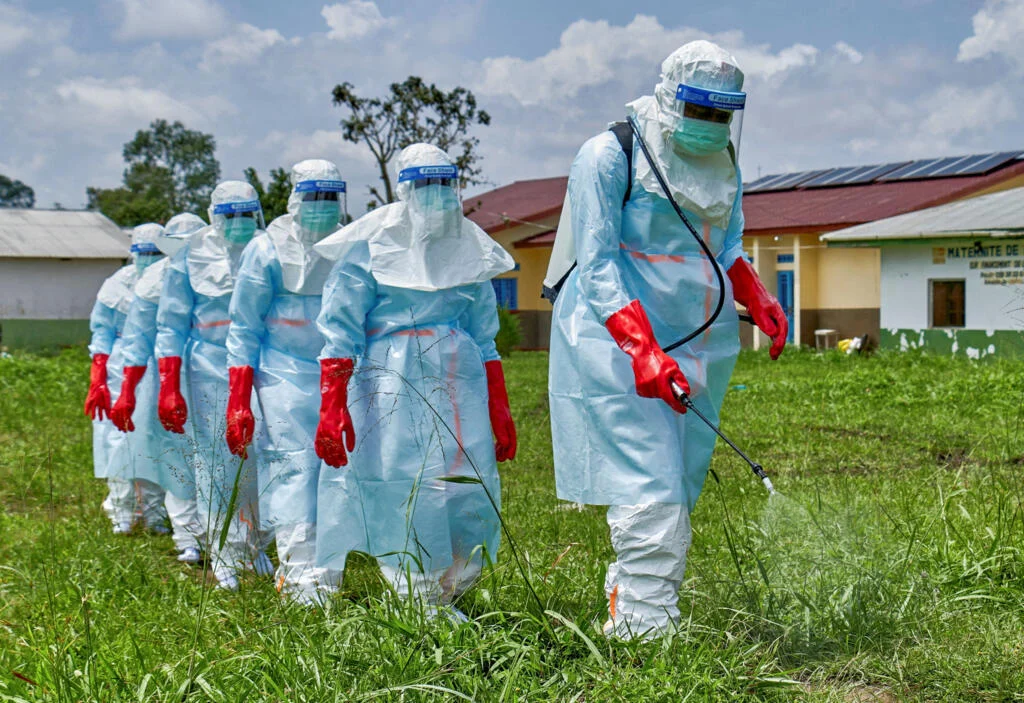
The NCDC has activated its incident management system, finalising an action plan focused on case management, enhanced surveillance, contact tracing, infection prevention and control, and risk communication. Officials are working around the clock. President Bola Tinubu earlier directed a review of the national response plan; a presidential task force chaired by Gbajabiamila, backed by N10 billion in emergency funding approved in June, continues to oversee airport screening, health declarations and isolation capacity.
Aviation restrictions and airport measures
Minister of Aviation and Aerospace Development Festus Keyamo has ordered the Nigeria Civil Aviation Authority to place 46 contacts—44 mainly healthcare workers and hospital staff plus two domestic employees—on a 21-day no-fly list. Airlines have been notified. The Federal Airports Authority of Nigeria is installing temperature-screening cameras, stepping up checks, providing protective equipment and coordinating closely with the NCDC.
State-level preparedness
States have moved quickly onto high alert. Anambra is monitoring remaining persons of interest after clearing most of an initial group of 40. Ogun State tracked 111 people of interest and has now discharged them, reporting no local cases. Niger State is completing an isolation centre. Yobe has deployed surveillance and contact-tracing teams across all 17 local government areas and prepared isolation facilities. Ekiti has stockpiled protective equipment, trained laboratory and response teams, and launched public awareness campaigns. Enugu and Kano have reactivated their public health emergency operations centres. Other states continue reviewing facilities and educating residents.
Legislative push
Both chambers of the National Assembly have demanded stronger action. The Senate called for mandatory health screening at all international airports, seaports and land borders, emergency funding for surveillance and isolation centres, and modernisation of the 1976 Quarantine Act. The House of Representatives urged the release of outstanding health funds and placed relevant agencies on high alert, citing the risk of transmission if detection and isolation lag.
Public health officials stress that identified contacts are not automatically infected; they are monitored for the 21-day incubation period. Authorities continue to emphasise early detection, hygiene and reliance on official information as the best defence against further spread of the rare but dangerous Bundibugyo strain.