

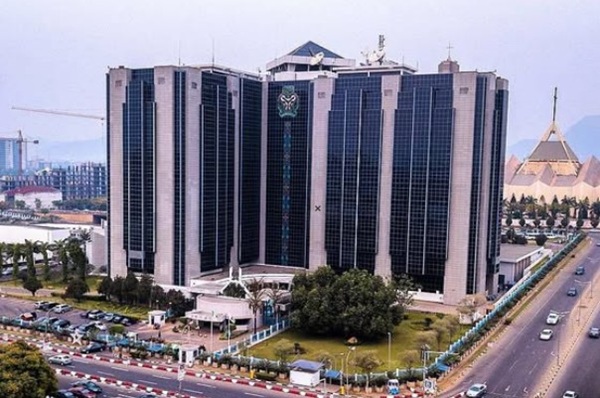


The Office of the Accountant General of the Federation (OAGF) has disclosed that the Central Bank of Nigeria (CBN) owes the Federal Government N5.3 trillion in unremitted operating surplus, despite repeated efforts by the House of Representatives Public Accounts Committee (PAC) to recover the funds.
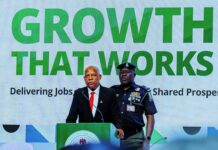
The revelation was made by the Director of Revenue and Investment at the OAGF, Makinde Mogaji, during a hearing where the Accountant General of the Federation (AGF), Shamsedeen Babatunde Ogunjimi, appeared before the House Committee on Public Accounts to respond to audit queries raised by the Office of the Auditor General for the Federation.
According to Mogaji, the CBN had accumulated an outstanding liability of N5.3 trillion in operating surplus owed to the Federal Government as of early last year.
He said the Public Accounts Committee had directed the apex bank to remit 70 per cent of the amount, but the directive has not been complied with.
Mogaji noted that the unpaid funds represent one of the government’s largest revenue sources, adding that other agencies, including the Federal Airports Authority of Nigeria (FAAN), had remitted substantial amounts, with FAAN contributing N473 billion.
Following the disclosure, the House Committee directed the Accountant General to provide a comprehensive breakdown of outstanding unremitted revenues owed by the CBN, the Nigerian National Petroleum Company Limited (NNPCL), and other government agencies.
The lawmakers also demanded explanations over allegations that the OAGF withdrew N15 billion from the account of the Universal Basic Education Commission (UBEC), alongside similar deductions from other Ministries, Departments and Agencies (MDAs).
Responding, AGF Ogunjimi defended the government’s automatic revenue deduction policy, describing it as an advance recovery mechanism introduced to secure government revenue before agencies finalize their operating surplus calculations.
He explained that although the initiative significantly boosted government revenue, several agencies later sought reversals after complaining to the Presidency, resulting in some deductions being cancelled or reduced.
The Accountant General also accused the NNPCL of refusing to cooperate with the revenue recovery initiative, saying disagreements over remittances remain under review by a post-mortem committee.
Supporting the AGF’s position, Mogaji maintained that the automatic deduction system had worked effectively by allowing the government to recover anticipated operating surplus in advance before reconciling final figures with affected agencies.
However, Chairman of the House Committee on Public Accounts, Bamidele Salam, expressed concern over complaints from UBEC, the National Agency for Science and Engineering Infrastructure (NASENI), the National Broadcasting Commission (NBC), and several other agencies that funds meant for statutory responsibilities were deducted without timely refunds.
Salam disclosed that UBEC alleged a N16 billion approved expenditure was withheld while another N15 billion was withdrawn from its account and remains unpaid. He warned that such deductions undermine agencies responsible for critical national development, particularly basic education.
He argued that withholding UBEC’s statutory funds could worsen Nigeria’s education crisis, noting the country still has millions of out-of-school children requiring urgent intervention.
In response, Ogunjimi insisted the OAGF does not arbitrarily withdraw funds from agency accounts, explaining that deductions are made only after approval from the Minister of Finance and following assessments of idle funds that have remained unused for extended periods.
He described the withdrawals as temporary loans used to meet urgent government financial obligations, assuring lawmakers that affected agencies are refunded when they require the funds.
The AGF cited the Tertiary Education Trust Fund (TETFund) as an example, stating that over N300 billion previously borrowed from the agency had been fully refunded.
Committee member Gboyega Nasir Isiaka also raised concerns over the persistent failure of several government agencies to remit revenues due to the Federal Government.
He urged the OAGF to provide detailed figures on outstanding remittances and called for closer scrutiny of the financial performance of agencies such as the CBN, the Securities and Exchange Commission (SEC), the Nigerian Maritime Administration and Safety Agency (NIMASA), and others, arguing that lawmakers must determine whether the operating surpluses declared accurately reflect the value of assets under their control.