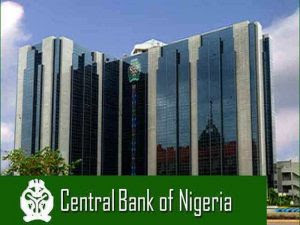
The recapitalisation policy is essential to strengthen the resilience of Nigeria’s financial system, improve banks’ capacity to fund large-scale economic development
Eight Nigerian Banks Meet CBN Recapitalisation Target Ahead of 2026 Deadline
Abuja, Nigeria – July 23, 2025 | Newsheadline247
The Central Bank of Nigeria (CBN) has confirmed that eight banks have successfully met the new minimum capital requirements under its ongoing recapitalisation programme, with others making significant strides toward the March 31, 2026 deadline.
This was disclosed by the CBN Governor, Olayemi Cardoso, during a press briefing at the conclusion of the Monetary Policy Committee (MPC) meeting held in Abuja on Tuesday.
“The MPC noted that eight banks have fully met the recapitalisation requirements, while others are making progress towards meeting the deadline,” said Cardoso.
Launched in March 2024, the recapitalisation programme redefined minimum capital as paid-up share capital and share premium, excluding retained earnings and other reserves. This adjustment means even banks with high shareholders’ funds must raise fresh capital.
- Commercial banks with international licenses must raise ₦500 billion,
- National banks are required to meet a threshold of ₦200 billion in share capital and premium.
Despite the challenges, the industry recorded major fundraising success in 2024, with total capital raised exceeding ₦2 trillion, and several offerings oversubscribed.
With less than nine months remaining, many banks—including some tier-1 institutions—are preparing to launch another round of fundraising to bridge remaining gaps before the Q4 2025 timeline.
Cardoso emphasized that the recapitalisation policy is essential to Strengthen the resilience of Nigeria’s financial system, improve banks’ capacity to fund large-scale economic development, and align Nigeria with global risk-based supervisory standards.
“The recapitalisation initiative is already reinforcing sector resilience, with key Financial Soundness Indicators showing sustained stability,” Cardoso noted.
MPC Holds Key Interest Rates Steady
The Monetary Policy Committee opted to maintain all policy parameters, aiming to consolidate recent gains in inflation control and ensure macroeconomic stability.
Current Monetary Policy Rates:
- MPR (Benchmark Rate): 27.50%
- Cash Reserve Ratio (CRR): 50.00% (Deposit Money Banks), 16.00% (Merchant Banks)
- Liquidity Ratio: 30.00%
Cardoso said the decision was driven by the need to “sustain the momentum of disinflation and sufficiently contain price pressures,” stressing that inflation dynamics were beginning to improve.
“We will continue to use every tool available—MPR, CRR, and ensuring an efficient foreign exchange market—to bring down inflation to significant levels,” he said.
The CBN Governor reiterated that managing inflation expectations and maintaining transparency in policy decisions were central to public trust and investor confidence.
Analysts React: Tight Policy Necessary Amid Economic Pressures
Dr. Muda Yusuf, CEO of the Centre for the Promotion of Private Enterprise (CPPE), said the hold decision was expected given the persistence of inflationary drivers.
“As long as inflation has not significantly moderated, it is unlikely that the CBN will cut rates,” Yusuf said.
Despite a marginal drop in headline inflation to 22.22%, Yusuf noted that month-on-month core, food, and headline inflation figures all rose, compounded by cost pressures from energy prices, exchange rate volatility, logistics, and insecurity.
“So, it’s no surprise that the CBN did not opt to ease rates. From their perspective, this is the expected stance,” he added.
While calling for cheaper credit to support real sector growth, Yusuf cautioned that interest rates above 30% remain too prohibitive for investors and small businesses.
NECA Commends CBN’s Policy Direction
The Nigeria Employers’ Consultative Association (NECA) also expressed support for the MPC’s tight policy stance.
NECA’s Director-General, Adewale-Smatt Oyerinde, noted that the cautious approach was necessary to protect recent economic gains and promote long-term stability.
“We commend the CBN’s consistency in policy implementation, which is critical to restoring investor confidence and macroeconomic balance,” he stated. Read More