





The Managing Director and Chief Executive Officer of the Bank of Industry (BoI), Dr. Olasupo Olusi, has urged Nigeria to reduce its dependence on foreign development financing and prioritise the mobilisation of domestic capital to fund long-term economic growth.
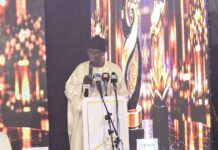
Speaking at the 6th Annual Conference and General Assembly of the Association of Nigerian Development Finance Institutions (ANDFI) in Abuja, Olusi said the era of relying heavily on long-term international development finance is gradually coming to an end.
Addressing participants at the conference themed “Unlocking Domestic Capital for Development Financing,” Olusi stressed that Nigeria must establish a stronger domestic financing framework capable of supporting infrastructure, industrialisation, agriculture, housing, manufacturing and Micro, Small and Medium Enterprises (MSMEs).
He described the conference theme as one of the country’s most pressing economic priorities, noting that Nigeria can no longer delay the mobilisation of local resources to finance national development.
“As access to long-term global development capital becomes increasingly constrained, mobilising domestic resources is no longer simply desirable. It is essential,” Olusi said.
According to him, domestic capital should play a greater role in financing strategic sectors that will shape Nigeria’s future competitiveness.
Olusi also highlighted the critical role of development finance institutions (DFIs), saying they must go beyond lending to mobilising investment, expanding access to finance, supporting businesses and driving sustainable economic development.
Despite global financial uncertainties, tighter international liquidity and rising borrowing costs, he said Nigerian DFIs have continued to support national priorities and contribute to the implementation of President Bola Tinubu’s Renewed Hope Agenda.
Reflecting on the progress of ANDFI, Olusi noted that the association has strengthened collaboration among development finance institutions, enhanced technical capacity and promoted practical solutions to Nigeria’s financing challenges.
He, however, warned that shrinking concessional international funding and growing competition among developing countries for development finance make stronger domestic collaboration more important than ever.
Also speaking at the conference, the Minister of Finance and Coordinating Minister of the Economy, Mr. Taiwo Oyedele, said Nigeria’s ambition of building a $1 trillion economy would depend largely on its ability to mobilise domestic savings rather than relying primarily on government borrowing or foreign capital.
According to Oyedele, domestic resources should complement foreign investment, not replace it.
“The question is not whether capital exists. The question is how do we convert our savings into productive investments? That is the precise mission of development finance,” he said.
He identified pension funds, insurance assets, banking sector liquidity, capital markets, sovereign financial institutions, family-owned businesses and diaspora remittances as major sources of investible capital that should be channelled into productive sectors.
The minister outlined five priorities to strengthen development financing, including creating attractive investment products, directing institutional funds into productive sectors, expanding credit enhancement mechanisms, strengthening infrastructure and green bond markets, and reforming development finance institutions to become more innovative and commercially driven.
Oyedele added that the Federal Government’s ongoing macroeconomic reforms are improving investor confidence through stronger public finances, exchange rate stability, increased revenue generation, improving external reserves and moderating inflation.
Meanwhile, the Regional Director General of the African Development Bank (AfDB) for Nigeria, Dr. Abdul Kamara, said Nigeria would require an estimated $2.3 trillion in investments over the next two decades to bridge its infrastructure gap and achieve its development targets by 2043.
Kamara disclosed that the AfDB currently channels a significant portion of its $6.7 billion Nigeria portfolio through institutions such as the Bank of Industry, the Bank of Agriculture (BoA), the Nigeria Sovereign Investment Authority (NSIA) and commercial banks while supporting reforms to attract more domestic and private capital.
In his remarks, the Managing Director of the Bank of Agriculture, Ayo Sotinrin, announced plans to recapitalise the institution with $1 billion under the “Bank of Agriculture 2.0” initiative.
He said the programme would boost agricultural lending, accelerate digital transformation and expand the bank’s operations nationwide.
Sotinrin revealed that the bank has financed more than 500,000 farmers, distributed two million bags of fertiliser, and currently serves women, youths, internally displaced persons and persons living with disabilities across 20 states and the Federal Capital Territory.
He added that the bank is deploying 2,000 tractors to mechanise 1.2 million hectares of farmland for 1.2 million farmers, while partnering with the African Development Bank on a $200 million programme targeting smallholder farmers.
Similarly, Acting Managing Director of the Infrastructure Bank, Nasiru Isyaku, called for stronger collaboration among government, development finance institutions and private investors.
He warned that Nigeria faces an estimated $100 billion annual infrastructure financing deficit, noting that private investment between 2013 and 2023 totalled only $8.4 billion, underscoring the need for innovative financing models and increased mobilisation of long-term domestic capital.