



The Federal Government has unveiled an ambitious ₦16 trillion plan aimed at lifting 50 million Nigerians out of poverty by 2030, marking a major step toward addressing the country’s growing socio-economic challenges.
The initiative, anchored on the newly launched One Humanitarian, One Poverty Response System (OHOPRS), is designed to deliver a coordinated and data-driven approach to tackling multidimensional poverty.
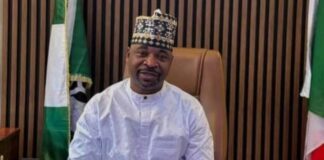
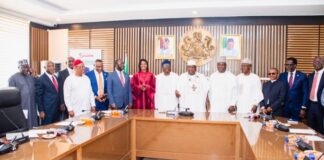
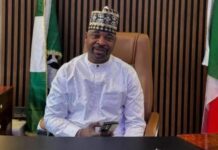
Speaking at the launch in Abuja, the Minister of Humanitarian Affairs and Poverty Reduction, Bernard Doro, said the programme would be funded with ₦3.2 trillion annually over the next five years.
According to him, the system aims to unify fragmented interventions across ministries, departments, agencies, and development partners while focusing on real-time data and people-centred solutions.
“We have been managing poverty, not ending it. Nigeria does not lack interventions; it lacks systems,” he said, stressing the need for a coordinated national framework.
Doro explained that the initiative aligns with the directive of President Bola Ahmed Tinubu, who has set a target of lifting millions of Nigerians out of multidimensional poverty within the next five years.
On the funding structure, Finance Aide to the Minister, Matur Ngyang, disclosed that ₦1.5 trillion will come from the Federal Government, ₦800 billion from development partners, ₦600 billion from the private sector and impact investors, and ₦300 billion from climate and global funds.
He added that key contributors are expected to include global institutions such as the World Bank, European Union, and the United Nations, alongside bilateral donors and foundations.
Ngyang warned that without proper implementation, the initiative would remain only a policy document, stressing that the new financing structure is designed to ensure sustainability and measurable impact.
Also speaking, the Resident Representative of the United Nations Development Programme (UNDP) in Nigeria, Elsie Attafuah, described poverty in Nigeria as a humanitarian crisis requiring urgent and systemic intervention.
She noted that over 60 per cent of Nigerians live in poverty, with millions facing acute food insecurity, and called for integrated solutions that combine humanitarian aid, social protection, and economic inclusion.
“This is not just about spending more, but investing smarter to achieve measurable improvements in people’s lives,” she said.
The OHOPRS framework is expected to serve as a national backbone for poverty reduction, aligning stakeholders and creating sustainable pathways for millions of Nigerians to escape poverty.