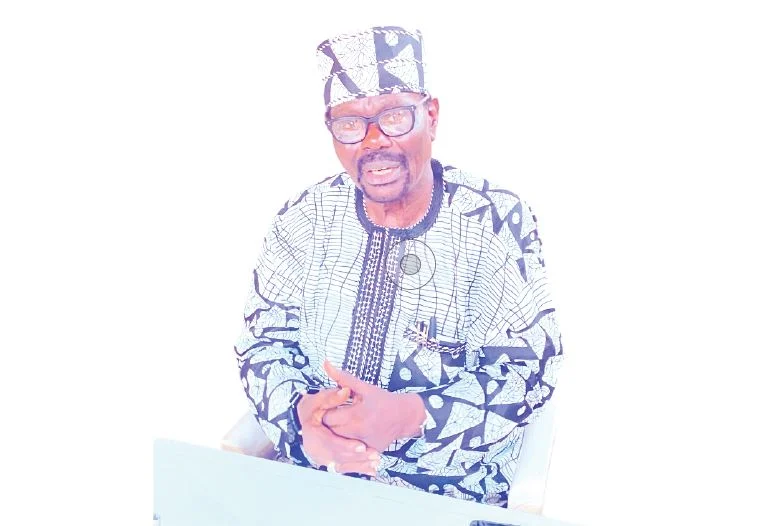
Veteran journalist, Chief Adetola Adeniyi, has opened up on a life shaped by precocious brilliance, fearless journalism and brushes with death — revealing how the 1979 electoral victory of Bola Ige altered what could have been a long prison sentence.
In this revealing conversation with AYOOLA OLASUPO, the former ombudsman traces his journey from a restless child prodigy in Yorubaland to one of Nigeria’s most outspoken media figures, who once faced orders to be found “dead or alive.”
Born on May 29, 1945, Adeniyi describes himself as a child shaped by discipline, culture and boundless energy. By age 10, he had finished primary school; by nine, he had founded a social club called the Isamuro Boys and earned the nickname “Never Tired.”
His early years combined Quranic education, Western schooling and hunting expeditions. He acted in school plays, led boxing training sessions and represented his school at the Western Nigeria Festival of Arts, where his team emerged victorious.
“I was a leader even as a child,” he recalls. “People doubted my age because I was the youngest in class, yet I led.”
Adeniyi’s passion for journalism began in secondary school, where he served as a school reporter and earned another nickname — “Lucky Star.”
His professional career would later be defined by bold commentary. He wrote controversial pieces predicting the fall of military regimes and criticised powerful figures, including former leaders such as Yakubu Gowon and Shehu Shagari.
Though arrests and torture followed some publications, Adeniyi insists fear never guided his pen.
“I wasn’t afraid,” he says. “I knew consequences could come, but I never allowed emotion to dictate my writing.”
As Africa’s first newsroom ombudsman at the Daily Times, Adeniyi saw himself as a defender of the public.
One of his most notable interventions was his campaign for the construction of an overhead pedestrian bridge on the Lagos-Abeokuta Expressway in 1974 after repeated fatal accidents. His advocacy eventually forced authorities to act.
He also investigated corporate injustice, including a controversial case involving a worker who died during office hours under scandalous circumstances — a story that exposed ethical and moral contradictions within society.
Adeniyi’s writing style and worldview, he says, are deeply rooted in Yoruba culture. He began as an Akewi, chanting poetry on Radio Nigeria at age 16.
He credits Yoruba traditions for instilling discipline, moral values and a profound respect for elders — principles he believes are fading in modern Nigeria.
“There’s no culture superior to the Yoruba culture,” he says, while maintaining reverence for tradition and communal humanity.
Perhaps the most chilling chapter of his career unfolded during the turbulent politics of 1979. Working with the Nigerian Tribune, which was widely seen as aligned with Obafemi Awolowo and his political movement, Adeniyi became a target.
He alleges that then military administrator Paul Tafa issued a chilling directive: “Find Tola Adeniyi dead or alive, but better alive. Remove one eye and cut off one leg.”
Warned by insiders, Adeniyi went into hiding. He was later arrested, stripped naked, beaten and thrown into a cell with condemned criminals. Charged with felony, his fate hung in the balance.
“If Bola Ige had not won the election in 1979, I would have gone to jail,” he says, crediting Ige’s victory for changing the political equation and ultimately sparing him prolonged imprisonment.
Reflecting on the current state of journalism, Adeniyi expresses concern over poor remuneration and deteriorating moral standards.
He argues that many young journalists operate under severe economic hardship, making ethical resilience more difficult in an already compromised system.
“When a country sinks morally, don’t expect journalists to be different,” he says, though he also laments what he describes as declining professional rigour.
His career came at a personal cost. Twice in 1979, his family fled their home following intelligence reports of planned attacks. His wife, he says, stood firmly by him — reading his articles before publication and never wavering in courage.
As he approaches another birthday on May 29, Adeniyi says survival itself feels like victory.
“My organs are working. I can still walk unaided. I just thank my destiny helpers and whoever sent me here.”
For a man who once stared down threats of assassination and imprisonment, that gratitude carries the weight of history.