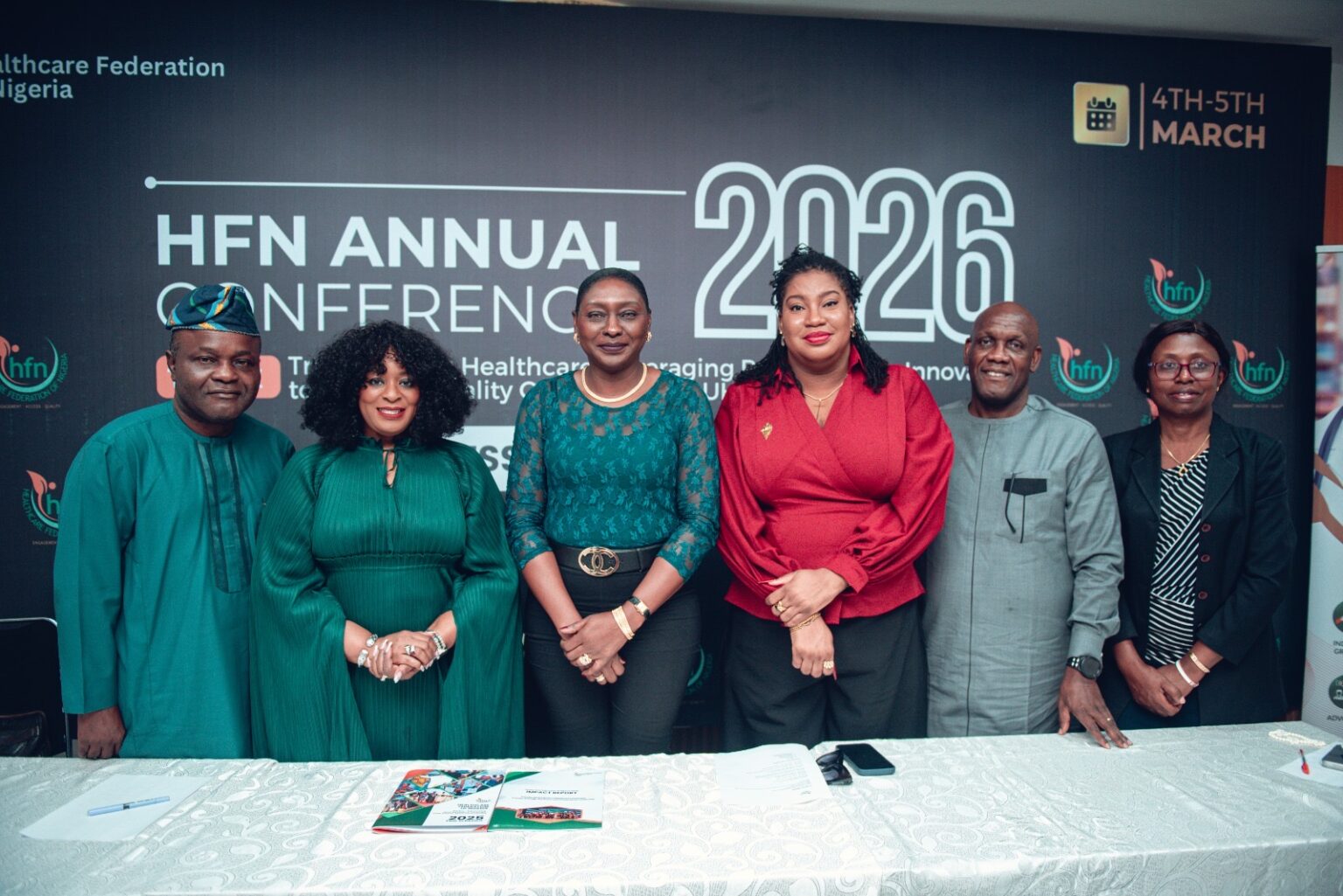
The Healthcare Federation of Nigeria (HFN) has emphasised that technology-driven private sector innovation is critical to improving healthcare quality, affordability and access, as Nigeria continues to grapple with high out-of-pocket spending and limited public funding.
Speaking at a media briefing on Thursday ahead of the 2026 HFN Annual Conference in Lagos, the federation’s President, Mrs Njide Ndili, said the private sector has already demonstrated its ability to transform healthcare delivery when supported by enabling government policies.
Ndili cited the Federal Ministry of Health’s recent decision to allocate a federal tertiary hospital to private organisations as a sign of growing government recognition of private-sector expertise.
“In December last year, the Federal Ministry of Health allocated a tertiary hospital to private organisations to improve the quality of care in federal facilities. That is a big win,” she said, noting that privately operated facilities have shown near world-class standards when efficient systems are deployed.
She added that consistent advocacy and proven results are gradually influencing public policy in favour of private-sector participation.
On healthcare affordability, Ndili noted that enrolment in Nigeria’s health insurance scheme has grown from about five million to nearly 20 million, but millions—particularly in the informal sector—remain uninsured.
“There is what we call the ‘missing middle’. The majority of Nigerians are still not covered by health insurance,” she said, stressing that private-sector innovation could help bridge the gap through simplified, technology-driven enrolment processes.
Drawing parallels with the banking and telecommunications sectors, Ndili said digital innovation could similarly unlock healthcare access and reduce out-of-pocket spending.
“When people say healthcare is expensive, it’s because they are paying directly from their pockets. Insurance changes that dynamic,” she added.
Also speaking, HFN Executive Secretary, Mr Olufemi Akingbade, said fragmentation within the private healthcare sector contributes significantly to high costs, as facilities often operate independently and bear the full burden of equipment procurement.
He explained that the federation is exploring shared-use models, such as regional hubs for expensive equipment like CT scan machines, to spread costs and make healthcare more affordable.
Akingbade also disclosed that HFN is pursuing partnerships in the power sector to reduce energy costs for private hospitals, noting that electricity expenses are a major driver of healthcare pricing.
The Chief Executive Officer of Infinity Health, Mrs Irene Nwaukwa, highlighted the role of technology in strengthening public-private partnerships and standardising healthcare delivery nationwide.
She said digitising primary healthcare centres would improve accountability, reduce medical errors and ensure adherence to clinical guidelines, especially during emergencies.
Other speakers, including the Chairman of the Guild of Medical Laboratory Directors in Lagos State, Mr Julius Adekoya, commended HFN for convening key stakeholders across policy, finance and healthcare delivery to drive sustainable reforms.
The Healthcare Federation of Nigeria Annual Conference 2026, themed “Transforming Healthcare: Leveraging Private Sector Innovation to Achieve Quality Outcomes and Universal Health Coverage,” is scheduled to hold from March 4 to 5, 2026, in Lagos.