



Escalating hostilities in the Middle East are sending shockwaves across Nigeria, disrupting pilgrimages, stranding travelers and triggering distress calls from citizens abroad.
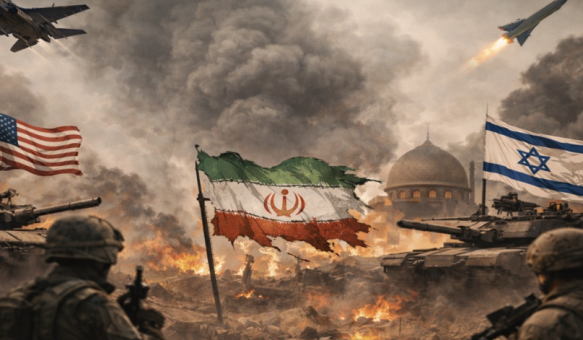
The crisis, involving Iran, Israel and the United States, has intensified over Tehran’s nuclear enrichment programme, with retaliatory missile exchanges spreading across parts of the Gulf region, including Saudi Arabia, the United Arab Emirates, Qatar, Bahrain and Jordan.
In response to the deteriorating security situation, the Nigerian Christian Pilgrim Commission (NCPC) announced the immediate suspension of all pilgrimages to Israel.
Executive Secretary of the Commission, Stephen Adegbite, said the decision followed recent developments, including the declaration of a state of emergency in Israel.
“The recent developments in the Middle East have led to the putting on hold of all pilgrimage exercises to Israel, including those conducted by private operators, until the situation normalises,” he said.
The suspension comes barely days after the Commission concluded its 2025 main pilgrimage to Israel and Jordan, with the final batch of pilgrims arriving at the Murtala Muhammed International Airport on March 3.
Adegbite emphasised that the safety of Nigerian pilgrims remained paramount and urged prayers for peace in Jerusalem and the wider Middle East.
Meanwhile, some members of the Islamic Movement in Nigeria (IMN), founded by Ibrahim El-Zakzaky, have staged protests in cities including Kano, Kaduna and Lagos in solidarity with Iran.
Reports indicate heavy casualties in the conflict, with hundreds reportedly killed in Iran, while Israel and the United States have also recorded fatalities.
The Nigerians in Diaspora Commission (NiDCOM) confirmed receiving distress enquiries from Nigerians in Qatar, the UAE and Iran.
According to NiDCOM spokesperson Abdur-Rahman Balogun, callers sought information about possible evacuation plans should the crisis escalate further.
He assured that the Ministry of Foreign Affairs is coordinating with relevant agencies and urged Nigerians in affected countries to adhere strictly to travel advisories and emergency contacts issued by Nigerian missions.
Airspace closures across the UAE, Qatar, Iran, Israel, Iraq, Kuwait and Syria have forced airlines to reroute flights, increasing operational costs and disrupting schedules.
The National President of the National Union of Air Transport Employees (NUATE), Ben Nnabue, warned that the disruptions could significantly affect Nigeria’s aviation revenue.
“When airlines adjust or suspend frequencies, it affects airport projections and revenue.Aviation is a global village; what happens in one region affects others,” he said.
Nnabue added that many Nigerians remain stranded in Dubai, Qatar and other transit hubs due to cancellations and altered flight frequencies.
Beyond travel disruptions, the crisis has rattled global oil markets, raising concerns about potential economic implications for Nigeria, Africa’s largest crude oil producer.
As tensions persist, Nigerian authorities say they are closely monitoring developments, with the safety of citizens at home and abroad remaining a top priority.