Home Blog Page 208

Defections Are Constitutional — Tinubu Responds to One-Party Fears, Hails APC as Voice of the People

Tinubu defended the defections as expressions of constitutional rights, arguing that freedom of movement and association are cornerstones of Nigeria’s democratic framework

Defections Are Constitutional — Tinubu Responds to One-Party Fears, Hails APC as Voice of the People

Abuja, Nigeria — President Bola Ahmed Tinubu has dismissed growing concerns over the dominance of the All Progressives Congress (APC), asserting that the wave of defections into the ruling party reflects Nigerians’ democratic choices rather than a threat to multi-party democracy.

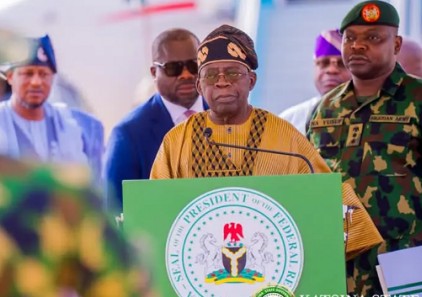
Speaking at the APC National Summit held at the State House Conference Centre in Abuja, Tinubu addressed critics who view the increasing consolidation of political power under the APC as a step toward a de facto one-party system.

“Before I speak, I just need to tell those saying one-party system is not good—it’s one party ruling and driving the aspirations of Nigerians,” Tinubu said. “You don’t blame a people bailing out of a sinking ship when there’s no life jacket.”

The President’s remarks come amid a steady stream of high-profile defections from opposition parties, fueling apprehensions within the political class that Nigeria’s democracy may be tilting toward single-party dominance.

However, Tinubu defended the defections as expressions of constitutional rights, arguing that freedom of movement and association are cornerstones of Nigeria’s democratic framework.

“I’m glad about what we have, and I’m expecting more to come. That is the game. We’re in a constitutional democracy,” he said. “Don’t forget the freedom of movement and freedom of association are not criminally punishable. Welcome to the progressives—sweep them clean.”

Sole Endorsement for 2027

Tinubu’s speech followed a wave of endorsements from major party structures. The National Assembly caucus, the APC National Working Committee (NWC) led by Dr. Abdullahi Ganduje, and the Progressive Governors Forum (PGF) headed by Governor Hope Uzodinma of Imo State, all formally endorsed the President as the APC’s sole presidential candidate for the 2027 elections.

In response, Tinubu thanked the party for its backing and declared his readiness to lead Nigeria forward.

“The endorsement today, the ‘carry go’ expression—I know road,” he said to loud applause. “We will lead you on to that promised land.”

Economic Outlook and Political Inclusion

Addressing the country’s economic trajectory, Tinubu reassured citizens that ongoing reforms are beginning to yield results.

“The resuscitation of the Nigerian economy is on course. The hope is standing before you—take it on,” he stated. “Nigeria will be industrialized. The next two years will be great. We have the mission, we have the vision.”

To party members and loyalists who may feel overlooked in the current administration, Tinubu urged patience and promised broader political inclusion in the near future.

“To many of you I have not offered political positions—be patient. Many things are coming,” he said.

The summit capped off a strategic show of strength for the APC, as the party continues to consolidate its political dominance ahead of future elections—amid continued debate over the health and diversity of Nigeria’s democratic system. Read More

Axmed Secures $5M Gates Foundation Grant to Expand Access to Life-Saving Medicines in Sub-Saharan Africa

0

The initiative aims to unlock up to $10 million in MNCH procurements across selected countries in Sub-Saharan Africa

Axmed Secures $5M Gates Foundation Grant to Expand Access to Life-Saving Medicines in Sub-Saharan Africa

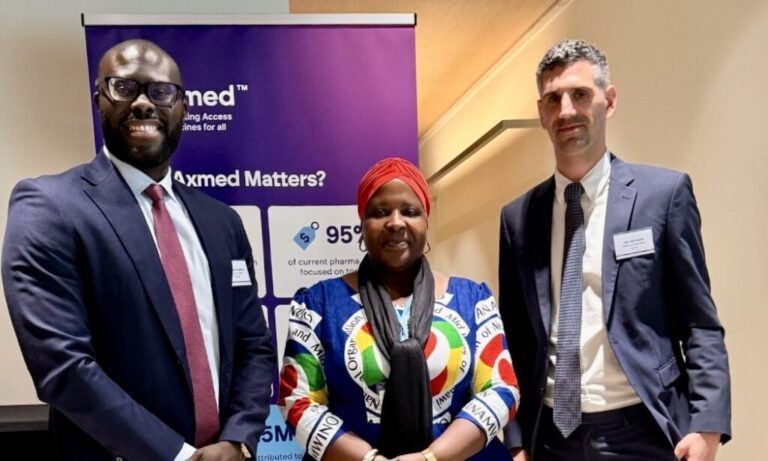
Geneva, Switzerland – In a significant boost to global health equity, the Bill & Melinda Gates Foundation has awarded a $5 million grant to Axmed, a healthcare technology company revolutionizing how essential medicines are procured across emerging markets.

The grant, announced at a high-level roundtable during the 78th World Health Assembly, will serve as a 1:1 matching fund to support government procurement of maternal, newborn, and child health (MNCH) commodities via the Axmed Medicines Platform.

The initiative aims to unlock up to $10 million in MNCH procurements across selected countries in Sub-Saharan Africa, enhancing national procurement capabilities while ensuring timely access to quality-assured, cost-effective medicines.

Ministries of Health will benefit from short-term liquidity support, pooled procurement, and aggregated demand—yielding better prices, stronger supply security, and more efficient health systems.

“Reducing the number of preventable deaths of mothers and babies is key to our work in sub-Saharan Africa,” said Cynthia Mwase, Director of Health, Africa, at the Gates Foundation. “This partnership with Axmed and local health leaders ensures that life-saving innovations reach the communities where they can have the greatest impact.”

Tackling Persistent Barriers to MNCH Access

Despite the availability of proven interventions, 287,000 women still die annually from pregnancy-related complications, and 2.3 million newborns die within their first month of life. These preventable tragedies are often rooted in weak procurement systems, limited budgets, and fragmented supply chains—challenges that have been further exacerbated by a global liquidity crunch and declining donor funding.

This new matching fund directly addresses these issues by providing immediate financing while supporting long-term reforms to procurement infrastructure in low-resource settings.

“Through our partnership with Axmed, the Government of Rwanda has demonstrated that efficient, sustainable delivery of high-quality medicines across multiple therapeutic areas is achievable,” said Dr. Loko Abraham, CEO of Rwanda Medical Supply. “This matching fund expands that impact, enabling us to reach the most vulnerable with urgency and precision.”

Digital Innovation Driving Scale and Savings

The Axmed Medicines Platform operates as a digital marketplace, connecting institutional buyers directly with vetted suppliers and leveraging collective purchasing power across borders. In 2024 alone, users of the platform—primarily Ministries of Health and government procurers—achieved average savings of 20–30%, with some MNCH products seeing cost reductions of up to 80%.

Axmed also collaborates with global logistics partners to ensure full-spectrum supply chain support, from manufacturers to last-mile distribution, with real-time tracking and traceability.

“This fund is a clear example of how catalytic financing and technology can work together to deliver immediate and lasting impact,” said Emmanuel Akpakwu, Founder & CEO of Axmed. “Our mission is not just to deliver medicines faster and more affordably—but to help countries build resilient, future-ready procurement systems.”

The grant signals growing momentum in efforts to modernize healthcare procurement and expand equitable access to life-saving medicines—marking an important step toward healthier futures for mothers, newborns, and children across Africa. Read More

Otedola Invests N320bn in First Bank, Commends Tinubu, Cardoso’s Reforms

Otedola’s move is being viewed as a powerful signal of private-sector confidence in Nigeria’s evolving economic framework

Otedola Invests N320bn in First Bank, Commends Tinubu, Cardoso’s Reforms

LAGOS — Femi Otedola, Chairman of First Bank Holding Company (First Holdco Plc), has revealed that his personal investment of over N320 billion in First Bank was driven by renewed confidence in Nigeria’s economic direction, citing reforms under President Bola Ahmed Tinubu and Central Bank Governor Yemi Cardoso as key enablers.

Speaking at the 13th Annual General Meeting (AGM) of First Holdco Plc, Otedola emphasized that the current macroeconomic and regulatory landscape has rekindled optimism for long-term investments in the Nigerian financial sector.

“This journey aligns closely with the bold and visionary leadership of President Bola Ahmed Tinubu, who deserves credit for championing the tough but necessary reforms in our economy,” Otedola said.

“I also commend the Governor of the Central Bank, Mr. Yemi Cardoso, for his courageous and pragmatic policy reforms. His actions are restoring credibility to the financial system and giving investors like me the confidence to commit long-term capital to this country.”

Otedola disclosed that his N320 billion stake—entirely self-funded without recourse to debt—signals a long-term commitment to transforming First Bank into a pan-African leader in the financial industry. He affirmed readiness to invest even more as the group embarks on a fresh capital raise, adding that the bank is well-positioned to meet its recapitalization targets ahead of the Central Bank of Nigeria’s deadline.

Otedola, who first entered the bank’s shareholding structure in 2021 after divesting from Forte Oil Plc, clarified that his investment is strategic rather than speculative.

“This was not a gamble,” he stated. “It was a calculated, strategic move to rebuild First Bank into a modern, well-governed, and highly profitable institution.”

Describing himself as an activist shareholder, Otedola pledged to enforce stronger corporate governance standards and eliminate financial inefficiencies, including executive excesses.

“No more private jets or unchecked luxuries. My focus is on protecting depositors’ funds, delivering shareholder value, and ensuring First Bank plays a meaningful role in society.”

He outlined a bold vision for the bank’s future, targeting continental dominance through expanded digital infrastructure, enhanced lending capabilities, and international growth.

“We’re not here just to compete—we’re here to dominate. Within four years, First Bank will rank among Africa’s top financial institutions, not just by asset size, but by governance, innovation, and value creation.”

Drawing parallels with his successful turnaround of Geregu Power Plc, which now supplies 10% of Nigeria’s electricity, Otedola expressed confidence in repeating that success with First Bank.

“I’ve done this before. I know what it means to fail, rise up, and win. First Bank is no different—this is a turnaround with purpose, and we are well on our way.”

Otedola’s move is being viewed as a powerful signal of private-sector confidence in Nigeria’s evolving economic framework. His endorsement of the Tinubu administration’s reform agenda and the Central Bank’s policy direction may encourage further institutional investments, particularly in a sector undergoing recapitalization and governance overhaul.

“We are back. We are profitable. And we remain on course in our aggressive pursuit to be the foremost financial institution in Africa,” he said. Read More

Fuel Gets Cheaper: Dangote Slashes PMS Price Again, Backs ‘Nigeria First’ Policy

Dangote refinery called on other marketers to join its expanding network of partners, thereby demonstrating their support for President Bola Tinubu’s Nigeria First policy

By Lukman Omikunle

Fuel Gets Cheaper: Dangote Slashes PMS Price Again, Backs ‘Nigeria First’ Policy

Dangote Petroleum Refinery & Petrochemicals has announced another reduction of N15 in the price of its high-quality Premium Motor Spirit (PMS). 

As a result of this reduction, Nigerians will now purchase the product at the following prices: N875 per litre in Lagos; N885 per litre in the South West; N895 per litre in the North West and North Central, while it will be sold for N905 per litre in the South East, South South, and North East.

These prices will apply through all its partners, including MRS, AP (Ardova), Heyden, Optima Energy, Techno Oil, and Hyde. The refinery called on other marketers to join its expanding network of partners, thereby demonstrating their support for President Bola Tinubu’s Nigeria First policy, which advocates for the prioritisation of locally-produced goods and services 

Dangote Petroleum Refinery & Petrochemicals has announced another reduction of N15 in the price of its high-quality Premium Motor Spirit (PMS). 

As a result of this reduction, Nigerians will now purchase the product at the following prices: N875 per litre in Lagos; N885 per litre in the South West; N895 per litre in the North West and North Central, while it will be sold for N905 per litre in the South East, South South, and North East.

These prices will apply through all its partners, including MRS, AP (Ardova), Heyden, Optima Energy, Techno Oil, and Hyde. The refinery called on other marketers to join its expanding network of partners, thereby demonstrating their support for President Bola Tinubu’s Nigeria First policy, which advocates for the prioritisation of locally-produced goods and services 

Since the commencement of operations, Dangote Petroleum Refinery has consistently implemented cost-reduction strategies aimed at delivering tangible savings to Nigerians. In February 2025, the company carried out two price reductions on petrol, resulting in a total decrease of N125 per litre.

This was followed by a further reduction of approximately N45 per litre in April. Additionally, the prices of other key products, such as diesel and Liquefied Petroleum Gas (LPG), have been significantly lowered, improving affordability across transportation, industrial, and domestic energy sectors. 

Dangote Petroleum Refinery recently reassured Nigerians of price stability despite fluctuations in global crude oil prices, reaffirming its commitment to supporting Nigeria’s economy. 

“By refining petroleum products domestically at the world’s largest single-train refinery, we are proud to make a substantial contribution to Nigeria’s energy security, foreign exchange savings, and overall economic resilience—aligning with President Bola Tinubu’s Renewed Hope Agenda, which focuses on addressing the nation’s economic challenges and improving the well-being of Nigerians.

“We are immensely grateful to His Excellency, President Bola Tinubu, for making this possible through the commendable Naira-for-Crude Initiative, which has enabled us to consistently reduce the price of petroleum products for the benefit of all Nigerians,” it stated. 

Dangote Petroleum Refinery further assures the public of a consistent supply of petroleum products, with sufficient reserves to meet domestic demand, as well as a surplus for export to enhance the country’s foreign exchange earnings. 

The founder of Dangote Refinery, Aliko Dangote, was named on Tuesday in the inaugural 2025 TIME100 Philanthropy list, which recognises the 100 most influential leaders shaping the future of philanthropy worldwide. The list, published by TIME Magazine, includes Aliko Dangote, whose Foundation spends an average of $35 million annually on programmes across Africa, alongside other global figures in charitable work, such as Michael Bloomberg, Oprah Winfrey, Warren Buffett, and Melinda Gates, all of whom were recognised as Titans. Read More

Alleged $35 Million Fraud: EFCC Opens Trial of Oil Tycoon Akintoye Akindele

0

According to the EFCC, the funds in question were disbursed by the NCDMB’s Capacity Development Intervention Company Ltd to Atlantic International Refinery and Petrochemical Limited

Alleged $35 Million Fraud: EFCC Opens Trial of Oil Tycoon Akintoye Akindele

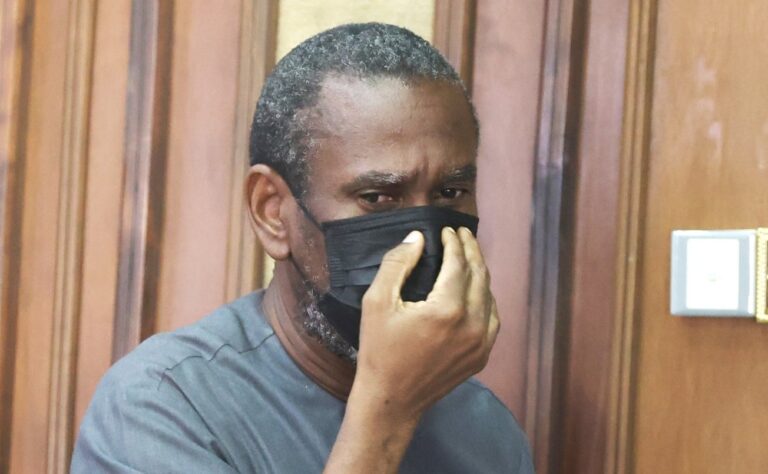
Abuja – The Economic and Financial Crimes Commission (EFCC) has begun the prosecution of prominent oil magnate, Dr. Akintoye Akindele, over allegations of fraud involving the diversion of $35 million belonging to the Nigerian Content Development and Monitoring Board (NCDMB).

The trial commenced on Tuesday at the Federal High Court, Abuja, with Akindele and two companies — Platform Capital Investment Partners Ltd and Duport Midstream Company Ltd — arraigned on a four-count charge bordering on money laundering and unlawful retention of public funds.

According to the EFCC, the funds in question were disbursed by the NCDMB’s Capacity Development Intervention Company Ltd to Atlantic International Refinery and Petrochemical Limited. They were meant for investments in a modular refinery, a jetty, and other infrastructure projects in Brass, Bayelsa State. However, prosecutors claim the money was unlawfully retained and partially spent by the defendants.

The case, filed under suit number FHC/ABJ/CR/641/2024, alleges that between December 2020 and February 2021, Akindele and Platform Capital retained $16 million from the diverted funds, and spent over $9 million during the same period. Additionally, Akindele and Duport Midstream are accused of separately retaining $784,681 and $220,000.

The EFCC says these actions contravene Section 15(2)(d) of the Money Laundering (Prohibition) Act 2011 (as amended in 2012) and are punishable under Section 15(3) of the same Act.

Akindele has pleaded not guilty to all charges and was granted bail to prepare for trial.

The prosecution’s first witness, Hon. Israel Sunny Goli, a former member of the Bayelsa State House of Assembly, testified that he petitioned the EFCC in 2023 over suspected mismanagement of funds linked to the Brass Fertilizer and Petrochemical Company, Atlantic International Refinery, and the Brass Petroleum Product Terminal.

Goli told the court that despite full payment for the project, only site clearing and a non-functional jetty had been completed two years after disbursement. He further alleged that caravans meant for staff had been abandoned and overtaken by reptiles.

Under cross-examination by Akindele’s lawyer, Chief A. O. Okeaya-Inneh (SAN), Goli admitted he could not confirm whether the $35 million was for equity investment or the full project, nor did he know if the EFCC was investigating or prosecuting officials of the NCDMB.

Responding to questions from counsel to the second and third defendants, Mr. B. J. Akomolafe (SAN), Goli stated that he had no direct evidence of payments to Duport Midstream, only what he was told by the NCDMB’s former Executive Secretary.

At the close of proceedings, EFCC counsel R. U. Adagba requested an adjournment to call the commission’s next witness.

An application by Akindele’s counsel seeking court permission for his client to travel abroad for medical treatment could not be heard due to a missing counter-affidavit from the prosecution.

Justice Ekerete Akpan adjourned the matter until July 10 and 15 for continuation of the trial. Read More

Ado-Odo/Ota LG Strengthens Partnership with CWAY Foods, Promises Action on Road, Tax Concerns

0

The collaboration was for both parties to strengthen their partnership for economic and community development

Ado-Odo/Ota LG Strengthens Partnership with CWAY Foods, Promises Action on Road, Tax Concerns

By Lukman Omikunle

Ota, Ogun State – In a bid to foster stronger ties with businesses operating within its jurisdiction, the Ado-Odo/Ota Local Government Council has paid a courtesy visit to CWAY Food and Beverages Ltd, one of the major manufacturers in the area.

Led by Executive Chairman Alhaji Lawal Adewale Wasiu, FCA, the local government team was received by CWAY’s top management at the company’s Ota plant. The visit was part of a broader initiative by the council to engage with corporate stakeholders and improve collaboration on developmental issues.

According to a statement made available on Wednesday by the Information Department of the Council, the CWAY’s management, during the meeting, showcased the company’s production capabilities and reaffirmed its compliance with both national and international safety and quality standards.

Established in 1999, CWAY has grown into a major player in the food and beverage sector, producing popular items such as Nutri Milk, Glucose Drink, Nutri Choco, Peach Fruit Drinks, Pizzy Apple Flavor, and Fuji Probiotics. The company also operates a second plant in Shagamu.

Commending CWAY’s contributions to the local economy, the Council  boss, Lawal praised the company’s commitment to quality and safety, describing it as a valued partner in community development.

However, the CWAY management raised pressing concerns affecting operations at the Ota facility. These included issues of multiple taxation, poor road infrastructure—particularly the deteriorating stretch from Oju Ore to the plant—and security challenges. Mr. Arun Bhintade, General Manager of CWAY, urged the local government to look into these matters, while Mr. Makanjulola James highlighted the financial strain caused by levies on trucks, which has made some operators shift preference to the Shagamu plant.

In response, Lawal clarified the local government’s position on levies and the role of its approved consultants. He assured the company of the council’s commitment to easing business operations and revealed that he had personally inspected ongoing road works at Oju Ore. He disclosed that contractors have been given a three-week ultimatum to provide adequate drainage systems and alternative routes for motorists, especially ahead of the rainy season.

The chairman also called on CWAY to educate its drivers on road etiquette, particularly the need to queue properly and avoid obstructing traffic. He emphasized that timely payment of levies is crucial for funding local development projects and improving infrastructure.

The visit ended with a mutual agreement to continue building a stronger partnership for economic and community advancement. Read More

How to Apply Perfume for Long-Lasting Results – Experts

How to Apply Perfume for Long-Lasting Results – Experts

When it comes to perfume application, spritzing more isn’t always the answer to making it last longer. For instance, someone doused in fragrance may walk past you and exude a strong scent, but that doesn’t mean it’ll last all day. And that’s because making sure that your perfume lasts has more to do with smart application than how much you spray. As it turns out, fragrance pros have a handful of tips just like these to help scents stick around for hours.

“Proper use ensures fragrance layers are fully appreciated and interact optimally with your skin’s natural oils, producing a unique scent for the wearer and anyone else nearby,” says Jonnie Swarbrick, the creative director at Fragrance Du Bois. As fragrance pros know, no scent smells exactly the same on two people. That said, there are still ways to make your fragrance last longer regardless of your pheromones. Along with Swarbick, perfumers Marie du Petit Thouars, Courtney Somer, and Frank Voelkl break down how to apply fragrance to make it last longer.

Hydrate the Skin

Experts suggest applying an unscented, hydrating body lotion out of the shower while your skin is still damp, as properly moisturized skin is more receptive to absorbing fragrance. “Hydrated skin retains natural oils, acting as a base for fragrance to adhere to. Also, retaining those natural oils ensures the scent profile will differ from person to person,” says du Petit Thouars. She also notes that dry skin has a rougher texture and microscopic fissures that prevent fragrance from adhering well. Be sure your skin is dry before application, as excess water can dilute fragrance and affect its longevity.

Apply to Your Pulse Points

Applying scent to pulse points such as the wrists, inside the elbows, on the neck, and behind the knees will utilize the body’s heat to activate and amplify the fragrance’s molecules, adding to its longevity and intensity. “Pulse points are the warmest areas of your body, where blood vessels are located closest to the skin,” says Somer. “They help emit scent and make it last longer.” According to Swarbrick, applying your perfume to several pulse points enhances its presence and ensures “a balanced diffusion throughout the day.”

Spray Onto Skin Directly

Let the formula absorb into your skin on its own. “Don’t rub your wrists together as friction can heat up the skin and alter the formula’s molecules, accelerating evaporation and throwing off the scent profile,” adds du Petit Thouars. Also pass on perfume clouds, as spraying fragrance into the air and walking through it can lead to a significant amount of waste when any droplets end up on the furniture or floor. “Plus, direct application ensures the fragrance is concentrated on the body, where it can interact properly with the skin’s chemistry,” says Swarbrick.

Tip: Voelkl recommends spraying fragrance behind your knees. According to the perfumer, this will deliver a more subtle experience as opposed to continuous exposure.

Credit: PeopleImages.com – Yuri A/Shutterstock

Layer Your Fragrance

Layering will make a scent last longer, especially when combined with a body wash and lotion in the same scent formula. “It’s always safest to stick with scents in the same olfactive family, as there’s a better chance the individual notes will work harmoniously together,” says du Petit Thouars.

Tip: To test how well two different perfume scents work together, spray some fragrance blotters (or any stiff, textured card) with different scents to see if they complement each other. “Spray the stronger scent first and then top it with the lighter fragrance so the second scent isn’t overpowered,” says Swarbrick. This way, you’ll get to see how the dry-down or base notes smell and how long the bespoke perfume lasts.

Consider Woody Scents

There’s an art to layering fragrances, which affects how long they last. “A lot has to do with the kind of scents you’re layering,” adds Voelkl. “For example, if you were to apply a light citrus scent and then add a woody musk on top of it, you’d increase the fragrance’s lasting effect as woody and musky notes typically last longer than citrus.”

Opt for Eau de Parfum

If you’re shopping for a new signature scent, try reaching for an eau de parfum over an eau de toilette. Eau de parfum typically has higher concentrations of perfume oil than eau de toilette, so its scent is stronger.

Control the Pump

Some fragrance pumps spurt out a poof while others rely on a continuous spray. Du Petit Thouars encourages adding one to three sprays. “Then, wait a few minutes if you want to intensify the scent with any additional spritzes.” But how do you know if you’ve applied too much? It’s not easy, but there are some telltale signs you can look for. For instance, if you can no longer smell any other scents around you or if you start to get a slight headache or feel nauseous. “You should think of your personal fragrance as something that enhances, not masks, you and everything around it,” adds du Petit Thouars.

Tip: Give your fragrance bottle a pump in the air if you haven’t reached for it in a while as the first spray (which will include residue in the nozzle) can contain perfume that may be partly oxidized.

Use Long-Lasting Scents

“There are many commonly used base notes, including vanilla, sandalwood, cedarwood, musk, and patchouli that will generally anchor a fragrance and contribute to the longevity of the overall scent profile,” says du Petit Thouars. “Many floral and citrus notes will show up in top and middle notes since they’re more volatile in nature and will evaporate more quickly,” adds du Petit Thouars.

The Bottom Line

Every single person has the right to wear whichever perfume they feel best in. Regardless of which perfume you opt for, experts say that there are a few things you should do to make it last longer.

First and foremost, you’ll want to make sure your skin is hydrated. Then, on dry-yet-hydrated skin, you’ll spritz perfume on all your pulse points. You could also layer different products and opt for scents that are listed as long-lasting. With a combination of those steps, your fragrance is sure to last virtually all day. Read More

SOURCE:InStyle

WHO HATES THE IGBO TRIBE? | By Femi Omidiji

0

It is improbable that the entire nation would single out one tribe as the scapegoat

WHO HATES THE IGBO TRIBE? | By Femi Omidiji

There is a widespread perception among Igbo individuals that other ethnic groups in Nigeria harbor animosity towards them. A pertinent question arises: why would a nation develop such negative sentiments towards a particular tribe?

It is essential to acknowledge that this is a personal viewpoint.

Historically, the Igbo tribe held significant positions of power in Nigeria, occupying major offices in politics and other sectors. They also dominated the military and police forces after independence.

Some attribute the current trend to the civil war, during which the Igbo people were allegedly ruthless towards northern military officers during the coup. Can it be reasonably concluded that this is the reason for the perceived hatred towards the Igbo people till date?

This explanation seems implausible, considering that the event occurred nearly seven decades ago and the anger has persisted. Moreover, those who witnessed the event have long passed away, leaving behind vague accounts of what actually transpired.

The primary reason this narrative has endured is largely political and not related to the civil war. After the Igbo people returned to the southwest, many regained possession of their properties, which they had left behind before fleeing.

There is no other tribe in Nigeria that has been more receptive to the Igbo people than the Yorubas. The Yorubas have been exceptionally welcoming and largely detribalized, a characteristic that has been consistent over time.

Historical accounts suggest that many Yoruba individuals protected Igbo people who remained in Yoruba land during the war. The notion that the Igbo people believe every other tribe dislikes them stems from their inability to assume leadership roles. They perceive it as a deliberate attempt to deny the Igbo people the presidency.

However, this is not necessarily the case. Some believe that other tribes are envious of the Igbo people’s success, as they are largely prosperous. However, this narrative is unfounded, as records indicate that only two Igbo individuals are among the ten richest people in Nigeria, and they do not occupy the top five positions.

While the Igbo people have indeed achieved significant success, Nigeria’s political system has not been favorable to them. This is not a deliberate attempt to marginalize the Igbo people but rather a result of the power structure, which is not unique to Nigeria.

Major tribes often dominate power dynamics, making it rare for minor tribes to assume leadership roles unless circumstances intervene, as seen in the case of Jonathan. It is improbable that the entire nation would single out one tribe as the scapegoat.

The prevailing belief among Igbo individuals that they are disliked stems primarily from their inability to secure the presidency, and unfortunately, this narrative may persist due to the low probability of an Igbo individual becoming president.

Often, Igbo individuals respond combatively to posts that they perceive as unfavorable, particularly those related to leadership. This phenomenon is rooted in psychology, as individuals who feel marginalized tend to become defensive. This behavior is not unique to the Igbo people but rather a natural response to perceived injustice.

*It is important to acknowledge that this article represents personal viewpoint and opinion of Femi Omidiji, a public commentator, who writes from Ogun State, Nigeria.

Elumelu Hails Naira Stability at Qatar Forum, Says Nigeria Now More Investor-Friendly

0

Resolving currency instability is vital for economic growth across emerging markets

Elumelu Hails Naira Stability at Qatar Forum, Says Nigeria Now More Investor-Friendly

By Lukman Omikunle

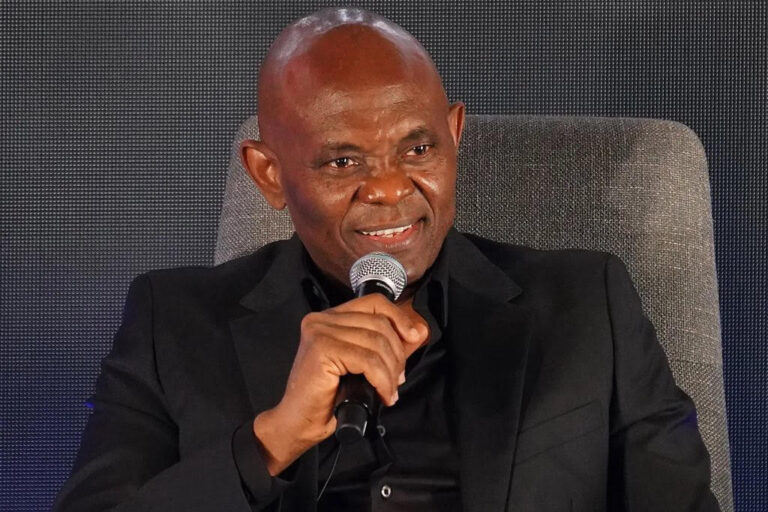
DOHA, Qatar — May 20, 2025 — Nigerian business leader Tony Elumelu has praised the recent stability of the naira, describing it as a positive signal for global investors eyeing opportunities in Africa’s largest economy.

Speaking at the Qatar Economic Forum, Elumelu—Chairman of United Bank for Africa (UBA) and a key member of Nigeria’s Presidential Economic Coordination Council—said the naira’s steadiness in recent months is making it easier for investors to plan and engage with the Nigerian market.

“The naira is becoming quite stable,” Elumelu said. “I’d like to see that continuing.”

In May, the naira has traded within a relatively narrow range of 1,588 to 1,611 per dollar, a notable shift from the turbulent currency swings seen since 2023. The turnaround is credited to deliberate reforms by the Central Bank of Nigeria (CBN), including efforts to clear a backlog of unmet dollar demand, offer attractive yields on government securities, and enhance foreign exchange supply.

Elumelu emphasized that resolving currency instability is vital for economic growth across emerging markets. “Currency volatility is a challenge for Africa and Asia. In the global south, fixing the volatility of our currencies will be critical for ultimately developing our economies,” he said.

Elumelu, who is also the largest shareholder of Transnational Corporation of Nigeria Plc, underscored the broader impact of monetary stability on investor confidence and economic planning.

The Qatar Economic Forum, underwritten by the State of Qatar and powered by Bloomberg, gathers global economic and policy leaders to discuss pathways to sustainable growth in developing economies. Read More

Fidelity Bank Dispels Bankruptcy Rumors, Clarifies N225 Billion Court Judgment

By Staff Writer

Fidelity emphasized that it remains one of Nigeria’s most capitalized and profitable banks, with international operations and a strong financial outlook

Fidelity Bank Dispels Bankruptcy Rumors, Clarifies N225 Billion Court Judgment

LAGOS, Nigeria — May 20, 2025 — Fidelity Bank Plc has responded to media reports suggesting it is facing bankruptcy following a Supreme Court judgment, calling the claims “misleading” and “contemptuous,” while reaffirming its financial stability.

The bank issued a statement in reaction to a recent publication by Peoples Gazette, which claimed that the Supreme Court had ordered Fidelity to pay N225 billion in damages to Sagecom Concepts Limited. The article referenced a longstanding legal dispute inherited by Fidelity Bank following its merger with the now-defunct FSB International Bank.

According to Meksley Nwagboh, Divisional Head of Brand & Communications at Fidelity Bank, the matter stems from a 2002 credit facility granted by FSB to G. Cappa Plc, secured by a mortgaged property in Ikoyi, Lagos. After G. Cappa defaulted on the loan, it initiated a lawsuit to prevent the sale of the property. In 2011, FSB sold the leasehold interest in the property to Sagecom, with court backing, though the issue of possession remained unresolved.

Despite court rulings, G. Cappa continued to occupy the property and collect rental income, prompting Sagecom to sue both G. Cappa and the bank in 2011. In 2018, a Lagos High Court ruled in Sagecom’s favor, awarding damages, which were later challenged up to the Supreme Court.

Fidelity Bank insists the core losses stemmed from G. Cappa’s prolonged possession of the property, not the bank’s actions. While the Supreme Court has upheld the 2018 judgment, Fidelity says ambiguities in the ruling have made it difficult to determine the actual amount owed. The bank estimates its share of the liability to be about N14 billion, based on the exchange rate in 2005, when the cause of action arose.

The bank also referenced a 2025 Supreme Court ruling in Anibaba v Dana Airlines Ltd, which clarified that judgment debts in foreign currency should be converted at the exchange rate as of the trial court’s decision—in this case, January 30, 2018. Based on that rate, Fidelity believes the total judgment debt—primarily owed by G. Cappa—amounts to just under N30.7 billion.

Fidelity said it has applied to the court for clarification on the interpretation of the judgment and the accurate calculation of its liability. The court has since ordered all parties, including Sagecom, to maintain the status quo and refrain from further media publications while the matter remains pending.

The bank condemned the Peoples Gazette report as “malicious and sponsored,” alleging it was intended to embarrass the institution and mislead the public. Fidelity emphasized that it remains one of Nigeria’s most capitalized and profitable banks, with international operations and a strong financial outlook. The bank pointed to its Q1 2025 financial results as evidence of its stability.

Fidelity further stated that it is taking legal steps to identify and prosecute individuals or platforms responsible for publishing what it calls false and defamatory content.

A court order prohibiting further media coverage of the case is currently in effect.