





Nigeria and the EU have concluded a decade-long readmission agreement to facilitate the return of Nigerians without legal residency in European countries
Nigeria, EU Finalise Deal to Return Illegal Migrants
By Newsheadline247
Nigeria and the European Union (EU) have concluded negotiations on a readmission agreement that will facilitate the return of Nigerians without legal grounds to remain in EU member states, ending nearly a decade of discussions between both parties.
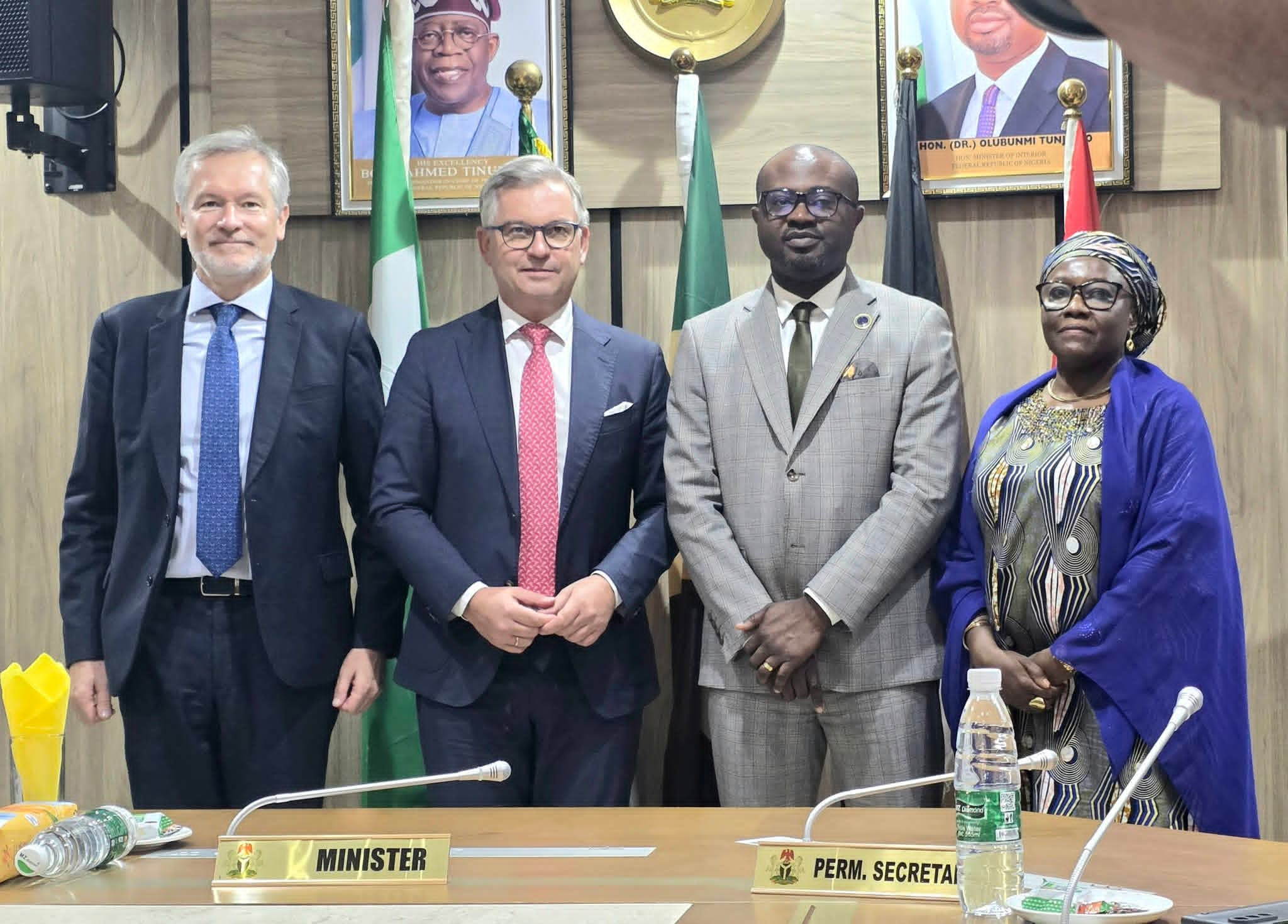
The agreement was finalised on Tuesday, November 10, 2026, during a meeting between the Minister of Interior, Dr Olubunmi Tunji-Ojo, and the EU Commissioner for Internal Affairs and Migration, Magnus Brunner, at the Ministry of Interior. It is expected to be formally signed by both parties.
Tunji-Ojo described the development as a significant step towards strengthening Nigeria’s relationship with the European bloc and improving migration management. He assured the EU delegation that the Federal Government would honour the provisions of the agreement.
The minister said the arrangement would establish a more orderly and dignified migration system, stressing that Nigeria did not encourage irregular migration or the abuse of international trust.
He also reaffirmed the government’s commitment to modernising migration and border management through automation and the integration of national identity databases to improve the identification and verification of Nigerians being returned from Europe.
According to him, the integrated system would enable authorities to establish the identities of returnees, including those without valid travel documents or who had lost their identification papers.
Tunji-Ojo disclosed that more than 17 million migration records had been migrated into an integrated system, adding that similar arrangements were being implemented with the United Kingdom, while discussions were ongoing with the United States.
The EU commissioner described the conclusion of negotiations as an important development in relations between Nigeria and the bloc, expressing the EU’s readiness to expand cooperation in border security, police collaboration, human trafficking and migrant smuggling.
Brunner disclosed that approximately 260,000 Nigerians were legally resident in EU member states, emphasising the need to create more opportunities for safe and regular migration.
He also commended Nigeria’s efforts to strengthen its border management architecture, noting that closer cooperation would help both sides address shared migration and security challenges.
A member of the EU delegation, Johannes Lucher, said the negotiations had been challenging because Nigeria sought to broaden the scope of cooperation to include other areas, particularly combating human trafficking and drug trafficking, as well as creating legal migration pathways.
He said discussions on the additional areas would commence following the conclusion of the readmission agreement.
Lucher further disclosed that the European Union had made almost €100 million in additional funding available to support broader cooperation with Nigeria.
He said discussions on the funding and other areas of collaboration were expected to begin with Nigerian migration and security officials.
The agreement marks a new phase in Nigeria-EU migration relations, with both sides expected to pursue closer cooperation on irregular migration, border security and the expansion of legitimate migration opportunities.