
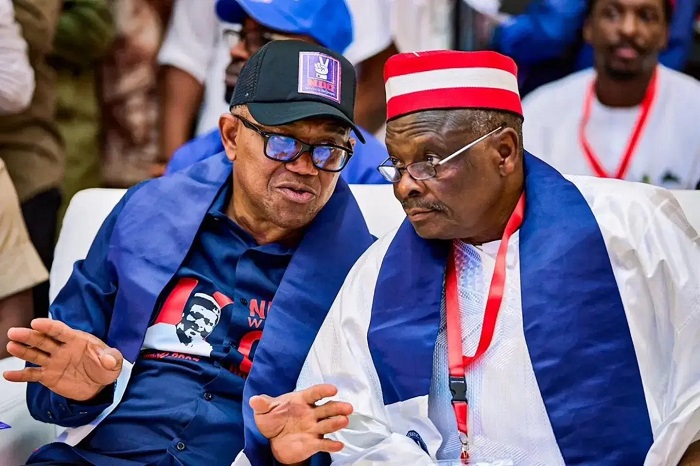


The OK Movement has rejected pressure to abandon its independent structure, insisting it will mobilise support for Peter Obi and Rabiu Kwankwaso ahead of 2027
OK Movement Defies NDC, Backs Obi, Kwankwaso for 2027
By Newsheadline247
The Obi-Kwankwaso Movement, popularly known as the OK Movement, has insisted it will retain its independent identity while mobilising support for the Nigeria Democratic Congress (NDC) and its candidates ahead of the 2027 general elections.
The movement’s leader, John Ughulu, said the group remained committed to its original mission of securing the election of former Anambra State Governor, Peter Obi, and former Kano State Governor, Rabiu Musa Kwankwaso, despite disagreements with the NDC leadership over its organisational structure.
In an interview, Ughulu dismissed concerns that the movement’s decision to maintain an independent campaign structure could undermine its support for the NDC, insisting that both sides shared a common political objective.
“What difference does it make when we campaign on parallel lines? The most important thing is that we have one objective,” he said.
Asked whether the movement had decided to retain its independent status rather than formally integrate into the NDC’s campaign structure, Ughulu maintained that its position remained unchanged.
“We have always been independent, and there is nothing wrong in that. We are campaigning for NDC party’s candidates. I will appreciate we leave it like that,” he added.
He urged members and supporters to remain committed to the principles upon which the movement was established, stressing that its political mission remained non-negotiable.
“The members of the OK Movement work on the principles upon which we formed the movement. The mission to bring His Excellency Peter Obi and His Excellency Senator Rabiu Musa Kwankwaso is sacrosanct,” Ughulu said.
The position underscores the movement’s determination to preserve its leadership, membership and organisational structures while supporting the NDC’s electoral ambitions, particularly its presidential ticket of Obi and Kwankwaso.
The disagreement between both sides followed the OK Movement’s announcement of a 59-member Presidential Campaign Council to coordinate mobilisation for the NDC candidates ahead of the 2027 elections.
The NDC leadership subsequently rejected the arrangement, insisting that only the party’s National Working Committee had the authority to constitute and announce its official campaign structures.
The party maintained that support groups could mobilise for its candidates but must operate within its recognised organisational framework rather than establish parallel campaign structures.
NDC National Leader, Senator Henry Seriake Dickson, also stressed that political movements supporting the party’s candidates should complement, rather than compete with, the party’s machinery.
However, the OK Movement resisted the position, arguing that its support for the NDC candidates should not compel it to surrender structures established independently.
The disagreement intensified after the party disowned the movement’s 59-member campaign council and referred Ughulu to its disciplinary organ over alleged disregard for party authority.
The NDC subsequently unveiled its own National Campaign Council for the 2027 elections on October 25, naming Dickson as chairman, Obi as co-chairman and Kwankwaso as co-vice-chairman.
Despite the emergence of the party’s official campaign structure, Ughulu maintained that the OK Movement would continue mobilising support for Obi, Kwankwaso and other NDC candidates without abandoning its independent identity.
The development highlights the organisational tensions facing the NDC as political groups and supporters seek to coordinate their mobilisation efforts ahead of the 2027 general elections.