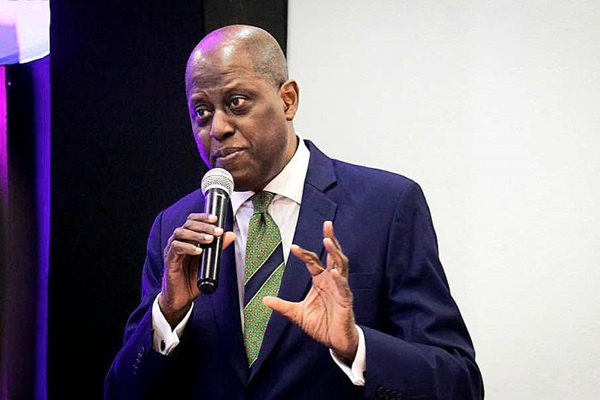
The Governor of the Central Bank of Nigeria (CBN), Olayemi Cardoso, has warned that slow, costly, and fragmented cross-border payment systems are stifling economic opportunities for millions of people, particularly in developing nations.
Speaking in Abuja at the G-24 Technical Group Meetings, Cardoso said inefficiencies in global payment systems continue to create serious barriers for individuals and small businesses seeking to participate in international trade and finance.
“If people cannot move money easily, affordably, and safely across towns, borders, and continents, then they cannot fully participate in modern economic life,” he stated.
According to Cardoso, remittance corridors currently cost more than six percent on average, settlements can take several days, and stringent compliance rules often exclude micro, small, and medium-sized enterprises.
He stressed that cross-border payments are now central to global financial stability, and inefficiencies translate into higher remittance costs, foreign exchange burdens, and expensive trade settlements for developing economies.
Cardoso identified digital innovation as a major solution, citing instant payment systems, interoperable platforms, distributed ledger technology, and strong digital identity frameworks as tools to reduce costs, increase transparency, and expand financial inclusion.
He disclosed that Nigeria launched its National Payment Stack in June 2025 — a real-time platform built on ISO 20022 messaging that supports multi-currency and cross-border transactions.
The CBN, he said, has also simplified Know-Your-Customer and anti-money-laundering requirements for low-value cross-border payments to encourage participation in the Pan-African Payment and Settlement System (PAPSS), easing intra-African trade transactions.
Nigeria’s remittance inflows now average about $600 million monthly, with projections to reach $1 billion per month soon, following reforms such as the Non-Resident Nigerian account platforms and digital BVN enrolment for Nigerians abroad.
Despite the benefits, Cardoso cautioned that digital cross-border systems carry risks, including foreign exchange volatility, currency substitution, and regulatory gaps.
He stressed that central banks must remain at the centre of payment reforms to safeguard financial stability and public trust, while supporting inclusive growth and job creation.
Also speaking, Minister of Finance and Coordinating Minister of the Economy, Wale Edun, said Nigeria is pursuing domestic revenue reforms aimed at raising the country’s tax-to-GDP ratio to 18 percent in the medium term through automation, improved compliance, and technology-driven systems.
He highlighted initiatives such as the National Single Window and Central Billing System as part of broader efforts to strengthen fiscal sustainability.
In her opening remarks, Dr. Iyabo Masha of the Intergovernmental Group of Twenty-Four warned that rising debt service costs and shrinking fiscal space are deepening structural financing challenges across developing countries.
She urged policymakers to adopt strong macroeconomic frameworks, invest in infrastructure and human capital, and deepen regional trade cooperation to drive sustainable, inclusive, and job-rich economic transformation.
As digital finance reshapes global markets, Cardoso said the next frontier lies in extending secure, affordable cross-border payment systems to empower households, small businesses, and emerging economies worldwide.