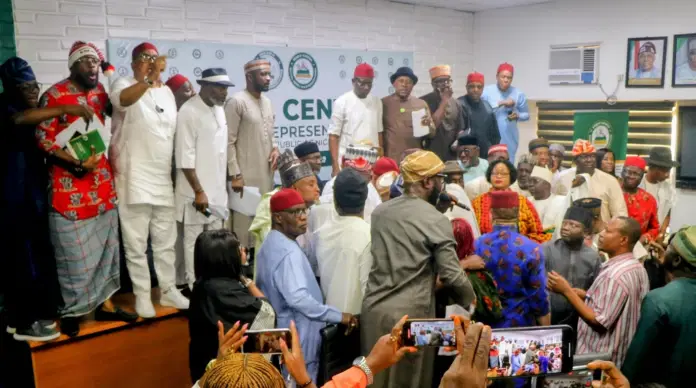
Tempers flared at the National Assembly as opposition lawmakers decried the decision to stop short of making electronic transmission of election results to the IReV portal strictly mandatory, warning that the “battle for Nigeria’s democracy has just begun.”
The controversy followed the passage of amendments to the Electoral Reform Bill, which now recognise electronic transmission of results but allow manual transmission as a fallback in cases of network failure. President Bola Ahmed Tinubu swiftly assented to the bill after its passage.
Opposition members accused the leadership of the National Assembly of Nigeria of betraying public trust, arguing that mandatory real-time electronic transmission would have strengthened confidence in the electoral process.
Former Senate Minority Leader, Senator Enyinnaya Abaribe, advised Nigerians to take proactive steps ahead of the 2027 general elections. According to him, citizens must safeguard their votes by deploying well-trained and motivated party agents at polling units.
Nigerians can defeat any attempt to rig their votes. All we need are properly trained agents who will not be afraid to confront sabotage at polling stations,” Abaribe said.
In the House of Representatives, Labour Party caucus leader Hon. Afam Ogene criticised what he described as a hasty presidential assent, questioning whether adequate scrutiny was given to the final document. He lamented what he called a retreat from earlier commitments to electronic voting reforms.
Similarly, Minority Caucus leader Hon. Kingsley Chinda said opposition lawmakers rejected provisions they believed could create room for “micro-manipulation,” insisting their resistance was rooted in patriotism rather than partisanship.
Hon. Ikwechegh Alexander Mascot of APGA urged citizens to actively participate in the democratic process, stressing that protecting votes requires vigilance beyond election day rhetoric. Rep. Peter Uzokwe also expressed anger, alleging that earlier agreements were altered following consultations outside the chamber.
However, House Spokesperson Hon. Akin Rotimi defended the amendment, describing it as a balanced and constitutional outcome of bipartisan deliberations.
For the first time, the law expressly mandates and recognises the IReV and electronic transmission of Form EC8A. The presiding officer shall mandatorily transmit results electronically, with manual transmission only as a fallback in the event of failure,” Rotimi said.
He maintained that the process complied fully with legislative rules and constitutional provisions, adding that electoral reforms evolve over time.
It was done in the best interest of Nigerians. What we have may not be perfect, but it is a step toward strengthening free, fair, and credible elections,” he stated.
With the 2027 general elections on the horizon, the debate underscores deep divisions within the legislature over how best to guarantee electoral integrity, leaving the broader public to weigh competing narratives about the future of Nigeria’s democracy.