





The House of Representatives has summoned MTN, Airtel, Glo and Mafab CEOs over poor network services, raising questions about telecom regulation and fibre damage
Reps Summon MTN, Airtel, Glo CEOs Over Poor Network Services, Threaten Arrest
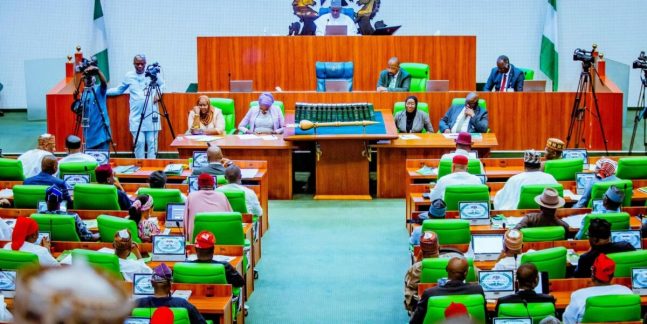
The House of Representatives has summoned the chief executives of MTN Nigeria, Airtel Nigeria, Globacom and Mafab Communications over persistent poor telecommunications services, threatening arrest summons to compel their appearance before its investigative committee.
The House ad hoc committee investigating telecommunications service quality directed the executives to appear on October 28, 2026, following reports that some operators failed to honour earlier invitations.
The committee, chaired by Olumide Osoba, also directed the Nigerian Communications Commission (NCC) to ensure the companies comply with the summons, escalating parliamentary scrutiny of network failures affecting subscribers and businesses across Nigeria.
Osoba said telecommunications services had become indispensable to economic activity, supporting businesses, financial transactions and point-of-sale operations.
The investigation comes amid growing concerns about unreliable connectivity and its impact on consumers, commercial activities and services increasingly dependent on digital infrastructure.
However, the latest summons has also revived questions about the respective responsibilities of telecom operators, the industry regulator and the legislature in addressing persistent service failures.
Figures from the NCC’s Quality of Experience data, reported by Technext, indicate that 44,678 fibre-related incidents were recorded between January and September 2026.
The reported incidents included 17,462 cases of service degradation, 9,283 incidents of vandalism and 9,008 cable connection problems.
In August, NCC Chief Executive Officer Aminu Maida disclosed that more than 5,000 fibre-cut incidents had occurred in the first half of the year, linked to road construction, excavation and other civil engineering activities.
“To a machine operator on a construction site, it may appear to be one buried cable. To the nation, it can mean failed calls, stalled payments, interrupted services and missed opportunities,” Maida said at a stakeholders’ workshop on fibre protection.
He called for stronger coordination among road contractors, telecommunications operators and government agencies, warning that physical infrastructure projects should not undermine the digital networks supporting economic activity.
The NCC has also identified vandalism, theft and restricted access to telecommunications facilities as factors affecting network reliability.
These challenges complicate efforts to determine the causes of poor service in individual locations. However, they do not remove operators’ responsibility to explain disruptions, account for network performance and demonstrate improvements to subscribers.
Investment in the sector has also raised questions about the relationship between spending and service quality.
NCC figures cited in the report indicated that mobile network operators invested more than N2.13 trillion in infrastructure and upgrades in 2025, while tower companies committed N373.8 billion.
The combined investment exceeded N2.5 trillion and supported the addition or upgrading of more than 2,800 telecommunications sites.
Despite the reported spending, persistent complaints about connectivity have intensified scrutiny of how investments translate into improved service, particularly in congested urban areas and locations experiencing recurring disruptions.
Operators must account for their performance, while any comprehensive assessment must also consider infrastructure damage, electricity supply challenges, security concerns and restrictions on access to network facilities.
The regulator’s performance is another central issue in the debate.
The NCC is responsible for monitoring service quality, enforcing regulatory standards and protecting consumers. Its effectiveness therefore depends not only on collecting performance data but also on demonstrating how enforcement measures address recurring network failures.
The House investigation has also revived a longstanding dispute over the National Assembly’s oversight of private telecommunications companies.
In 2018, the Association of Licensed Telecommunications Operators of Nigeria, then led by Gbenga Adebayo, approached the Federal High Court in Abuja seeking clarification of the legislature’s oversight powers over private telecom operators.
The association said operators were receiving repeated invitations from different legislative committees, sometimes on overlapping issues.
It also questioned demands for the personal attendance of chief executives when other senior officials might be better placed to respond to technical questions.
The litigation raised concerns about the scope of legislative oversight, requests for corporate information and the burden of multiple invitations on telecommunications companies. The final outcome of the case has not been independently verified for this report.
The House also investigated telecommunications coverage in underserved communities and the utilisation of the Universal Service Provision Fund in 2023, inviting operators, the NCC and other institutions to participate in the inquiry.
That investigation provides an earlier example of parliamentary scrutiny of the sector, although the available information does not establish whether the intervention produced lasting improvements.
The timing of telecom investigations in 2023 and 2026, both ahead of general elections, also raises questions about the relationship between legislative oversight and the political calendar. However, the timing alone does not establish the motives behind either inquiry.
The current investigation will therefore need to clarify the legal basis of the committee’s actions, the specific issues within its terms of reference and how its work complements the NCC’s statutory responsibilities.
For telecommunications operators, the central expectation is reliable service, transparent explanations for network failures and measurable improvements in performance.
For the NCC, the challenge is to demonstrate that its monitoring and enforcement activities are producing results for subscribers.
The National Assembly, meanwhile, faces questions about the legal basis, scope and effectiveness of its intervention, particularly given the longstanding dispute over repeated invitations to telecom executives.
Government agencies and contractors also have responsibilities where road construction, excavation, vandalism or restricted access damages critical telecommunications infrastructure.
With the 2027 general election approaching, the latest summons places the quality of Nigeria’s telecommunications services back in the spotlight while reviving questions about the boundaries of parliamentary oversight.
Ultimately, the significance of the hearings will depend on the evidence presented, the legality of the committee’s actions and whether the investigation leads to verifiable improvements in network quality.
For millions of subscribers who depend on mobile connectivity for communication, banking and business, the priority remains straightforward: reliable networks and effective accountability when services fail.