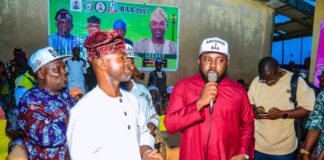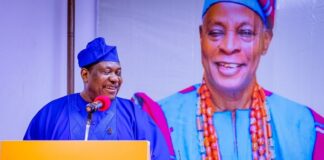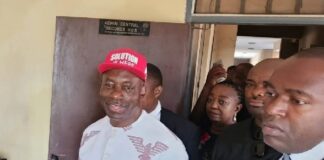
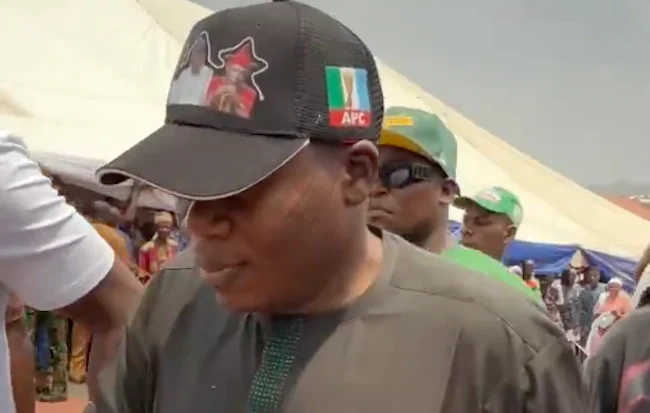
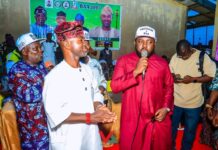
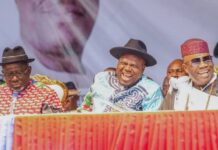
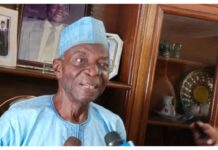
Yoruba nation activist Sunday Adeyemo, popularly known as Sunday Igboho, has stirred fresh political debate after he was seen wearing a fez cap emblazoned with the logo of the All Progressives Congress (APC).
Igboho attended the first Ramadan lecture hosted by the Olubadan of Ibadanland, Rasheed Ladoja, following the monarch’s coronation. In a now-viral video, the activist was captured greeting the traditional ruler and the event’s guest lecturer, the Chief Imam of Offa, Sheikh Muyideen Salmon, while wearing the APC-branded cap.
The footage quickly ignited reactions online, with many users drawing comparisons between Igboho and detained IPOB leader Nnamdi Kanu.
Some critics accused Igboho of aligning with the political establishment he once opposed, while others defended him, arguing that his recent travails may have influenced his stance.
The debate reflects ongoing public interest in the trajectories of prominent separatist figures and their relationships with Nigeria’s political elite.
Meanwhile, Igboho’s spokesman, Olayomi Koiki, disclosed that arrangements have been concluded for his return to Nigeria after traditional rulers reportedly intervened on his behalf.
According to Koiki, monarchs including Oba Ladoja, the Ooni of Ife, Adeyeye Ogunwusi, and the Olugbon of Orile Igbon, Oba Francis Alao, appealed to President Bola Ahmed Tinubu to remove Igboho’s name from the list of wanted persons.
Igboho fled Nigeria in July 2021 after a joint operation by security agencies raided his Ibadan residence over allegations of stockpiling arms — claims he denied. He was later arrested in Cotonou, Benin Republic, and detained for over a year before being released in March 2022.
Under the administration of former President Muhammadu Buhari, Igboho was declared wanted and faced restrictions including passport denial and frozen bank accounts.
Koiki now says his principal has been cleared by the Presidency and could return to Nigeria “at any moment.”
The sighting of Igboho in APC insignia has added a new dimension to discussions about his political future, particularly as the 2027 general elections approach.
Whether symbolic or strategic, the moment has reignited conversations about activism, political reintegration, and shifting alliances in Nigeria’s evolving democratic landscape.