
Power Minister Adebayo Adelabu says Tinubu’s reforms have doubled sector revenue, stabilised the grid and positioned Nigeria to export electricity across West Africa
Tinubu’s Power Reforms Paying Off as Nigeria Boosts Electricity Supply, Eyes West Africa Export — Adelabu
Nigeria’s electricity sector is witnessing a major turnaround under President Bola Ahmed Tinubu, with sweeping reforms already delivering tangible gains in power generation, grid stability and regional energy leadership, Minister of Power, Adebayo Adelabu, has said.
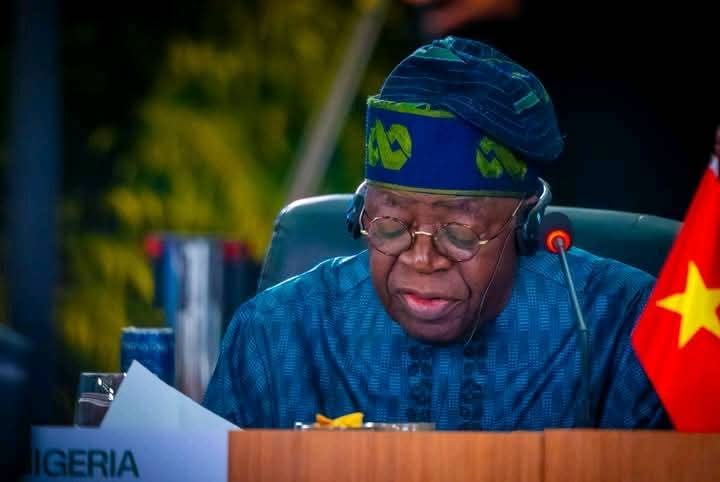
Speaking on the sidelines of the West Africa Energy Cooperation Summit in Accra, Ghana, Adelabu said the administration’s interventions have injected new life into a sector long plagued by inefficiencies, positioning Nigeria not only to meet domestic demand but also to supply electricity across West Africa.
According to the minister, the revival of the sector is anchored on five major reform pillars, beginning with landmark legislative changes.
He explained that the Electricity Act of 2023, signed shortly after President Tinubu assumed office, ended decades of centralised control by opening the entire electricity value chain to state governments and private investors.
“The power sector is no longer the exclusive preserve of the federal government. Decentralisation has unlocked fresh capital, encouraged competition, and created room for innovation across generation, transmission and distribution,” Adelabu said.
One of the most significant shifts, he noted, is the transition to cost-reflective electricity tariffs, a move that has transformed the sector’s finances.
Previously, electricity was heavily subsidised, with consumers paying barely a third of its actual cost. Adelabu revealed that about 50 per cent of electricity consumers are now on full commercial pricing.
“As a result, sector revenue has more than doubled within two years, giving operators the liquidity needed to improve service delivery,” he said, adding that customer migration is being done gradually to protect vulnerable users.
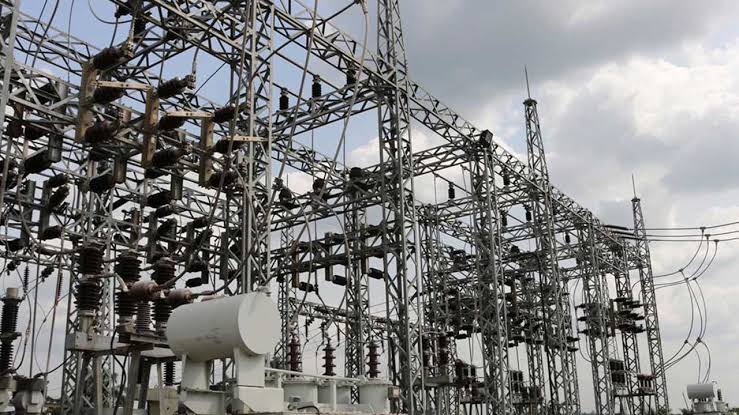
On infrastructure, the minister said Nigeria’s installed generation capacity has grown from 13,000 megawatts to 14,000 megawatts, while transmission capacity has expanded dramatically under the Presidential Power Initiative, supported by Siemens.
Transmission capacity has risen from about 5,000 megawatts to 8,500 megawatts, with plans underway to add another 7,000 megawatts in the next phase.
“Today, the national grid is far more stable. Grid collapses, which used to be frequent, have largely been eliminated,” Adelabu disclosed.
He also highlighted aggressive investments in distribution infrastructure, including new power lines, transformers and injection substations, alongside efforts to close Nigeria’s long-standing metering gap.
Out of roughly 13 million electricity customers, over 6 million are still on estimated billing — a situation the ministry says is being urgently addressed.
Beyond conventional energy sources, Adelabu said Nigeria is accelerating the adoption of renewable energy, particularly large-scale solar projects in northern Nigeria, in line with global energy transition goals.
In a major milestone for local content development, he disclosed that Nigeria recently exported solar panels to Ghana for the first time, signalling growing manufacturing capacity at home.
The minister stressed that Nigeria’s ambition extends beyond its borders, noting that the country plays a central role in the West African Power Pool due to its gas reserves, hydro resources and large market size.
“With synchronised transmission lines and frequencies across the region, Nigeria will be well-positioned to export power to neighbouring countries,” he said.
Adelabu also addressed concerns about gas supply, insisting that Nigeria has sufficient reserves to meet both local demand and regional export obligations through the West African Gas Pipeline, which already supplies Ghana.
He added that pipeline vandalism — a major threat in recent years — has been significantly curtailed through collaboration with security agencies and host communities.
“Incidents of vandalism have dropped considerably. These assets are now more secure, and we will continue strengthening protection to ensure sustainable power supply,” he said.
On electricity access, Adelabu acknowledged Nigeria’s challenge, revealing that about 63 per cent of the population currently has access to power.
“With over 200 million people, achieving universal access by 2030 will require massive investment, grid expansion and off-grid renewable solutions, especially for rural communities,” he said.
The minister expressed confidence that with sustained reforms, Nigeria’s power sector is finally on a path toward stability, growth and regional leadership. Read More