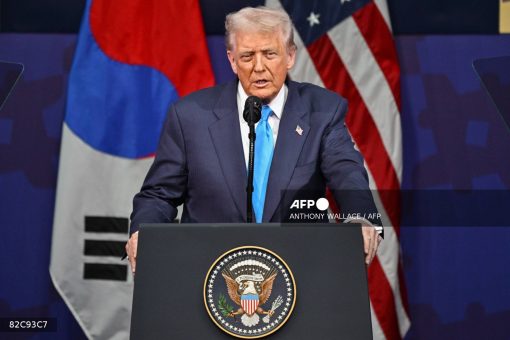
US President Donald Trump has expanded travel restrictions to 24 countries, including Nigeria, citing security and vetting concerns. The move affects tourist, student, and exchange visas
Trump Expands US Entry Restrictions to 24 Countries, Nigeria Affected
United States President Donald Trump has announced a major expansion of entry restrictions on foreign nationals from 24 countries, including Nigeria, citing what his administration described as persistent and severe deficiencies in screening, vetting, and information-sharing that pose risks to U.S. national security and public safety.
The decision was detailed in a fact sheet released Tuesday on the White House website, titled “President Donald J. Trump Further Restricts and Limits the Entry of Foreign Nationals to Protect the Security of the United States.”
According to the document, the new Presidential Proclamation imposes a full suspension of entry on eight countries and partial restrictions on 16 others, affecting both immigrant and non-immigrant travellers. The affected visa categories include B-1, B-2, B-1/B-2 (business and tourism), as well as F, M, and J visas for students and exchange visitors.
The administration said the measures are aimed at preventing the entry of individuals for whom the United States lacks sufficient information to adequately assess security risks, while also strengthening enforcement of immigration laws.
Security Incident Sparks Policy Shift
The policy move follows heightened security concerns after two U.S. National Guard soldiers were shot near the White House in November, resulting in one fatality. Authorities later arrested a suspect, whom U.S. officials identified as a 29-year-old Afghan national.
A day after the incident, Trump vowed to suspend migration from what he described as “third world countries,” marking a further escalation of his hardline immigration stance in his second term, which has been characterised by mass deportations and stricter border controls.
According to AfghanEvac, the suspect had previously worked alongside U.S. forces in Afghanistan and was granted asylum earlier in the year but did not hold permanent residency.
Review of Green Card Holders
In early December, the Trump administration also announced a review of the immigration status of Green Card holders from Afghanistan and 18 other countries following the shooting.
This review builds on a June executive order that designated 19 countries as “Countries of Identified Concern,” imposing near-total entry bans on nationals of 12 countries, including Afghanistan, Haiti, Iran, Libya, Somalia, Sudan, and Yemen.
Barely two weeks after that order, Trump also initiated plans for a general visa ban on Nigerian nationals, signalling Nigeria’s growing exposure to U.S. immigration restrictions.
Wider Visa Restrictions Under Consideration
A report by The Washington Post revealed that an internal memo signed by U.S. Secretary of State Marco Rubio proposed visa restrictions or entry bans on up to 36 additional countries, giving them a 60-day deadline to meet new State Department requirements.
Although the deadline reportedly expired in August 2025, the new Proclamation was only issued four months later.
Understanding Full and Partial Suspensions
Under the Proclamation, full suspensions generally bar affected nationals from entering the United States and halt the issuance of most new visas, with limited exemptions for lawful permanent residents, diplomats, and special categories.
Partial suspensions, such as Nigeria’s, restrict specific visa classes — including tourist, student, and exchange visas — and may involve stricter vetting, shorter visa validity periods, and enhanced screening.
Countries Facing Full Suspension
The eight countries under full suspension include Burkina Faso, Laos, Mali, Niger, Sierra Leone, South Sudan, Syria, and holders of Palestinian Authority-issued travel documents, largely due to terrorism concerns, high visa overstay rates, and weak document verification systems.
Countries Under Partial Suspension (Including Nigeria)
The 16 countries facing partial restrictions include Nigeria, Angola, Benin, Côte d’Ivoire, Senegal, Tanzania, Zambia, Zimbabwe, among others.
In Nigeria’s case, the Proclamation cited the activities of Boko Haram and Islamic State-linked groups, as well as challenges in screening and vetting. According to U.S. data, Nigeria recorded a 5.56% overstay rate for B-1/B-2 visas and 11.90% for F, M, and J visas.
The new restrictions mark one of the most expansive U.S. travel clampdowns in recent years, with significant implications for international travel, education, and diplomatic relations — particularly for affected African countries. Read More