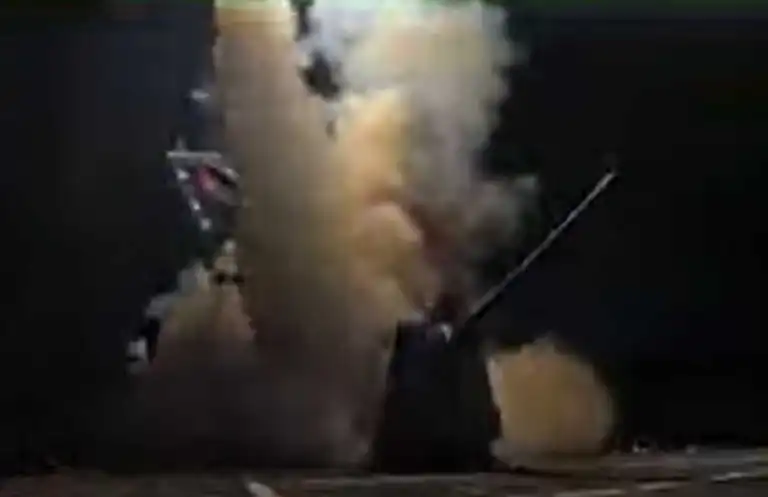
U.S. combat drones launched from Ghana struck terrorist enclaves in Sokoto after an intelligence deal between Nigeria and AFRICOM, disrupting planned Christmas attacks
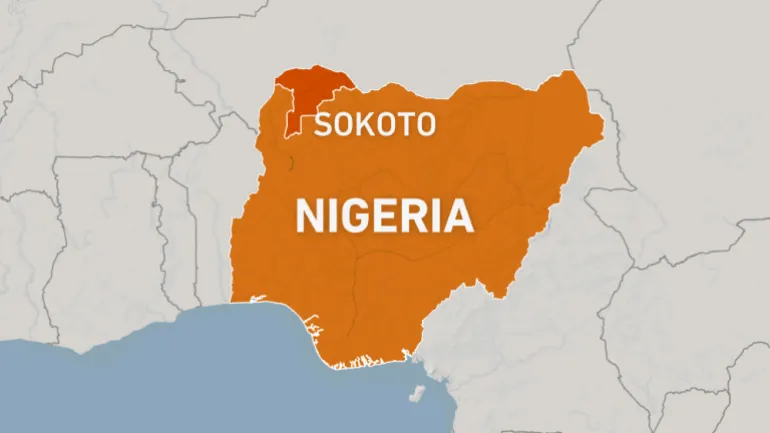
How U.S. Drones from Ghana Hit Sokoto Terrorist Enclaves After Nigeria–AFRICOM Deal
Long-range United States combat drones launched from a U.S. military facility in Ghana have successfully neutralised a major terrorist build-up in Sokoto State, following an intelligence-driven security collaboration between the Nigerian government and the U.S. Africa Command (AFRICOM), PRNigeria has reported.
Multiple security and defence sources confirmed that the operation deployed advanced long-distance unmanned aerial systems, supported by naval strike assets from the Gulf of Guinea, enabling highly precise engagements while significantly minimising civilian casualties and collateral damage.
Footage later released by the Pentagon showed at least one precision projectile launched from a U.S. naval platform as part of a coordinated strike package executed against identified terrorist locations in north-western Nigeria.
Foreign-Linked Terror Cells Targeted
The strikes reportedly targeted foreign-linked terror cells, including elements associated with the Lakurawa and Jenni groups. Intelligence assessments indicated that the groups were mobilising fighters from Burkina Faso and Mali, with plans to launch coordinated attacks across Sokoto communities during the Christmas and New Year festivities.
According to defence intelligence sources cited by PRNigeria, the operation relied on a 24-hour Intelligence, Surveillance and Reconnaissance (ISR) loop, jointly maintained by U.S. personnel stationed in Ghana and Nigeria’s military intelligence command.
“This was a carefully planned and highly selective operation. The surveillance architecture ensured that only confirmed terrorist combatants and logistics hubs were engaged,” a defence source said.
The source added that the high level of precision achieved ensured civilian settlements, farmlands and livestock were deliberately excluded from the strike envelope.
Legal Backing and Regional Security Concerns
Security officials noted that Nigeria’s recent formal designation of armed bandit groups as terrorist organisations provided the legal framework for international military cooperation involving kinetic action.
Intercepted communications reportedly revealed what intelligence officials described as a “massive convergence” of fighters moving through Sahelian corridors into Nigeria, raising fears of a coordinated regional escalation involving militant networks operating across Burkina Faso and Mali.
For the United States, the operation aligns with broader efforts to contain transnational jihadist movements and disrupt cross-border terror logistics in West Africa, particularly in the fragile Sahel belt.
High-Level Clearance and Official Confirmations
Multiple officials confirmed that the strikes followed high-level diplomatic and security coordination, ensuring full clearance of target zones before drone deployment.
Subsequent confirmations emerged from both Washington and Abuja, acknowledging the Christmas Day airstrikes.
Statements attributed to former U.S. President Donald Trump indicated that the strikes were personally authorised in response to what he described as the “vicious killing of innocent citizens” by ISIS-linked elements operating in north-west Nigeria.
The U.S. Africa Command (AFRICOM) also confirmed that the mission was carried out at the request of the Nigerian government, describing it as a joint counter-terrorism operation.
Nigeria’s Ministry of Foreign Affairs similarly acknowledged the collaboration, noting that real-time intelligence sharing enabled precision strikes on multiple terrorist targets.
Troop Reinforcements and Security Tightened
Following the operation, Nigeria’s armed forces have reinforced deployments in border Local Government Areas, including Gudu, Tangaza and Binji, to prevent regrouping by fleeing fighters and to secure communities throughout the festive period.
Meanwhile, the U.S. Defence Secretary hinted at the possibility of further operations, posting cryptically on social media: “More to come…”
Security analysts say the successful neutralisation of the terror build-up has disrupted a major plot aimed at destabilising Sokoto and neighbouring border communities during the holidays. Read More