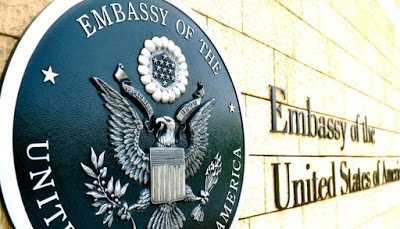
Diplomatic tension brews as US denies claims of retaliatory visa policy, saying decision stems from global security reviews — not Nigerian actions
US Embassy Explains Visa Validity Cut for Nigerians, Says “Not a Retaliation or Linked to Venezuela”
The United States Mission in Nigeria has clarified that its recent decision to reduce visa validity for Nigerian non-immigrant applicants from five years to three months was not in retaliation to any specific actions taken by the Nigerian government.
Responding to widespread speculation and backlash, the US Embassy emphasized that the policy change was not tied to Nigeria’s stance on accepting Venezuelan deportees, its new e-visa policy, nor its affiliations with BRICS.
In a post shared on X (formerly Twitter) on Friday, the US Mission stated, “We value our longstanding partnership with Nigeria and remain committed to working closely with the Nigerian public and government officials to help them meet those criteria and benchmarks, thereby ensuring safe, lawful, and mutually beneficial travel between our nations.”
The statement also noted that the shortened visa duration is part of a “global review of the use of US visas by other countries using technical and security benchmarks to safeguard US immigration systems.” While the embassy initially cited “reciprocity” as a reason, the latest communication appeared to walk that back, distancing the decision from any direct bilateral dispute.
The move, however, has drawn criticism from Nigerian officials. The Nigerian presidency swiftly faulted the US Embassy’s justification, stating that the reasoning based on reciprocity does “not accurately reflect Nigeria’s current visa policy towards US citizens.”
Tensions heightened further after Minister of Foreign Affairs, Yusuf Tuggar, suggested that the US policy might be a response to Nigeria’s refusal to accept deportees—particularly prisoners of Venezuelan origin—from the United States.
In an appearance on Channels Television’s Politics Today, Tuggar stated that, “It will be difficult for a country like Nigeria to accept Venezuelan prisoners into Nigeria. We have enough problems of our own.
We cannot accept Venezuelan deportees to Nigeria for crying out loud. We already have 230 million people. You will be the same people that would castigate us if we acquiesce to accepting Venezuelans from US prisons to be brought in.”
The US Mission in Nigeria later denied that the new visa restrictions had anything to do with Venezuela, reinforcing that the changes are technical and system-driven.
Despite diplomatic assurances, the development continues to raise eyebrows in policy circles and among ordinary Nigerians, many of whom are concerned about the implications for travel, business, and educational opportunities in the United States.
While both governments have reaffirmed their commitment to maintaining strong ties, the controversy highlights the fragile balance between immigration policy, diplomacy, and national interests. Read More