






Beyond Training: What AI Skills Are Changing In Nigerian Classrooms
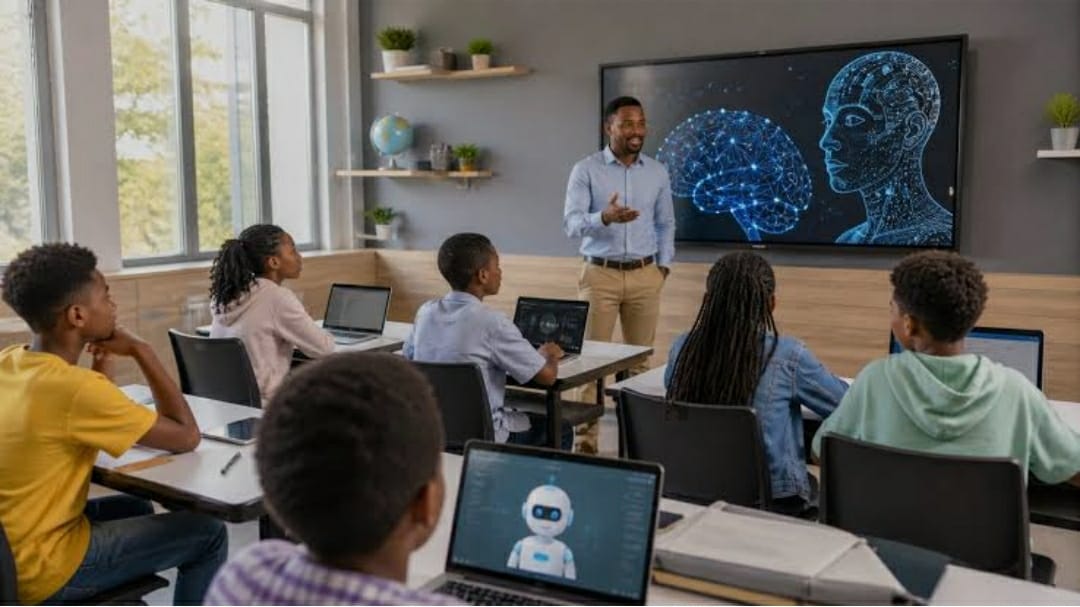
For 5,000 Nigerian public-school teachers who have undergone training in artificial intelligence-assisted teaching and inquiry-based learning, the real test begins after the certificates have been collected: whether the new skills change what happens inside their classrooms.
The teachers were drawn from public primary and secondary schools across the 36 states and the Federal Capital Territory under the 2026 MTN-SAIL Teachers’ Fellowship.
While all 5,000 participated in the first phase, 500 were selected for a further three months of intensive online training, sustained assessment and classroom application, according to SAIL Innovation Lab co-founder, Feyisola Abiru.
The current cohort also marks a significant shift in the programme, with formal training in AI-assisted teaching introduced through Microsoft, under the MTN Foundation partnership. Abiru said the teachers were being equipped to use the technology responsibly rather than regard it as a substitute for professional teaching judgment.
This development is key as artificial intelligence moves from a technology discussion into the classroom.
Lagos State Deputy Governor, Kadri Obafemi Hamzat, recently told teachers that AI should amplify their work rather than replace them.
Speaking at the 13th Professor Adetokunbo Babatunde Sofoluwe Memorial Anniversary Lecture at the University of Lagos, Hamzat said AI could assist teachers with developing learning materials and exercises, assessing students, identifying learning gaps and supporting marking.
But, he stressed, technology could not replace the human understanding, communication and encouragement that teachers bring to education. He also warned that unequal access to devices and technology could deepen existing inequalities in education.
That makes the next stage of teacher training more consequential than the number of certificates issued.
A teacher completing a course shows that training has taken place. A teacher returning to school and using the knowledge to prepare a lesson differently, develop exercises, identify where pupils are struggling or make classroom discussions more interactive demonstrates application.
It is this transition from training to classroom practice that could determine the longer-term value of the investment.
For the 500 teachers who completed the intensive phase, the programme organisers have already set expectations beyond graduation. Abiru urged them to apply their knowledge in their classrooms, share what they have learnt with other teachers and remain connected through the fellowship’s alumni network.
Five of the graduating teachers who distinguished themselves during the programme were also presented with laptops and laptop bags for their performance and classroom application.
But technology is only one part of the intervention.
Lagos State Commissioner for Innovation, Science and Technology, Olatunbosun Alake, captured the relationship between technology and teaching during the graduation ceremony.
“AI will not fix a classroom. Inquiry-based learning is the real revolution here. Technology only amplifies whatever pedagogy is already there,” Alake said.
Inquiry-based learning places greater emphasis on pupils asking questions, investigating problems and participating actively in the learning process rather than relying entirely on the teacher as the source of information.
The approach also provides an important counterweight to the excitement surrounding AI.
A teacher may have access to an AI tool but lack reliable connectivity, a suitable device or the confidence to integrate it into a lesson. Similarly, a school may have connectivity without having teachers who know how to turn digital resources into useful classroom activities.
Teacher capability, therefore, remains a critical part of the equation.
The MTN-SAIL programme is also part of a wider effort to introduce AI and digital skills into Nigerian education.
In 2025, the Experience AI programme was launched in Nigeria to train 3,150 secondary-school teachers across Lagos, Ogun, Oyo, Ondo and Ekiti, with a stated target of reaching more than 157,000 students by 2026. The initiative is being implemented in Nigeria by NerdzFactory in partnership with the Raspberry Pi Foundation and Google DeepMind, using blended online and in-person training and classroom resources.
The growing number of such initiatives reflects the pressure on the education system to prepare teachers and learners for an economy increasingly shaped by digital technologies.
But it also raises a harder question: how should success be measured?
The number of teachers trained is relatively easy to count. So are the number who complete an intensive programme and the number who receive devices.
More difficult to establish is how many teachers continue using AI tools months after training, how frequently they use them, what subjects or lessons they apply them to and whether the new methods translate into better student engagement or measurable improvements in learning.
That distinction is particularly important when programmes cite their potential reach.
Abiru estimated that if each of the 5,000 teachers in the current cohort reached an average of 80 pupils in a year, the intervention could indirectly affect about 400,000 children.
That figure should be understood as a projection based on an assumed average of 80 pupils per teacher, rather than a verified count of pupils already benefiting from the programme.
Similarly, claims about improved learning outcomes need to be distinguished from independently evaluated results.
MTN Foundation Executive Director, Odunayo Sanya, has spoken of inquiry-based learning making lessons more participatory and improving learning outcomes, but such statements represent the programme’s assessment rather than an independently published impact evaluation.
For Lagos State, however, the policy direction is clear.
Secretary to the State Government, Bimbola Salu-Hundeyin, said at the fellowship’s closing ceremony that education and technology remain central to the state’s development priorities, stressing that quality education must extend beyond the traditional classroom.
The challenge now is turning that ambition into routine classroom practice.
For the teachers emerging from the MTN-SAIL programme, that may mean using AI to prepare a different kind of lesson, creating exercises suited to different levels of ability, identifying pupils who need additional help or freeing more classroom time for discussion and inquiry.
It may also mean knowing when not to rely on AI.
That is because the ultimate measure of the technology may not be how often teachers use it, but whether it helps them understand their pupils better and teach them more effectively.
For the 5,000 teachers trained in the latest cohort, the more important milestone may therefore come after graduation — when the laptops, digital tools and new techniques meet the realities of Nigerian classrooms.
That is where the difference between being trained in AI and using AI to improve learning will finally become visible.