
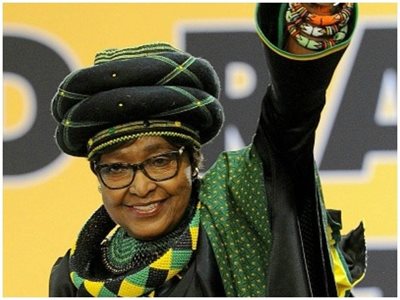



A new Africa Youth Survey reveals 51% of young South Africans regard Winnie Madikizela-Mandela as Africa’s greatest female liberation fighter
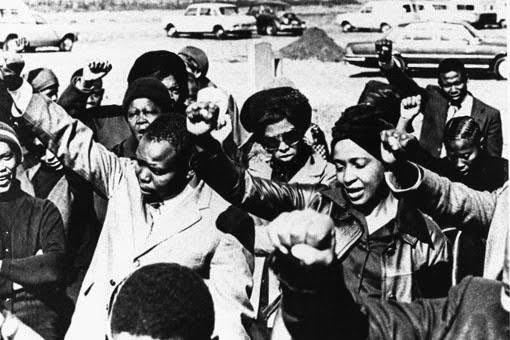
Winnie Mandela named Africa’s greatest female liberation fighter by young South Africans
By Lukman OMIKUNLE
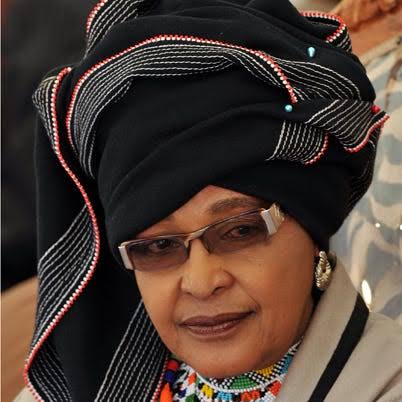
Winnie Mandela has been named Africa’s greatest female liberation fighter by young South Africans, with 51 per cent of respondents aged 18 to 24 choosing her over other women associated with the continent’s liberation struggles.
The finding, contained in previously unreleased results from the 2026 Africa Youth Survey, was released on Monday, 70 years after more than 20,000 women marched to South Africa’s Union Buildings in protest against apartheid pass laws.
Winnie Mandela’s margin was decisive. Albertina Sisulu and Helen Joseph, her closest South African rivals, polled 6 per cent and 5 per cent respectively.
The survey also placed Winnie Mandela among the three leading figures young South Africans believe sacrificed the most for the anti-apartheid struggle.
About 36 per cent selected her, putting her behind Nelson Mandela at 61 per cent and just one percentage point behind Steve Biko at 37 per cent. She was the highest-ranked woman in the ranking.
The findings further showed the strength of her standing among a generation born after apartheid. Some 89 per cent of respondents described Winnie Mandela as one of the greatest icons of the anti-apartheid movement, while 81 per cent said she sacrificed the most among leaders of the liberation struggle.
About 84 per cent described her as a fallen hero prepared to sacrifice laws and lives in pursuit of revolution and redress, while 76 per cent said her actions and legacy should be viewed within the context of the apartheid system she confronted.
Ivor Ichikowitz, founder and commissioner of the Africa Youth Survey and executive producer of The Trials of Winnie Mandela, said the findings showed that younger South Africans were reassessing the country’s liberation history.
“This is a verdict from the generation born after apartheid, and it is impossible to dismiss. Young South Africans see Winnie Mandela as a central protagonist in the liberation story, a woman who carried the struggle in public while paying an extraordinary private price. Their judgement is not uncritical, but it is clear: history diminished her contribution and they are now demanding a fuller account of who fought, who suffered and who was allowed to define the national memory,” he said.
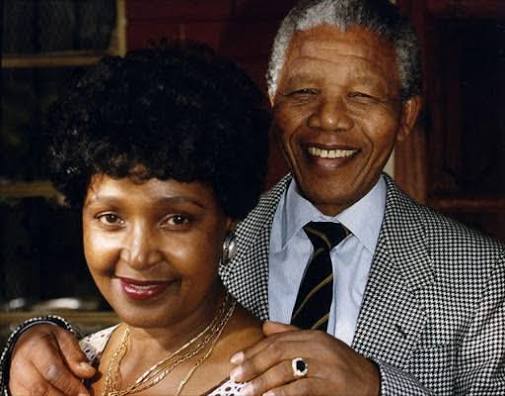
Ichikowitz said the survey did not suggest that young South Africans were overlooking the controversies surrounding Winnie Mandela.
“What matters is that this generation is examining the evidence for itself. It is not asking for a sanitised heroine. It is asking for an honest history which recognises the scale of Winnie Mandela’s sacrifice, the brutality of the system she confronted and the complexity of the choices that struggle imposed,” he said.
The findings come less than four months after the release of The Trials of Winnie Mandela, a seven-part Netflix documentary backed by the Ichikowitz Family Foundation.
The documentary, which premiered on April 23, 2026, examines Winnie Mandela’s political career, personal sacrifices, controversies and historical legacy through her own testimony and the journey of her granddaughters.
It subsequently became a fixture on Netflix South Africa’s Top 10 and triggered renewed debate across television, radio, newspapers and social media about Winnie Mandela’s role in the liberation struggle.
Ichikowitz said the documentary helped reopen a conversation about her legacy, but argued that the survey showed young South Africans were already questioning the version of history handed down to them.
“The response to the documentary has been extraordinary because it opened a conversation South Africa had postponed for too long. These findings show that the conversation began before the cameras rolled. A generation that did not live through apartheid is reaching conclusions that challenge the simpler version of history it inherited,” he said.
The survey was released on South Africa’s National Women’s Day, which commemorates the August 9, 1956 march by more than 20,000 women against the extension of apartheid pass laws.
But while the survey showed strong admiration for women who fought apartheid, it also exposed deep concern over the situation of women in present-day South Africa.
About 95 per cent of young South Africans said they were concerned about gender-based violence and femicide, including 81 per cent who were very concerned.
Another 93 per cent said they were concerned that women’s rights were not adequately protected, while 82 per cent agreed that Africa still lacked enough female leaders and role models.
The 2026 Africa Youth Survey, commissioned by the Ichikowitz Family Foundation and conducted by PSB Insights, interviewed 4,901 young Africans aged 18 to 24 across 16 countries in March.
The countries covered were Burkina Faso, Chad, Congo Brazzaville, the Democratic Republic of Congo, Ethiopia, Ghana, Kenya, Liberia, Mozambique, Nigeria, Rwanda, Somalia, South Africa, Togo, Zambia and Zimbabwe.
Launched in 2020, the survey has now covered 28 African countries and more than 18,000 face-to-face interviews, making it one of the continent’s largest recurring studies of youth opinion.
The latest findings suggest that for young South Africans, Winnie Mandela’s legacy remains deeply connected to sacrifice, resistance and the unfinished debate over who gets to define the history of the anti-apartheid struggle.