







Nigeria’s banking sector is undergoing a historic recapitalisation. Here’s how the new CBN capital rules work, where major banks stand, and what it means for customers
Nigeria’s Banks Are Being Rebuilt: Winners, Survivors and What Comes Next Before 2026
Nigeria’s banking sector is quietly undergoing one of the most far-reaching restructurings in its history. It is not happening with sirens or sudden collapses, but through capital calls, shareholder meetings and regulatory deadlines that will permanently redefine what banks can do—and where they can operate.
For anyone who banks, invests or runs a business in Nigeria, the changes now unfolding are not abstract. They will determine which institutions finance international trade, which focus on domestic lending, and which quietly retreat into narrower niches.
At the centre of this transformation is the Central Bank of Nigeria’s recapitalisation programme, introduced in 2024 and scheduled to culminate on March 31, 2026.
Under the new framework, the CBN raised minimum paid-up capital requirements and introduced a three-tier licensing structure: regional, national and international banks. The regulator’s message was unambiguous—scale must match ambition.
Under the new rules:
- International banks must hold ₦500 billion in paid-up capital
- National banks require ₦200 billion
- Regional banks must maintain ₦50 billion
Crucially, the CBN has been clear that paid-up capital—not retained earnings—counts. It is a distinction that has forced banks back to the market, cap in hand, seeking fresh equity rather than relying on balance-sheet history.
As one senior banking analyst put it, “This recapitalisation is less about punishing banks and more about forcing clarity. You can no longer claim global ambitions on local capital.”
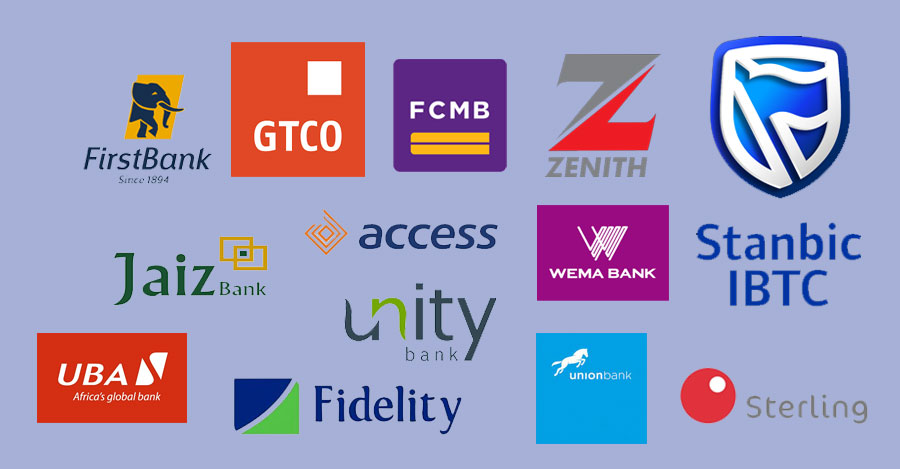
Several of Nigeria’s largest lenders moved early. Access Bank, Zenith Bank, GTBank, UBA, Fidelity Bank and First Bank of Nigeria have already crossed the ₦500 billion threshold, securing international licences and preserving their ability to finance cross-border trade, multinational corporates and large infrastructure projects.
Others have chosen a different, but no less viable, path.
Banks such as Stanbic IBTC, Citibank Nigeria and Wema Bank have secured national licences, signalling a strategic focus on domestic operations rather than continental expansion. In a market as large as Nigeria, analysts note, this is not a retreat but a recalibration.
“National banking is not a downgrade,” a Lagos-based investment banker explained. “It is a decision to specialise. Nigeria alone is a big enough market for sustainable profitability.”
Caught between these two groups is First City Monument Bank (FCMB), whose journey illustrates the nuance of the recapitalisation process.
In 2024, FCMB raised ₦147.5 billion through a public offer, lifting its banking subsidiary above the ₦200 billion threshold and securing its national banking licence. That move effectively insulated its core operations from regulatory risk under the new framework.
According to market watchers, this ensured business continuity for customers and reassured depositors at a time when uncertainty was rippling through the sector.
FCMB, however, is not stopping there.
The bank has since initiated additional capital-raising efforts aimed at reaching the ₦500 billion required for an international licence. These include further share sales and shareholder-approved funding options, with regulatory review ongoing.
A person familiar with the bank’s strategy noted, “The national licence guarantees stability. The international licence is about optionality—being ready for regional and global opportunities when the time is right.”
For customers, the distinction between national and international licences is not merely regulatory jargon. It determines what a bank can offer.
International banks can support cross-border trade, foreign currency financing and multinational transactions. National banks focus primarily on domestic lending, retail banking and local corporate finance. Both models are legitimate, and under the new CBN framework, both are explicitly recognised.
The broader effect of the recapitalisation is already visible. Across the industry, banks are pursuing mergers, licence downgrades and niche strategies, resulting in a system that is more transparent about what each institution is built to do.
A senior CBN official, speaking previously on the reforms, summarised it succinctly: “The goal is not for every bank to be international, but for every bank to be sound.”
By 2026, Nigeria’s banking sector will look more ordered than it has in decades—not because every institution chased the same ambition, but because each chose a sustainable lane and raised the capital to support it.
For customers, that clarity may prove to be the recapitalisation’s most valuable dividend. Read More