
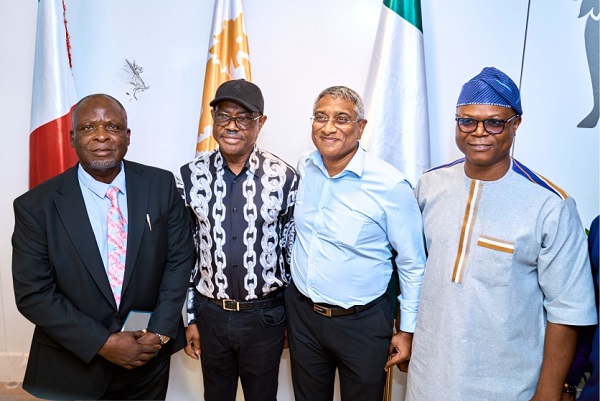



The Minister of the Federal Capital Territory (FCT), Nyesom Wike, has stepped up efforts to resolve persistent flooding and traffic congestion in Abuja’s prime business district, inspecting ongoing drainage, sewer and access road projects around the World Trade Center Abuja and the Metro Rail corridor.
The high-level inspection focused on infrastructure serving one of Abuja’s most strategic zones — home to federal ministries, corporate headquarters and diplomatic missions where heavy daily traffic has often been worsened by seasonal flooding.
For years, torrential rains have submerged key access routes, disrupting business operations, delaying commuters and increasing transport costs in the nation’s capital.
The projects, executed by the Federal Capital Territory Administration through the Federal Capital Development Authority, aim to improve stormwater management, rehabilitate critical sewer systems and ease vehicular movement within the district.
Officials say the upgraded drainage network will significantly reduce the impact of heavy rainfall, protect roads from damage and minimise delays caused by waterlogged streets.
Urban development experts note that while drainage and access road upgrades rarely attract the spotlight given to new skyscrapers, their economic impact is substantial.
Poor supporting infrastructure in high-value districts often translates into lost productivity, increased operational costs and inefficiencies for both public and private institutions.
At the heart of the corridor is the World Trade Center Abuja, one of Nigeria’s largest mixed use developments.
The complex features a 22-storey Grade A office tower offering over 33,000 square metres of lettable space and a 24 storey residential tower comprising 120 apartments.
It serves multinational corporations, financial institutions, embassies and professionals — making reliable surrounding infrastructure essential.
During the inspection, Wike described the World Trade Center Abuja as an impressive addition to the capital’s skyline, stressing that public infrastructure must match the scale of major private investments.
Jerome Das, Chief Executive of the Churchgate Group, welcomed the intervention, expressing appreciation to the FCT Administration for addressing long-standing drainage and access challenges around the complex and Metro Rail axis.
Similarly, Ibukun Adeogun, General Manager for Operations and Corporate Communications at Churchgate World Trade Center Abuja, said the upgrades would significantly improve access, safety and overall functionality of the district.
According to Adeogun, the minister’s visit sends a strong signal to investors nationwide that the FCT administration is prioritising critical infrastructure needed to keep Abuja functioning effectively as Nigeria’s seat of government and a leading business hub.
With the intervention underway, stakeholders express confidence that improved drainage and road access will not only reduce flooding risks but also strengthen Abuja’s position as a dependable centre for governance, commerce and diplomacy.