

Nigeria has renewed its push to deepen strategic ties with Israel, with a call for the immediate operationalisation of the Nigeria-Israel Joint Commission to unlock broader cooperation in security, health, agriculture and technology.
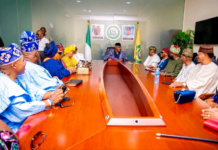
The Minister of State for Foreign Affairs, Bianca Odumegwu-Ojukwu, made the call during a meeting with the Israeli Ambassador to Nigeria, Michael Freeman, at the Tafawa Balewa House in Abuja.
According to a statement issued by her media aide, Dr. Magnus Eze, discussions between both officials spanned defence and intelligence collaboration, economic partnerships, religious tourism, consular matters, and multilateral engagement.
Odumegwu-Ojukwu stressed that Nigeria could benefit significantly from Israel’s expertise in border security management, particularly as the country continues to battle insurgency and terrorism.
She noted that activating the Nigeria-Israel Joint Commission would provide a structured platform to strengthen counter-terrorism cooperation, intelligence sharing and capacity building.
The minister described Israel’s experience in security innovation as an important model for Nigeria, especially in tackling cross-border threats and financing of terrorism.
In the health sector, the minister commended Israel’s pledge to donate about 60 fully equipped ambulances to Nigeria, describing it as a critical intervention.
“These kinds of initiatives are very significant because we have a problem regarding first responders. For me, it’s just the beginning of integrating ambulance culture in Nigeria,” she said.
Freeman confirmed that Israel is already working with Nigeria’s Federal Ministry of Health to begin phased delivery of the ambulances, starting with three or four units.
“We want to donate 50–60 ambulances to Nigeria. This is a significant package to save lives. We will also make arrangements to train the people that are going to man them,” the ambassador stated.
Beyond security and healthcare, Freeman revealed that Israel would also extend its agricultural technology to Nigeria to enhance food security — a sector seen as vital to economic stability and poverty reduction.
He described Nigeria as a strategic partner, noting its status as Africa’s most populous nation and a key player on the continent.
The renewed momentum follows a comprehensive political dialogue held on August 11 last year in Abuja between Odumegwu-Ojukwu and Israel’s Deputy Foreign Minister, Sharren Miriam Haskel-Harpaz.
The meeting reaffirmed both countries’ commitment to deepening collaboration in counter-terrorism, intelligence sharing, border management technology, agriculture, innovation, tourism, and consular affairs.
Both sides also agreed on study tours, sustained diplomatic dialogue, and stronger multilateral cooperation on issues of mutual concern.
With the proposed operationalisation of the Nigeria-Israel Joint Commission, officials say the partnership is set to transition from dialogue to structured, results-driven implementation — potentially marking a new phase in Nigeria-Israel relations.