







A detailed political feature on Ogun State Deputy Governor, Engr. Noimot Salako-Oyedele, exploring her engineering career, leadership style, and influence…
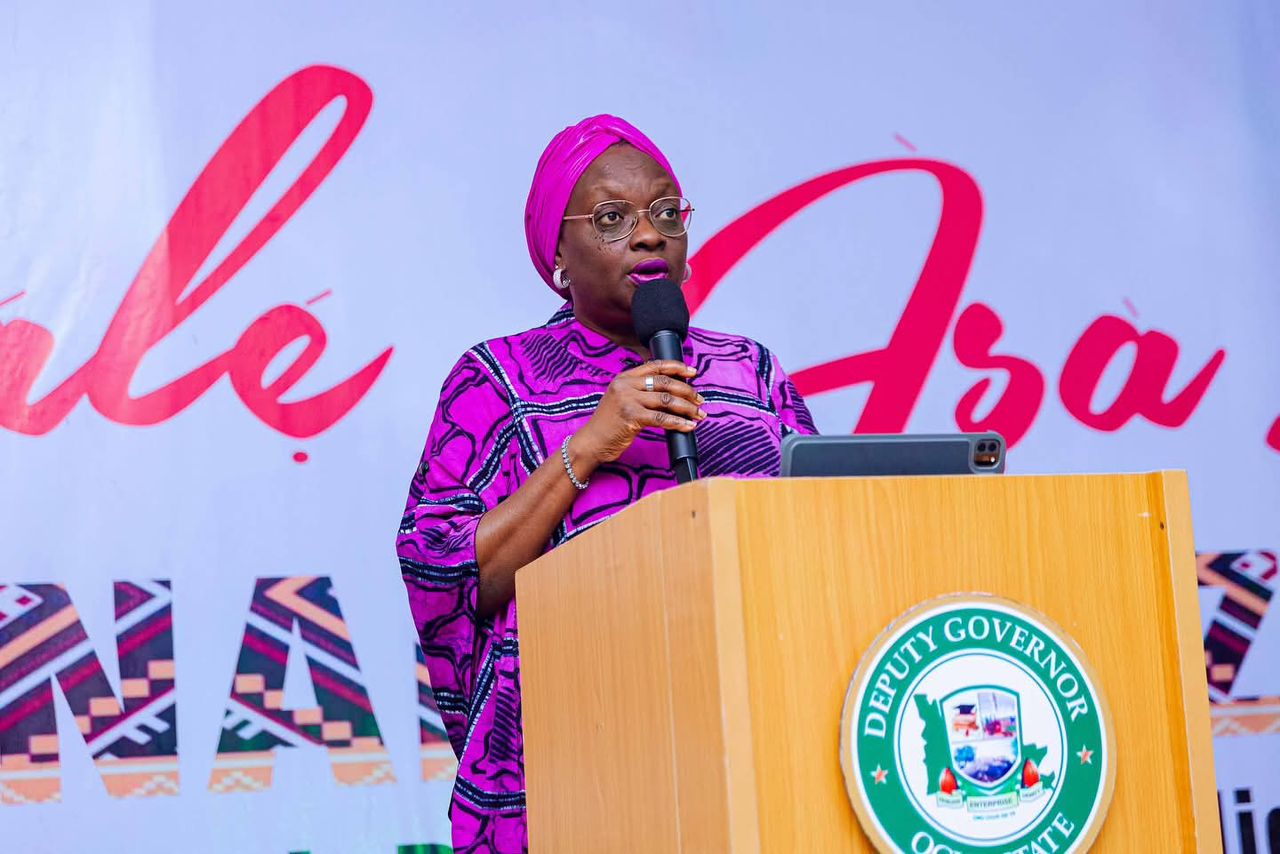
Inside Her Quiet Political Rise…
By Lukman OMIKUNLE
When the administration of Dapo Abiodun took office in 2019, one figure quietly emerged as one of the most stable pillars of governance in Ogun State — Her Excellency, Engr. Noimot Salako-Oyedele.
Her acceptance across political divides was never accidental. From the very beginning, it was driven by what many close observers describe as her authenticity and genuine desire to serve.
More than six years later, that early perception appears to have been reinforced by her steady performance in office.
Unlike many politicians who thrive on constant publicity, Salako-Oyedele has built a reputation for delivering results with minimal noise — allowing outcomes and beneficiaries of government programmes to speak louder than political rhetoric.
Since assuming office in 2019, the deputy governor has remained a consistent working force within the machinery of the Ogun State Government.
Her role has spanned policy coordination, community engagement, and implementation oversight across multiple development initiatives under the administration’s “Building Our Future Together” agenda.
The stability of her working relationship with Governor Abiodun has also been widely noted in political circles.
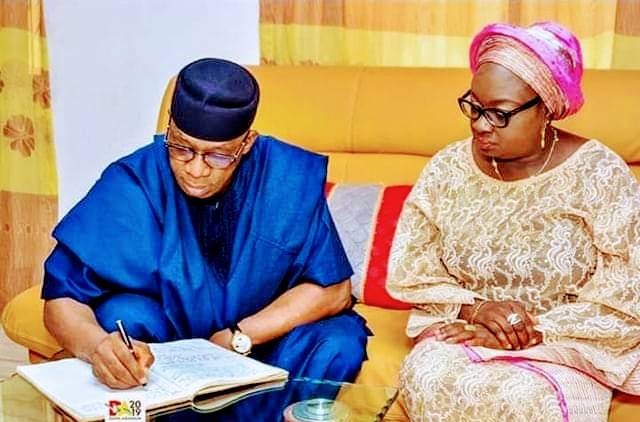
Seven years of collaboration without internal friction is rare in Nigeria’s often turbulent political environment.
Political analysts often attribute this to Salako-Oyedele’s technocratic discipline and team-oriented leadership style.
Governor Abiodun himself once described her as “a dependable lieutenant whose leadership and loyalty have been central to the success of this administration.”
Long before politics entered the picture, Salako-Oyedele had already built a strong professional reputation.
An engineer by training, she spent decades building a successful career in the energy and infrastructure sectors, both in Nigeria and internationally.
Her career progression included leadership roles in major multinational organisations, where she worked in oil and gas, infrastructure development, and engineering management.
That technical background later shaped her approach to governance.
Speaking at a Nigerian Society of Engineers event, she emphasised the central role of engineering in national development.
“Engineering has always been at the heart of economic progress—from infrastructure development to industrialisation and digital transformation,” she said.
She added that countries seeking economic transformation must empower engineers and innovators.
“Nigeria has all the ingredients necessary for industrial and technological transformation… but we must create an environment where engineering excellence and innovation can thrive.”
Beyond her professional achievements, Salako-Oyedele’s personal journey has also shaped her public image.
Before politics, she was widely known as a self-made professional who balanced career growth with family responsibilities as a wife and mother.
Those close to her say that balancing these roles helped develop the multitasking discipline that now defines her leadership approach in government.
Her supporters often point to this ability to juggle complex responsibilities as evidence of her administrative capacity.
While she is widely associated with women empowerment initiatives, Salako-Oyedele’s development philosophy extends beyond gender advocacy.
Her programmes have consistently focused on inclusive human development, supporting opportunities for women, youths and vulnerable groups alike.
During a leadership programme, she emphasized that leadership must be inclusive.
“Leadership is about service, vision and creating opportunities for others,” she said, stressing that leadership should never be limited by gender.
Encouraging women to pursue leadership roles, she also noted, “Leadership is not something we stumble into; it is something we must actively prepare for.”
Perhaps one of the most defining aspects of Salako-Oyedele’s political style is her preference for quiet effectiveness over dramatic publicity.
Observers say she has avoided the “celebrity politics” that often accompanies public office in Nigeria.
Instead, she focuses on measurable outcomes.
Her philosophy of influence reflects this thinking.
“Influence is not built in one viral moment; it is built in the little things you do daily,” she once advised young Nigerians.
“Consistency is the bridge between small beginnings and big impact.”
Over time, Salako-Oyedele has also become one of the most visible examples of female leadership within Nigerian state governments.
Her influence extends beyond Ogun State, particularly in national conversations around women’s political participation.
Prominent leaders have publicly recognised her contributions.
On her 60th birthday, Nigeria’s First Lady praised her dedication to governance, describing her service as impactful and inspiring for women across the country.
In a political environment often dominated by loud personalities and constant media battles, Salako-Oyedele represents a different model of leadership.
Her reputation has been built on technical expertise, discipline, and service delivery rather than spectacle.
For many observers, that combination of competence and humility explains why she has remained one of the most respected figures in Ogun’s political landscape since 2019.
Whether viewed as a technocrat, administrator, or political leader, one thing appears increasingly clear, Engr. Noimot Salako-Oyedele has quietly become one of the most consequential figures in the governance story of Ogun State. Read More