


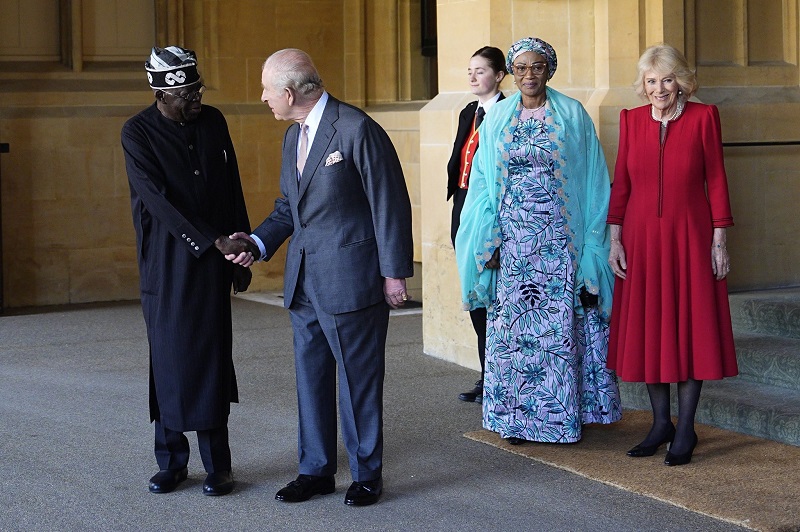




President Bola Ahmed Tinubu has secured a raft of strategic agreements with the United Kingdom, marking a significant step toward strengthening trade, security, and economic cooperation between both nations.
The high-level engagements, which concluded with the President’s state visit, produced key Memoranda of Understanding (MoUs) and Statements of Intent covering migration partnership, border security, and expanded business mobility.
A major highlight of the visit was the signing of a £746 million infrastructure deal to modernise Nigeria’s busiest seaports—Apapa Port and Tin Can Island Port—aimed at boosting trade efficiency and economic growth.
The agreement, signed at Lancaster House, is expected to revitalise critical port infrastructure in Lagos, easing congestion and enhancing Nigeria’s global trade competitiveness.
Minister of Finance, Wale Edun, who signed on behalf of Nigeria, said the deal aligns with the government’s Renewed Hope Agenda focused on infrastructure, industrialisation, and job creation.
He noted that deepening bilateral partnerships would attract investment, stimulate economic activities, and reduce poverty.
Nigeria’s Minister of Interior, Olubunmi Tunji-Ojo, formalised agreements on migration and border security, describing them as a framework for a “safe, orderly, and mutually beneficial” migration system.
The agreements also target organised immigration crime, reinforcing cooperation between Nigeria and UK authorities.
Tunji-Ojo emphasised that Nigeria remains committed to protecting lawful migrants while ensuring accountability for those who exploit migration channels for criminal activities.
A key component of the partnership is the expansion of business visas for UK companies operating in Nigeria—an initiative expected to improve ease of doing business and unlock investment opportunities.
Tunji-Ojo described the development as a “major enabler” for Nigeria’s economic ambitions, particularly its drive toward becoming a trillion-dollar economy.
The UK Home Secretary, Shabana Mahmood, described the agreements as unprecedented, noting Nigeria’s priority status in Britain’s bilateral relations.
She highlighted the shared vision between both countries in tackling migration challenges and expanding economic collaboration.
Similarly, UK Trade Envoy Florence Eshalomi said the visa and trade agreements would deliver mutual economic benefits and strengthen Nigeria’s position as a leading African economy.
President Tinubu described the visit—Nigeria’s first such engagement with the UK in 37 years as historic, stressing the need to build on longstanding institutional ties through stronger trade and investment frameworks.
“We must consolidate on our shared history to create more opportunities for growth and development,” he said.
Meanwhile, the National Identity Management Commission (NIMC) announced plans to expand National Identification Number (NIN) enrolment services for Nigerians in the UK.
NIMC Director-General Abisoye Coker-Odusote said the initiative would improve access to services and strengthen connections between Nigerians abroad and the country’s digital economy.
She added that the Commission is also scaling up grassroots enrolment across Nigeria to ensure wider inclusion, particularly in rural communities.
The agreements underscore a renewed commitment by both nations to deepen economic ties, enhance security cooperation, and unlock new opportunities for growth in an increasingly interconnected global economy.